
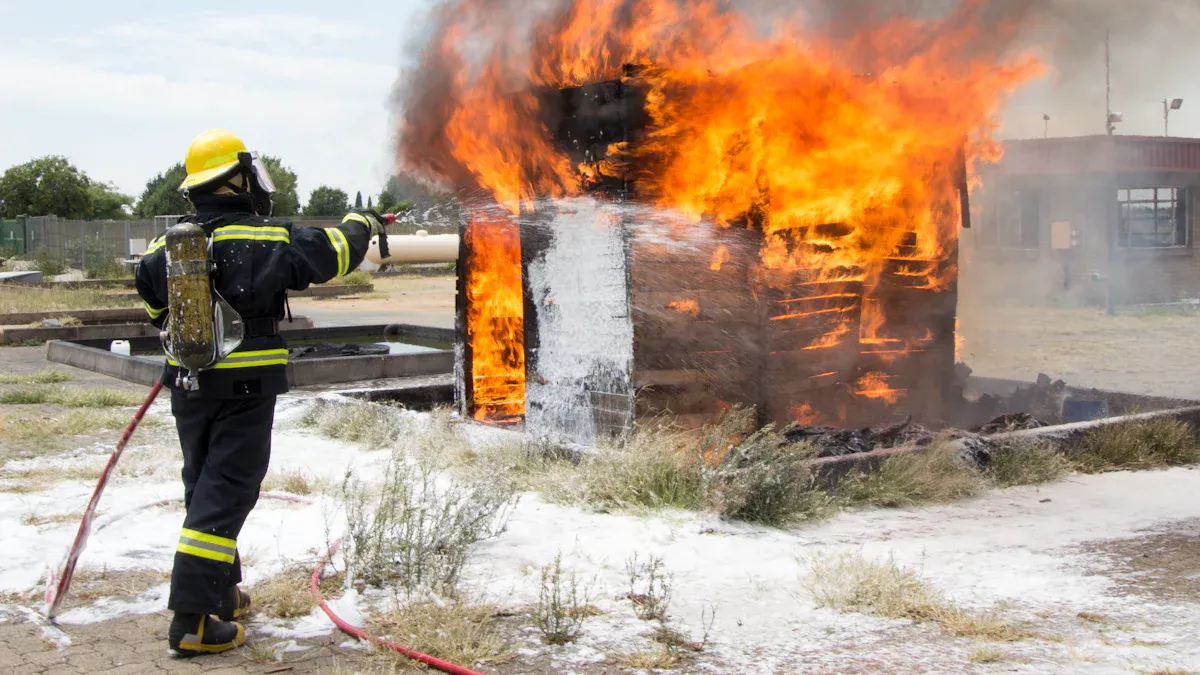
Many Chinese fire fighting equipment suppliers meet international standards, while others do not. A significant number of Chinese manufacturers now offer high-quality, certified products. For instance, ZheJiang World Fire fighting equipment produces international standard fire fighting equipment, including critical components like the Fire pipeline connector. Identifying compliant fire fighting equipment suppliers, especially for items like High-rise building fire safety equipment, requires understanding key factors and thorough due diligence.
Key Takeaways
- Many Chinese fire fighting equipment suppliers meet international standards, but some do not.
- Look for certifications like UL, FM, CE, and ISO to find good suppliers.
- Always check a supplier’s quality control and visit their factory if you can.
- Using equipment that does not meet standards can be dangerous and cause problems.
- Working with good Chinese suppliers can save money and give you access to new technology.
The Nuance of Compliance Among Chinese Fire Fighting Equipment Suppliers
Not All Chinese Fire Fighting Equipment Suppliers Are Equal
The landscape of Chinese manufacturing presents a diverse range of capabilities and quality standards. Not all Chinese fire fighting equipment suppliers operate at the same level of compliance. Some manufacturers prioritize cost reduction above all else. This approach can lead to products that do not meet rigorous international safety or performance benchmarks. Other suppliers, however, invest heavily in research, development, and quality control. They aim to produce high-grade equipment that competes globally. Buyers must recognize this distinction. They need to differentiate between suppliers committed to excellence and those who might offer lower-quality alternatives.
The Growing Trend Towards International Compliance for Fire Fighting Equipment
A clear trend shows more Chinese manufacturers are embracing international compliance. This shift is driven by several factors. Global market demands require adherence to specific certifications. Manufacturers also recognize the importance of reputation and reliability for export success. Companies like ZheJiang World Fire Fighting Equipment Co., Ltd exemplify this trend. They integrate design, R&D, and production to supply high-quality fire fighting equipment. Their facility holds ISO 9001:2015 certification. Their products also achieve certifications such as MED, LPCB, BSI, TUV, and UL/FM. This commitment demonstrates a strong move towards meeting and exceeding global standards. This growing compliance ensures greater safety and performance for end-users worldwide.
Driving Factors for International Compliance in Chinese Fire Fighting Equipment
Government Initiatives and Evolving Regulations for Fire Fighting Equipment
Governments both within China and globally increasingly demand higher safety standards. This regulatory push compels manufacturers to adopt advanced safety measures. These evolving regulations often align with international benchmarks, creating a strong incentive for Chinese suppliers to meet global compliance. Companies must adapt their production processes and product designs to satisfy these stricter legal requirements. This ensures their products remain viable in both domestic and international markets.
Technological Advancements and Quality Improvement in Fire Fighting Equipment Manufacturing
Technological innovation significantly drives quality improvement in Chinese manufacturing. Manufacturers now utilize advanced tools and processes. For example, a specialized testing toolkit from the Shanghai Fire Research Institute evaluates water gun flow and hydraulic rescue tool force. This portable kit features wireless data transmission and robust sensor systems, enhancing frontline inspection efficiency.
Furthermore, composite materials reduce cylinder weight while maintaining strength. Smart technology, including IoT-enabled sensors, monitors cylinder pressure and integrity in real-time. This reduces risks and enables predictive maintenance. AI in manufacturing also improves production efficiency and predictive analytics. These innovations lead to durable fire suppression systems, advanced alarms, and smoke detection devices. Over 50% of fire safety innovations originate from countries with advanced manufacturing capabilities, with China playing a leading role.
Global Market Demands and Export Focus for Chinese Fire Fighting Equipment
Global market demands strongly influence Chinese manufacturers to seek international certifications. Regulatory compliance becomes increasingly stringent worldwide, requiring companies to meet legal requirements for market access. The rapid growth in car ownership, for instance, increases the risk of vehicle fire accidents. This creates a huge demand for vehicle fire extinguishers. Chinese companies specialize in the research and development of these products. They gain recognition through advanced technology, strict quality control, and international certification systems. Xinhao Fire Fighting Equipment Co., Ltd., for example, obtained CE 0036 certification and ISO 9001:2008 quality management system certification. This demonstrates their adherence to international quality standards for exporting products globally.
Essential International Certifications for Fire Fighting Equipment
International certifications provide crucial assurance for the quality and reliability of fire fighting equipment. These approvals confirm that products meet stringent safety and performance standards. Buyers often look for these certifications to ensure compliance and reduce risks.
Understanding UL and FM Approvals for Fire Fighting Equipment
UL (Underwriters Laboratories) and FM (Factory Mutual) approvals are two of the most recognized certifications in the fire protection industry. Both signify that products have undergone rigorous testing and meet high safety standards.
UL evaluates fire equipment for compliance with appropriate National Fire Protection Association (NFPA) standards. This includes testing at manufacturing facilities for standards like NFPA® 1900 for various fire apparatus. UL also tests in-service equipment, such as performance testing of fire pumps under NFPA® 1910. Specific product types also have dedicated UL standards. For example, water-based agent fire extinguishers must meet ANSI/UL 8, while dry chemical extinguishers adhere to ANSI/UL 299. UL also certifies components like cylinders and hose assemblies.
UL certification involves comprehensive testing. For instance, fire hoses undergo a bend test of 100,000 cycles and an abrasion test of 500 cycles. Coupling retention is tested at burst pressures up to 1500 psi for 500 service hoses. An adhesion test requires 12 lbs on 1.5 inches for 10 minutes with minimal slip. UL tests every size, color, and marking individually. Ongoing retesting is also required to maintain listing. This ensures consistent product quality and adherence to the latest NFPA 1961 standards, covering flows, friction loss, and heat resistance.
FM Approval follows a systematic process to ensure product integrity.
- Initial Facility Assessment: FM examines the manufacturing facility. This ensures consistent, quality product production. It includes evaluating quality control processes and adherence to FM standards.
- Product Design Examination: FM scrutinizes the product’s design in detail. This assesses if specifications meet necessary safety and performance criteria. They review blueprints, material compositions, and intended uses.
- Rigorous Physical Testing: Products undergo a series of physical tests. These tests simulate real-world conditions and stresses. They push products to their limits to ensure reliability under extreme conditions.
- Documentation and Sample Submission: Manufacturers provide comprehensive documentation. This includes technical specifications, product samples, and sales literature. This supports product claims and compliance.
- Continuous Compliance and Surveillance Audits: Regular audits and re-tests occur even after initial approval. This ensures ongoing compliance with FM standards and maintains certification status.
FM approves various fire protection equipment, including sprinklers, alarms, and fire extinguishers. These items undergo rigorous testing for utmost reliability. They must perform flawlessly even in extreme scenarios, fortifying building defense against fire.
The Significance of CE Marking for European Fire Fighting Equipment Markets
The CE (Conformité Européenne) mark is mandatory for many products sold within the European Economic Area (EEA). For fire fighting equipment, CE marking indicates that the product complies with relevant EU directives and regulations. These directives cover essential health, safety, and environmental protection requirements. Manufacturers self-declare compliance, but often involve a Notified Body for certain high-risk products. The CE mark allows free movement of products within the European market. It signals to customs and consumers that the product meets European safety standards. Without CE marking, manufacturers cannot legally sell their fire fighting equipment in the EEA.
ISO Certifications for Quality Management Systems in Fire Fighting Equipment Production
ISO certifications, particularly ISO 9001, focus on quality management systems. They do not certify the product itself but rather the processes used to create it. ISO 9001:2015 is a widely recognized standard for quality management. It ensures consistent quality in the installation, inspection, and maintenance of fire protection services. For businesses producing fire fighting equipment, this certification demonstrates a commitment to quality and customer satisfaction. It assures that their systems are reliable and effective.
Companies like Lloyd Industries, a producer of HVAC products and fire dampers, obtained ISO 9001 certification for its Hong Kong operations. This demonstrates their commitment to delivering high-quality products and services. They adhere to internationally recognized quality standards. The certification validates a company’s workflow. It assigns responsibility for each process involved in ensuring product quality. This ensures consistent delivery of products that meet customer expectations.
Manufacturers of fire fighting equipment maintain ISO 9001 to embed quality management best practices throughout their processes. This improves quality from development and material sourcing to product delivery and customer interaction. The standard also facilitates continuous quality management. It helps reduce defects and efficiently ship quality products.
Other Relevant Regional and Product-Specific Standards for Fire Fighting Equipment
Beyond the widely recognized UL, FM, CE, and ISO certifications, other regional and product-specific standards play a crucial role in ensuring the quality and safety of fire fighting equipment. These standards often address unique local requirements or specific product categories, providing additional layers of assurance.
The BSI Kitemark, issued by the British Standards Institution, stands as a prominent mark of quality and safety across the UK and internationally. It signifies that a product meets specific standards. It also confirms the manufacturer maintains a comprehensive quality management system for consistent production. This ensures reliability and performance.
In North America, the National Fire Protection Association (NFPA) develops a comprehensive set of codes and standards. These standards are widely adopted and often form the basis for local regulations. Key NFPA standards for fire fighting equipment include:
- NFPA 13: This standard governs the installation of sprinkler systems. It covers critical aspects like pipe sizing, sprinkler head spacing, and approved material types.
- NFPA 14: This standard addresses the installation of standpipe and hose systems. It specifically covers vertical pipes in multi-story buildings for firefighter hose connections.
- NFPA 20: This standard details requirements for the installation of stationary pumps for fire protection. It includes specifications for fire pump assemblies, piping, fittings, and valves.
Understanding these diverse regional and product-specific standards is essential. They ensure global market access and uphold the highest safety benchmarks for fire protection systems worldwide.
Identifying Compliant Chinese Fire Fighting Equipment Suppliers
Identifying compliant Chinese suppliers requires a systematic approach. Buyers must conduct thorough due diligence. This process involves verifying credentials, scrutinizing production methods, and reviewing performance data.
Verifying Certifications and Documentation for Fire Fighting Equipment
Verifying certifications and documentation is a critical first step. Buyers must check for valid international and local certifications. These include UL, FM, and China Compulsory Certification (CCC). For European markets, CE Certification is essential. ISO 9001 certification indicates a robust quality management system. British safety requirements often involve EN3 & BS Standards. Requesting detailed documentation of quality control procedures at each production stage provides further insight. This includes product-specific certifications like CE or UL listings. Third-party test reports from accredited laboratories such as SGS or TÜV verify fire resistance, combustion performance, and durability. Material certifications also confirm product integrity.
Buyers should also request application documents submitted to Chinese authorities. These detail product parameters, components, and suppliers. Even if CCC is not strictly required for a product, clearance certificates are recommended. They reduce potential import-related problems. Reviewing the supplier’s manufacturing history and requesting references from past clients offers valuable insights into reliability and after-sales support. Independent customer reviews also provide perspectives on a supplier’s consistency.
Assessing Quality Control Processes and Facilities for Fire Fighting Equipment
Assessing a supplier’s quality control processes and facilities reveals their commitment to product excellence. Robust quality control begins with product design analysis. This involves collaboration between design and production teams. They assess for manufacturability (DFM) to ensure high-quality production. Raw material inspection is another key step. Suppliers establish clear quality standards and conduct regular audits to ensure adherence. In-process quality control requires defining critical control points (CCPs) within the production process. Real-time monitoring detects deviations promptly.
Finished product inspection uses robust random sampling techniques and comprehensive testing protocols. These cover performance, durability, and safety. Quality audits, both internal and external, evaluate effectiveness. They also develop corrective action plans based on findings. A comprehensive quality assessment establishes an initial quality baseline. It performs a gap analysis to identify shortcomings. Investing in technology and automation for quality control is also crucial. Employee training and skill development programs focus on quality control and new technologies. Establishing clear Standard Operating Procedures (SOPs) for all production stages ensures consistency. A closed-loop feedback system captures real-time data. It provides immediate feedback for corrective actions. Continuous monitoring and improvement, aligned with Key Performance Indicators (KPIs), drive ongoing quality. Engaging employees in quality improvement initiatives fosters a culture of excellence. Facility audits, virtual or in-person, examine raw material sourcing, manufacturing processes, and quality control labs.
Requesting and Reviewing Testing Reports for Fire Fighting Equipment
Requesting and reviewing testing reports provides objective evidence of product performance and safety. These reports detail how products perform under various conditions. Essential testing reports include those focusing on Personal Alert Safety Systems (PASS). These reports detail performance at high temperatures. They ensure devices function when firefighters are in danger. Reports on Thermal Imaging Cameras provide methods for measuring and testing these cameras. This helps fire departments select effective models. Investigations into portable radios cover their performance at elevated fireground temperatures. This addresses communication reliability issues. Experiments and reports on Self-Contained Breathing Apparatus (SCBA) Face Masks assess their resilience to rapid temperature changes. This prevents clouding or breakage that could impair visibility or safety. Specific NIST publications serve as key testing reports. Examples include ‘Thermal Environment for Electronic Equipment Used by First Responders’ and ‘Performance of Thermal Imaging Cameras in High Temperature Environments’. Other NIST reports cover ‘Performance of Portable Radios Exposed to Elevated Temperatures’ and ‘Thermal Performance of Self-Contained Breathing Apparatus Facepiece Lenses Exposed to Radiant Heat Flux’. These documents offer crucial data for evaluating product suitability.
The Importance of Factory Audits and Site Visits for Fire Fighting Equipment Suppliers
Factory audits and site visits are indispensable for buyers seeking compliant suppliers. These direct assessments offer invaluable insights into a manufacturer’s operations. They go beyond mere documentation. They provide a real-world view of production capabilities, quality control, and ethical practices. A physical presence at the factory allows buyers to verify claims made on paper. It also helps them build trust with potential partners.
Buyers conduct various types of audits to ensure comprehensive oversight. Manufacturing audits confirm products meet specifications. They also ensure processes are followed correctly. Ethical audits, such as SMETA or amfori BSCI, verify appropriate work conditions. These audits are guided by regulatory standards or internal policies. Living wage audits confirm employees receive adequate remuneration for a decent standard of living. Structural audits assess building integrity. They also check fire safety measures and adherence to general building codes. Environmental audits ensure compliance with local, regional, national, and international environmental standards. Chemical safety audits evaluate potential chemical hazards. They also check the controls in place to mitigate risks. C-TPAT audits protect against security threats. They align with U.S. Customs and Border Protection requirements.
These on-site evaluations help buyers identify potential risks early. They can spot inconsistencies between stated policies and actual practices. Audits also foster transparency. They encourage suppliers to maintain high standards consistently. Regular visits reinforce the buyer’s commitment to quality. They also signal the importance of compliance to the supplier. Ultimately, factory audits and site visits are a proactive measure. They safeguard product quality and ensure ethical sourcing.
Advantages of Partnering with Compliant Chinese Fire Fighting Equipment Suppliers
Partnering with compliant Chinese suppliers offers significant benefits. These advantages include cost savings, access to cutting-edge technology, and robust production capabilities.
Cost-Effectiveness Without Compromising Safety of Fire Fighting Equipment
Compliant Chinese suppliers provide substantial cost savings without sacrificing safety standards. Chinese fire truck manufacturers, for example, offer savings of 30-50% compared to local suppliers. One customer saved 33% on a fleet of 10 SANY SRT55D trucks by procuring directly from the factory. This eliminated middleman markups. For water cannons, typical unit prices (FOB China) range from $1,200–$1,800 for standard portable models. Smart remote-controlled cannons cost $8,000–$12,000. Suppliers often provide tiered discounts, making large orders even more competitive. Sourcing fire extinguishers from Chinese manufacturers also offers competitive pricing. This results from economies of scale, advanced production techniques, and lower labor costs. Bulk buyers achieve better deals, making China a cost-effective sourcing destination.
Access to Innovation and Advanced Manufacturing of Fire Fighting Equipment
Compliant Chinese manufacturers are at the forefront of innovation and advanced manufacturing. They continuously develop new products and technologies. For instance, Tianjin Jinyu Fire-Fighting Equipment Co., Ltd. uses advanced manufacturing processes. These ensure precision and quality while reducing product failure. Fujian Longxiang Fire-Fighting Equipment Co., Ltd. focuses on high-precision extinguishing and fashionable designs. Guangdong Huaxin Fire-Fighting Equipment Co., Ltd. develops fast-acting, lightweight extinguishing agents. These agents are compatible with various electrical equipment. Hebei Xinyuan Fire-Fighting Equipment Co., Ltd. produces high-purity, environment-friendly extinguishing agents. Shanghai Xinghuo Fire-Fighting Equipment Co., Ltd. offers ultra-high-efficiency and intelligent extinguishing solutions with aesthetic designs. Zhejiang Taiji Fire-Fighting Equipment Co., Ltd. provides long-lasting extinguishing effects and user-friendly designs.
Scalability and Production Capacity for Fire Fighting Equipment Orders
Chinese manufacturers possess immense scalability and production capacity. This allows them to handle large orders efficiently. Their extensive manufacturing infrastructure supports high-volume production. This ensures timely delivery for global demands. This capability is crucial for projects requiring significant quantities of equipment. It also supports rapid deployment in emergency situations.
Risks Associated with Non-Compliant Chinese Fire Fighting Equipment

Using non-compliant equipment carries significant risks. These dangers affect safety, legal standing, and financial stability. Buyers must understand these potential pitfalls.
Safety Hazards and Performance Failures of Substandard Fire Fighting Equipment
Substandard equipment poses severe safety hazards. Neglecting to maintain fire prevention systems can turn small risks into major catastrophes. Unmaintained fire safety equipment, like fire extinguishers, becomes unreliable in emergencies. This makes them as dangerous as having no equipment at all. Failure to comply with building codes and standards, including NFPA codes, puts property and employees at risk. Unchecked sprinkler systems, left without maintenance, can fail to operate when needed. This results in damaged property and equipment. Malfunctioning alarms, detectors, or sprinkler systems delay detection and response during a fire. Extinguishers may not work, leaving occupants without a critical tool. These failures increase the risk of injury, loss of life, and extensive property damage.
Legal and Reputational Consequences from Non-Compliant Fire Fighting Equipment
Non-compliant equipment brings serious legal and reputational consequences. Property owners face hefty fines and penalties for not following fire safety regulations. In a fire event, insurance claims may be denied or reduced if equipment was not properly maintained or compliant. This increases legal liabilities for property owners. Beyond legal issues, a lack of adequate fire safety measures leads to a loss of confidence among occupants, tenants, employees, and customers. For businesses, this can mean decreased occupancy rates, reduced customer loyalty, and potential loss of revenue.
Financial Losses from Recalls and Replacements of Faulty Fire Fighting Equipment
Financial losses from non-compliant equipment can quickly accumulate. The cost of repairs, replacements, and legal liabilities often far exceeds the expense of regular maintenance or ensuring compliance. When equipment fails, companies face expensive recalls. They must replace faulty products. These costs, combined with potential fines and denied insurance claims, create a significant financial burden.
Best Practices for Sourcing Compliant Chinese Fire Fighting Equipment
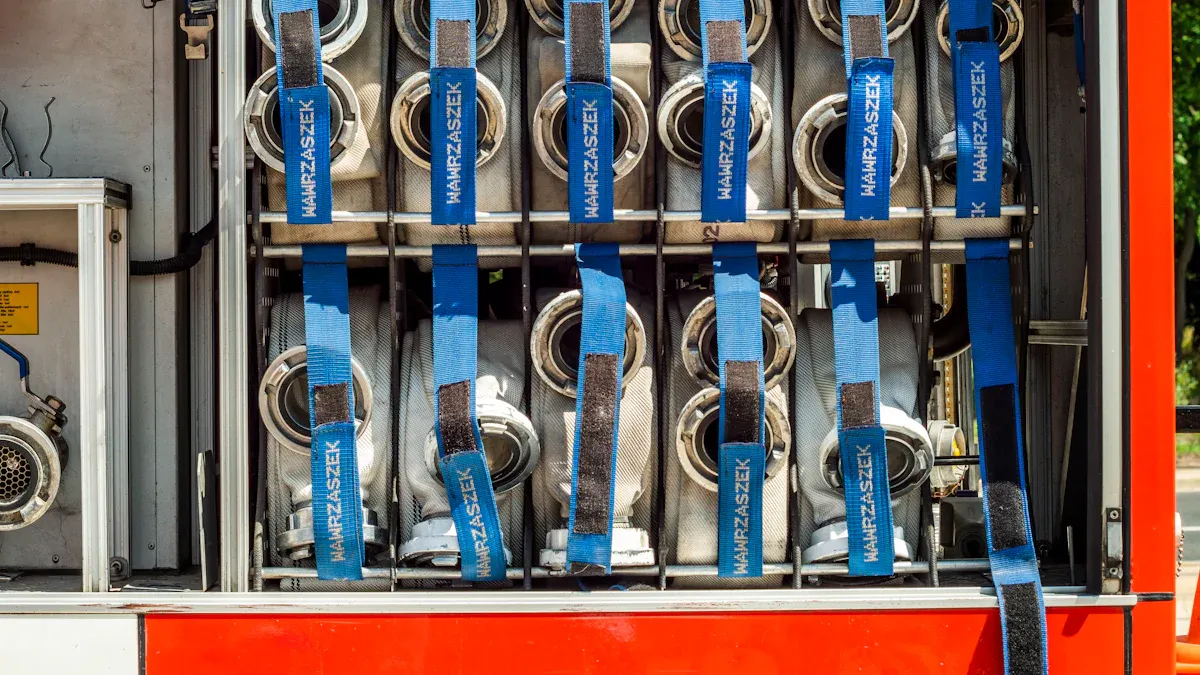
Sourcing compliant Chinese suppliers requires a strategic approach. Buyers must implement best practices to ensure product quality and reliability. These practices safeguard investments and uphold safety standards.
Establishing Clear Specification Requirements for Fire Fighting Equipment
Specificity is paramount when procuring fire fighting equipment. The purchasing document must fully particularize the desired apparatus. This leaves no doubt for dealers and manufacturers regarding the purchaser’s requirements. While fire departments and dealers often share a common understanding, the Authority Having Jurisdiction (AHJ) may not. This necessitates preparedness to defend all specified requirements. Private industry developed performance specifications to mitigate issues associated with design specifications. This approach prioritizes what the apparatus must do rather than how it is built. Buyers analyze operating conditions, job requirements, and performance objectives. This method allows manufacturers to use their engineering expertise and ingenuity. They meet performance requirements competitively, ensuring component compatibility and job effectiveness. The “boilerplate” or “General Requirements” section of specifications is crucial. It identifies the most responsible bidder. These requirements establish minimum ground rules for the bid. They clearly communicate what is desired and how it should be supplied.
Engaging Third-Party Inspection Services for Fire Fighting Equipment
Engaging third-party inspection services provides crucial oversight. Third-Party Certification (TPC) offers strong assurance of compliance and quality for products and services. This is especially true for products with life safety functions. Independent expert body assurances give buyers confidence in their purchases. An external party verifies conformity to requirements. TPC confirms independently that performance claims are supported by relevant and valid tests. It is considered good evidence that due diligence has been performed. This offers a defense for duty holders. Many tender specification documents increasingly require TPC as a criterion. This offers a competitive advantage. TPC provides crucial indicators for quality assurance and conformity assessment. It helps prevent systemic failures in the fire safety sector.
Building Long-Term Supplier Relationships for Fire Fighting Equipment Procurement
Building long-term relationships with Chinese suppliers offers significant advantages. These relationships foster trust and consistency. They also lead to better communication and potential for innovation. Suppliers become more invested in understanding a buyer’s specific needs. This results in customized solutions and improved product development. Long-term partnerships often secure preferential pricing and priority in production schedules. This ensures a stable supply chain. Consistent collaboration also allows for continuous improvement in product quality and service delivery.
Understanding Import Regulations and Local Standards for Fire Fighting Equipment
Buyers must thoroughly understand import regulations and local standards in their destination country. This knowledge is crucial when sourcing products from international suppliers. Each nation possesses unique customs duties, tariffs, and import licensing requirements. Importers must research these specific rules before placing orders. Failure to comply can lead to significant delays at customs, unexpected costs, or even product confiscation.
Local safety standards also demand careful attention. These standards often dictate specific product features, performance criteria, and testing protocols. For instance, equipment destined for the European Union requires CE marking. Products for the North American market may need UL or FM approvals. Building codes and fire safety regulations vary widely by region. Buyers must ensure the imported fire fighting equipment meets all applicable local codes. This includes specific requirements for installation, maintenance, and operational performance.
Tip: Always consult with a customs broker or legal expert familiar with the destination country’s import laws. This proactive step helps prevent costly mistakes and ensures smooth market entry.
Proper documentation is another critical aspect. Importers need to provide accurate product descriptions, country of origin, and relevant certifications to customs authorities. Incorrect or incomplete paperwork can cause substantial logistical problems. Understanding these regulations protects buyers from legal liabilities and ensures the safe, compliant deployment of fire safety solutions. This diligence guarantees products meet all necessary safety and legal benchmarks.
Many Chinese suppliers indeed meet international standards. They offer reliable products. Thorough verification and due diligence are crucial. These steps ensure successful procurement of compliant equipment. Choosing certified Chinese suppliers provides significant advantages. Buyers benefit from quality, cost-effectiveness, and innovation in the global market.
FAQ
What does “compliant” mean for Chinese fire fighting equipment suppliers?
“Compliant” means suppliers meet international safety, performance, and quality standards. These standards include certifications like UL, FM, CE, and ISO. They also follow relevant regional regulations. This ensures products are reliable and safe for use.
Why are certifications like UL and FM important for fire fighting equipment?
UL and FM certifications confirm rigorous testing. They ensure products meet high safety and performance benchmarks. These approvals provide assurance that equipment will function effectively in critical situations. They are crucial for market acceptance and user safety.
How can buyers verify a Chinese supplier’s compliance?
Buyers verify compliance by checking certifications and documentation. They assess quality control processes and facilities. Requesting and reviewing testing reports is also essential. Conducting factory audits and site visits provides direct insight into operations.
What are the risks of using non-compliant fire fighting equipment?
Non-compliant equipment poses significant safety hazards. It can lead to performance failures and increased injury risk. Buyers also face legal and reputational consequences. Financial losses from recalls and replacements are common.
Do Chinese suppliers offer innovative fire fighting equipment?
Yes, many compliant Chinese suppliers are at the forefront of innovation. They invest in research and development. They use advanced manufacturing processes. This leads to new technologies and improved product designs.