

Chinese OEM/ODM fire fighting equipment suppliers earn trust for global fire safety procurement. They commit to international standards, offer cost-effectiveness, and innovate continuously. Their robust fire fighting equipment manufacturing and efficient global logistics make them preferred partners. The growing global fire extinguisher market relies on their reliable fire safety solutions, including UL/FM/CE certified fire equipment and products like a fire hose nozzle.
Key Takeaways
- Chinese suppliers follow strict global safety rules and use strong quality checks. This ensures their fire fighting equipment meets high international standards.
- These suppliers offer good prices because they make many products. They also use new technology to make fire safety equipment better and more efficient.
- Chinese companies use advanced technology like smart sensors and IoT in their fire equipment. They also have good ways to ship products around the world quickly.
Unwavering Quality and Compliance in Fire Fighting Equipment

Adherence to Global Safety Standards
Chinese OEM/ODM suppliers build trust by strictly following global safety standards. They understand that fire safety leaves no room for compromise. Manufacturers ensure their products meet the highest international benchmarks. For example, many companies hold certifications like ISO9001 and ISO14001, which the British Standards Institution (BSI) certifies for quality and environmental management. They also comply with the EU Construction Products Regulation (CPR) for fire detection and alarm systems, ensuring consistent performance. Furthermore, their products often meet EN54 standards, which confirms the reliability of fire detection and alarm systems. Global certifications like CE, UL, and ISO are also common, showing a broad commitment to quality.
When it comes to specific products like fire pumps, Chinese manufacturers go the extra mile. They ensure compliance with NFPA standards, especially NFPA 20, which covers the installation of stationary pumps for fire protection. This standard requires “listed” pumps. To meet this, manufacturers obtain UL/FM certifications. A UL/FM certified fire pump is specifically designed to meet NFPA 20 requirements. This ensures the pump’s integrity and performance, like delivering at least 65% of its rated pressure at 150% of its rated flow. Manufacturers provide official UL Listing and/or FM Approval certificates. These documents detail compliance with safety, performance, construction integrity, material quality, and adherence to related standards like NFPA 20.
Rigorous Quality Control Processes
Chinese suppliers implement rigorous quality control processes at every stage of production. This ensures every piece of fire fighting equipment meets high standards. The process begins even before assembly.
- Raw Material Inspection: Before anything goes into production, all raw materials, such as plastics, fabrics, and metal components, undergo thorough inspection. This check ensures their integrity, compliance with safety standards, and consistent quality.
- Process Inspection: Multiple inspections happen during the assembly line.
- Workers visually check the back panel for defects.
- They verify the correct installation and function of bottle valve assemblies.
- Gas cylinders undergo leak testing for air tightness.
- Inspectors check connection strength to ensure secure joints.
- Finally, the whole machine undergoes comprehensive testing for air leaks.
- Factory Inspection: A final inspection occurs before distribution. This includes re-testing the whole machine for air tightness. Inspectors also check the air supply valve performance for smooth operation and correct airflow. They test the pressure reducer performance under various conditions and verify the safety valve activates as expected.
Companies like Shanghai Grumman International Fire Equipment Co., Ltd. employ a “Strictly QC team to sure all products meet standard.” This dedicated team ensures every item leaving the factory is reliable. Beyond these general checks, specific testing protocols ensure the durability and performance of components. For example, the DuPont Thermo-man, a mannequin dressed in gear, is exposed to fire. This assesses thermal protection and helps understand firefighter safety in worst-case scenarios. Material property testing also occurs. Individual fibers and fabrics are tested for thermal strength, mechanical durability, UV sustainability, and resistance to repeated washes. Experts evaluate fabrics for their appearance and behavior before, during, and after fire exposure. This ensures overall material effectiveness. They also assess smart blend fabrics (Nomex, Kevlar, PBO) for strength retention and integrity after thermal protective performance exposure.
International Certifications and Accreditations
International certifications and accreditations are crucial for global market acceptance. Chinese fire fighting equipment manufacturers actively pursue these to demonstrate their commitment to quality and safety.
Many manufacturers proudly display their UL/FM approvals. For instance, a Chinese manufacturer of fire pumps is described as “UL/FM Approved.” They offer “UL Listed Fire Pump Package” and “UL Listed, Nfpa Listed Fire Pump.” These certifications are vital for market entry in many regions.
Other common certifications include:
- Xinhao Fire Protection’s fire extinguisher products have CE0036 certification.
- Xinhao Fire Protection’s production facilities hold German TUV ISO9001:2008 certification.
- Gulf Security Technology Co., Ltd. (GST) ensures product compliance through international certifications such as ISO9001, CE, and UL.
These certifications are not just badges; they represent a commitment to rigorous testing and adherence to global benchmarks. They give international buyers confidence in the quality and reliability of Chinese-made fire fighting equipment.
Cost-Effectiveness and Manufacturing Prowess for Fire Fighting Equipment
Strategic Competitive Pricing
Chinese OEM/ODM suppliers offer highly competitive pricing, which makes them an attractive choice for global buyers. You can often achieve significant cost savings without sacrificing technical performance. For example, global buyers sourcing fire alarm systems from Chinese OEM/ODM suppliers can save up to 35% compared to European or North American suppliers. This substantial difference helps businesses manage their budgets effectively.
How do these suppliers maintain such competitive prices while still meeting international quality standards? They achieve this primarily through their vast manufacturing industry and the resulting economies of scale. This allows them to produce high-quality products, like fire pumps, without excessive costs. Their strong supply chains and easy access to modern materials also help keep expenses low. At the same time, these suppliers strictly follow international quality standards, such as NFPA and ISO guidelines. They also obtain certifications like ISO 9001 and implement rigorous testing procedures. Continuous technological advancements, including IoT integration, further boost efficiency and lead to long-term cost savings. This ensures their products meet or even exceed safety and performance expectations.
Advanced Manufacturing Capabilities
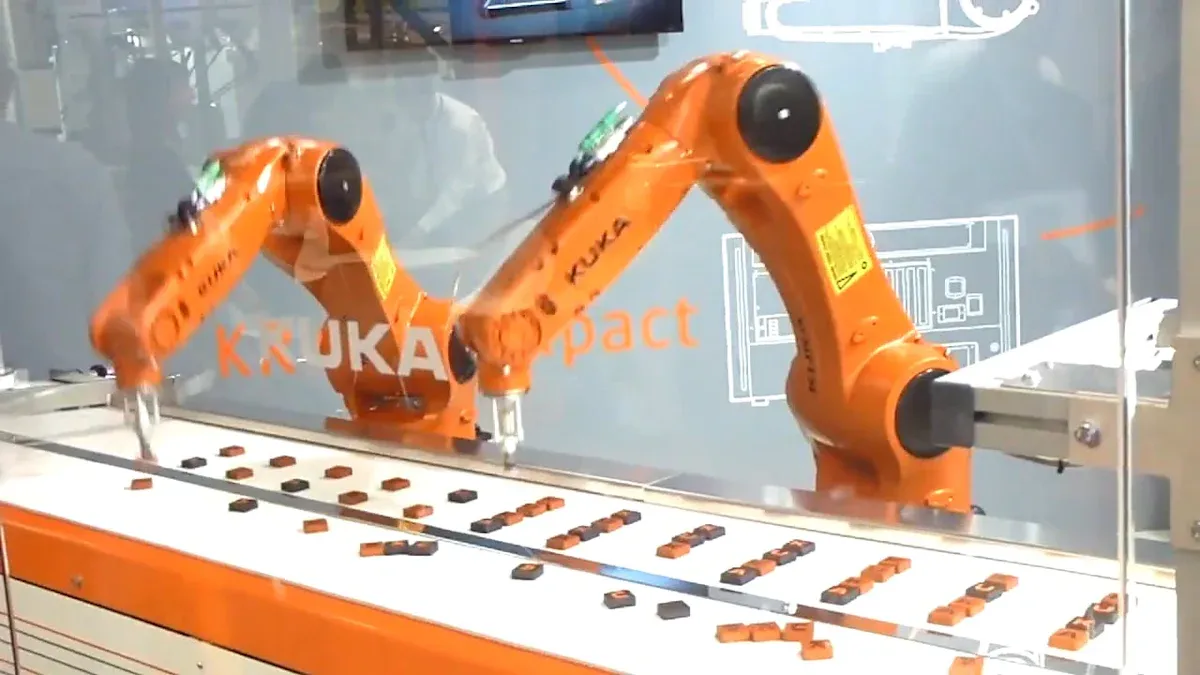
Chinese manufacturers boast advanced manufacturing capabilities, utilizing cutting-edge technologies to produce reliable fire safety solutions. Their facilities often feature state-of-art equipment.
- Industrial automation equipment: Provinces like Shandong are hubs for this technology. They apply it in various areas, including fire suppression robotics.
- Electronics integration: This is crucial for robotic systems, especially in Guangdong province, home to tech cities like Shenzhen and Guangzhou.
- Advanced manufacturing facilities: You find these modern factories in key production clusters such as Guangdong, Shandong, and Jiangsu provinces.
- Mature supply chains for robotics components: These same production clusters also have robust ecosystems for advanced manufacturing, ensuring a steady supply of parts.
These advanced technologies allow for precision manufacturing, faster production cycles, and consistent product quality. They also enable the production of complex and innovative fire fighting equipment.
Economies of Scale in Production
Economies of scale significantly reduce the unit cost of fire fighting equipment produced in China. Large manufacturers gain substantial cost advantages because they produce a wide range of products. This allows them to maximize production efficiencies. They can also cross-subsidize across different models. For instance, their extensive product range means they can share components and adapt to changing market demands. This leads to more efficient and cheaper operations.
Consider the difference between large and small manufacturers. Large companies, like Rosenbauer International AG, Pierce Manufacturing, and REV Group, produce diverse fire trucks—pumpers, ladders, rescue vehicles, and special airport types. This broad portfolio helps them achieve cost savings. In contrast, smaller manufacturers often specialize in a limited variety of products, such as basic pumper trucks. Their restricted product range limits their market scope. It also prevents them from taking advantage of the cost benefits that come with producing a wider array of models. This often results in higher production costs and reduced competitiveness for smaller players. Chinese OEM/ODM suppliers leverage these large-scale production benefits, passing the cost savings on to global buyers.
Innovation and Reliable Supply Chains for Fire Fighting Equipment
Technological Advancements in Equipment
Chinese OEM/ODM suppliers constantly push the boundaries of fire safety technology. They integrate advanced features into their products. For example, they offer various sophisticated fire suppression systems. These include HFC-227ea (FM200) products, like pipe network, cabinet, and automatic (ceiling type) systems. They also provide fire detection tube systems and automatic fire extinguishing pipes. You can also find Novec1230 and CO2 products. Furthermore, they supply inert gas systems such as IG541 (nitrogen), IG100 (nitrogen), and IG55 (argon) fire extinguishing systems.
These systems often feature built-in microprocessors and intelligent software for accuracy. They use 2 bus lines current PWM digital transmission technology for reliability. Automatic drift compensation and daily calibration ensure consistent performance. Suppliers also use special methods for damp-proof, antisepsis, and mildew-proof qualities. An inner mothproof net and shield cover add protection. SMT technology provides firmness, high security, and anti-jamming capabilities. SEMS screws make wiring easy. Many systems operate with 2-wire without polarity, simplifying installation. This integration of gas fire, automatic control, and fire detection reflects advanced technology and a reasonable structure. It offers convenient operation and simple maintenance.
Beyond traditional systems, Chinese manufacturers lead in smart fire protection. This is China’s future development direction. It uses wireless sensing and communication technology. The core idea involves feedbacking both normal working status information and alarm information from fire equipment. This shows a focus on comprehensive monitoring and rapid response. Manufacturers integrate IoT, cloud computing, and 5G technologies with traditional fire safety manufacturing. This aligns with China’s strategy to enhance fire prevention through early warning and intelligent systems. Li Ning, head of the electronics branch of the China Fire Protection Association, highlights how AI and big data revolutionize fire safety. They push the industry to new frontiers.
Companies like Tyee Fire Protection develop comprehensive fire emergency lighting and evacuation indication systems. They also offer automatic fire alarm systems, fire door monitoring systems, and advanced fire protection Internet of Things (IoT) platforms. Their products include intelligent fire detection systems for real-time monitoring and rapid response. EvolutionFire specializes in gas suppression systems and fire safety controls. They integrate cutting-edge technology for enhanced fire detection and suppression. They offer high-precision gas suppression systems with smart diagnostics for early fault detection. Shanghai Jindun Fire Safety Equipment Co., Ltd. manufactures intelligent firefighting vehicles and equipment. This includes fire trucks that use IoT and AI for real-time data transmission and remote control, as well as robot extinguishers. Shenzhen HTI Sanjiang Electronics Co., Ltd. offers fire protection solutions. These include fire alarm systems, gas extinguishing control systems, and fire safety IoT devices. They developed the LoRaWAN™ Wireless Fire Alarm System. It supports numerous wireless repeaters and nodes for real-time status updates and alerts. Ningbo Toman Import & Export Co., Ltd. produces certified smart fire alarms, extinguishers, and smoke detectors. These have advanced sensors and smart connectivity for quick detection and alerts. They meet global safety standards.
Efficient Global Logistics and Distribution
Chinese suppliers have built highly efficient global logistics and distribution networks. These networks ensure timely delivery of fire fighting equipment worldwide. Shanghai serves as a major hub for export-oriented suppliers. It has strong logistics networks. Industrial clusters across China also play a crucial role. These regions provide streamlined supply chains. They offer proximity to component suppliers, testing facilities, and logistics providers. This reduces lead times significantly.
Southern coastal regions like Guangdong and Fujian Provinces leverage their proximity to major ports. Shenzhen and Xiamen are examples. They also benefit from robust export networks. Shanghai and its surrounding areas host established players. These companies have expertise in international compliance and strong R&D capabilities. Coastal locations enable direct container shipping via sea freight. This reduces transit time and logistics complexity. Companies based in coastal areas also facilitate seamless coordination with freight forwarders and customs brokers. This minimizes delays in shipping.
Responsive OEM/ODM Customization
Chinese OEM/ODM suppliers excel at responsive customization. They understand that different markets and clients have unique needs. They accept both OEM (Original Equipment Manufacturer) and ODM (Original Design Manufacturer) orders. This means they can manufacture products based on a buyer’s specific designs and specifications. They can also design and manufacture products that buyers then brand as their own.
Customization options are extensive. For example, buyers can customize fire fighting suits. This includes specific materials, sizes, and features. Suppliers can also tailor the design and functionality of various products. This ensures the products perfectly match the client’s requirements. This flexibility allows global buyers to source specialized solutions. They can meet local regulations, climate conditions, or specific operational demands. This responsive approach makes Chinese suppliers valuable partners for businesses seeking bespoke fire safety solutions.
Chinese OEM/ODM suppliers consistently deliver high-quality, compliant, and innovative fire fighting equipment solutions. They offer these at competitive prices. Their robust manufacturing and reliable supply chains make them essential partners for global procurement. Choosing these suppliers gives a strategic advantage. It ensures access to cutting-edge fire safety technology and dependable service.
FAQ
Why do global buyers trust Chinese fire fighting equipment suppliers?
Global buyers trust them because they meet international safety standards. They also have strict quality control and hold many global certifications like UL, FM, and CE.
How do Chinese suppliers offer competitive prices for fire fighting equipment?
They achieve competitive prices through large-scale manufacturing and efficient production. This allows them to produce high-quality equipment at lower costs.
What kind of technological innovations do Chinese fire fighting equipment suppliers offer?
They offer advanced systems like smart fire protection and IoT integration. This includes intelligent fire detection, gas suppression, and robotic extinguishers. 🤖