
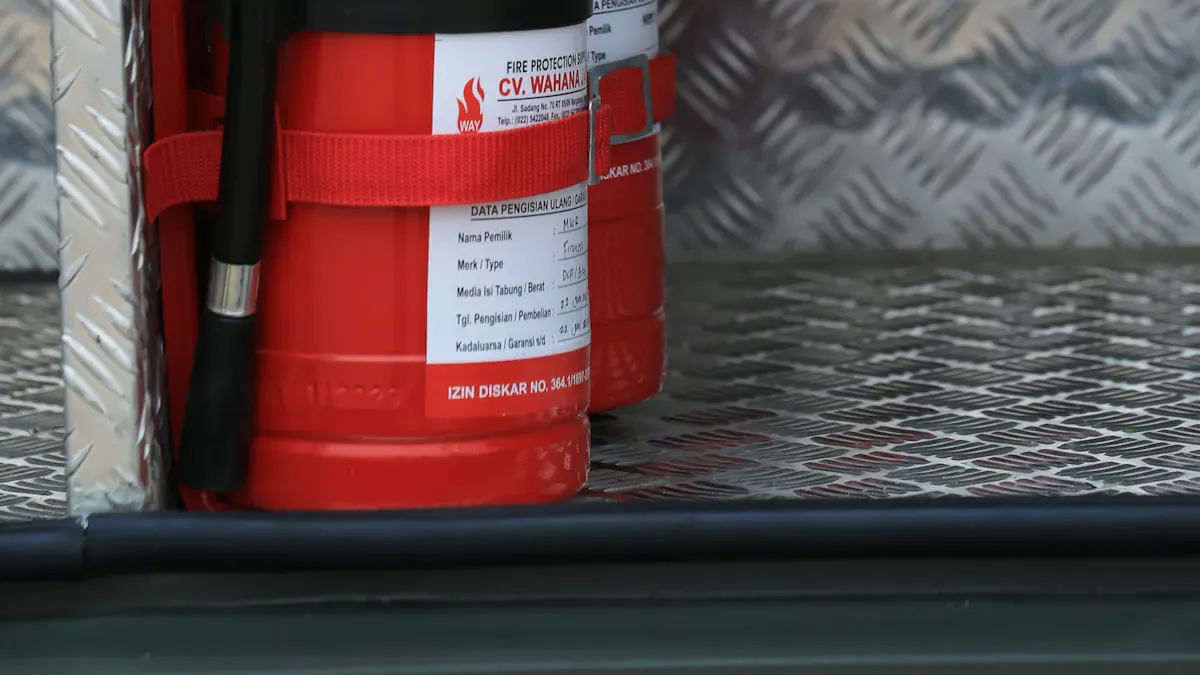
Fire safety holds paramount importance in industrial settings, where the risk of fire can lead to catastrophic outcomes. Fire extinguishers, including the ABC powder fire extinguisher and CO₂ fire extinguisher for factories, serve as critical tools, enabling quick responses to small fires before they escalate. According to the National Fire Protection Association (NFPA), most fires can be managed in their initial stages, significantly reducing potential fire-related losses. This rapid response capability protects both lives and property, underscoring the necessity for specific types of fire fighting equipment tailored to various hazards. Additionally, understanding why foam extinguishers are essential in warehouses is crucial for comprehensive industrial fire safety. Facilities must prioritize the selection of appropriate fire fighting equipment to ensure a safe working environment.
Key Takeaways
- Identify the right fire extinguishers for your facility. Different types address specific fire hazards, ensuring effective responses.
- Regularly inspect and maintain fire extinguishers. Monthly checks keep them fully charged and ready for emergencies.
- Train employees on fire extinguisher use. Proper training enhances preparedness and ensures safety during fire incidents.
- Consider multi-class extinguishers for versatility. They can handle various fire types, simplifying safety measures and training.
- Stay updated on fire safety regulations. Regular reviews of equipment and protocols ensure compliance and enhance workplace safety.
Class A Fire Extinguisher
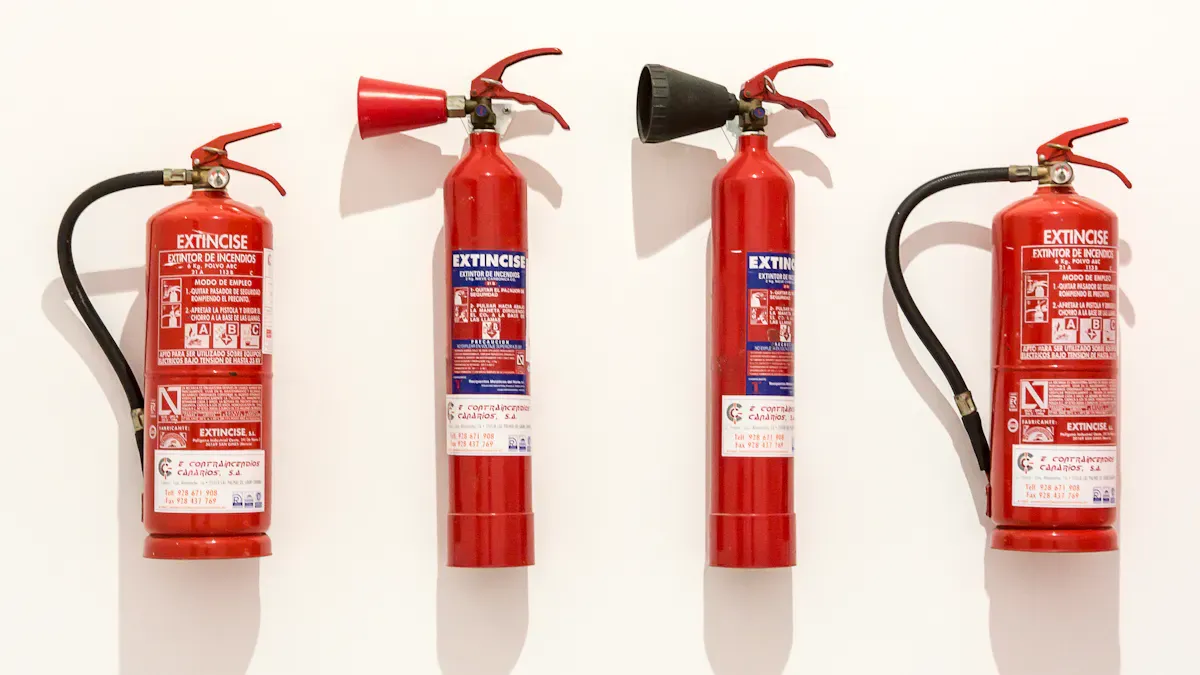
Class A fire extinguishers are essential for combating fires involving ordinary combustible materials. These materials include:
- Paper
- Wood
- Cloth
- Rubber
- Some plastics
In industrial facilities, these items often serve as the primary fuel for fires. Class A extinguishers effectively control fires by removing heat, cutting off oxygen, and stopping the chemical reactions that sustain flames. This makes them crucial for maintaining safety in environments where such materials are prevalent.
The effectiveness of Class A fire extinguishers is notable. They are specifically designed to tackle fires involving ordinary combustibles. Their operation relies on three key principles:
- Cooling: They lower the temperature of the burning material.
- Smothering: They displace oxygen around the fire.
- Interrupting the chemical reaction: They disrupt the process that keeps the fire burning.
Due to these mechanisms, Class A extinguishers can significantly reduce the risk of fire spread in industrial settings. Regular maintenance and proper training on their use are vital to ensure that employees can respond effectively in emergencies.
Class B Fire Extinguisher
Class B fire extinguishers are vital for fighting fires fueled by flammable liquids and gases. These extinguishers effectively combat fires involving:
- Petroleum-based products like gasoline and diesel
- Alcohol and alcohol-based solutions
- Oil-based paints
- Flammable gases such as propane and butane
- Lithium-ion batteries
In industrial environments, these materials frequently pose significant fire hazards. Class B extinguishers utilize various agents to suppress flames, making them essential for maintaining safety in facilities that handle these substances.
When comparing the effectiveness of Class B fire extinguishers to other types, it is crucial to understand their unique capabilities. The following table outlines how different extinguishers perform against Class B fires:
| Extinguisher Type | Effectiveness on Class B Fires | Limitations |
|---|---|---|
| Carbon Dioxide Extinguishers | Remove oxygen from the fire triangle, effective for small fires. | Limited to smaller fires, no cooling to prevent re-ignition. |
| Dry Chemical Extinguishers | Interrupt chemical reactions, effective for Class A, B, and C fires. | Can be corrosive and problematic. |
| Foam Fire Extinguishers | Forms a foam blanket, cuts off oxygen supply to prevent flames. | Messy and requires careful disposal. |
| Dry Powder Extinguishers | More suitable for metal fires (Class D), not versatile for Class B. | Less effective for flammable liquid fires compared to other types. |
| Multi-class F-500 EA | Tested for maximum performance, offers immediate knockdown and vapor-sealing feature. | None specified, designed for efficacy and environmental responsibility. |
Class B fire extinguishers play a crucial role in protecting industrial facilities from fire hazards. Regular training and maintenance ensure that employees can respond effectively in emergencies. Understanding the specific needs of a facility helps in selecting the right type of fire extinguisher, ultimately enhancing workplace safety.
Class C Fire Extinguisher
Class C fire extinguishers are crucial for addressing fires involving energized electrical equipment. These fires can occur in various industrial settings, where electrical systems are integral to operations. Common causes of Class C fires include:
- Faulty wiring
- Overloaded outlets
- Malfunctioning appliances
- Heating devices
- Overheating electronics
Class C fires involve energized electrical equipment, meaning the current flows through wiring, control panels, circuits, or outlets.
Using the correct fire extinguisher is vital when dealing with these types of fires. Employing the wrong extinguisher can lead to severe consequences, including electrical shock or equipment damage. Recommended extinguishers for Class C fires include carbon dioxide and dry chemical powder.
The following table outlines the properties and use cases for different extinguisher types in Class C fire scenarios:
| Extinguisher Type | Properties | Use Case for Class C Fires |
|---|---|---|
| Carbon Dioxide | Displaces oxygen, cools fire, leaves no residue | Ideal for electrical fires, prevents conduction risks |
| Dry Chemical Powder | Coats fuel, cuts off oxygen, prevents reignition | Effective for Class C fires, protects equipment |
| Water Mist | Uses deionized water, does not conduct electricity | Can safely cool and smother flames in electrical fires |
When using Class C fire extinguishers, follow these safety protocols:
- Use non-conductive agents to prevent electrical conduction.
- Ensure control over the power supply when dealing with electrical fires.
- Always assess the situation before attempting to extinguish the fire.
By adhering to these guidelines, industrial facilities can enhance their fire safety measures and protect both personnel and equipment from potential hazards.
Class D Fire Extinguisher
Class D fire extinguishers are essential for combating fires involving combustible metals. These fires can occur in various industrial environments, particularly where specific metals are present. Common metals that require Class D fire extinguishers include:
- Magnesium
- Titanium
- Sodium
These metals pose unique challenges during a fire. They can burn at extremely high temperatures, making them difficult to extinguish. Additionally, they react violently with water or standard extinguishing agents. Using water on these fires can lead to explosive reactions, worsening the situation.
Class D extinguishers utilize dry powder agents specifically designed to address these challenges. These agents create a barrier between the burning metal and oxygen, effectively smothering the flames and absorbing heat. This method is crucial for controlling metal fires safely and effectively.
When selecting a Class D fire extinguisher, facility managers should consider the specific types of metals present in their operations. Proper training for employees on the use of these extinguishers is vital. Understanding the unique properties of combustible metals can help staff respond effectively in emergencies.
Class K Fire Extinguisher
Class K fire extinguishers are specifically designed to combat fires that involve cooking oils and fats. These types of fires often occur in commercial kitchens and food processing facilities, where high-temperature cooking methods are prevalent. Common sources of Class K fires include:
- Vegetable oils
- Animal fats
- Cooking oils used in deep fryers
These fires can escalate quickly due to the flammable nature of the materials involved. Class K extinguishers utilize a special wet chemical agent that effectively cools and suppresses flames. This agent works by forming a barrier between the fuel and oxygen, preventing re-ignition.
When selecting a Class K fire extinguisher, facility managers should consider the following key features:
- Wet Chemical Agent: This agent is specifically formulated to handle high-temperature grease fires.
- Cooling Capability: The extinguisher cools the burning oil, reducing the risk of flare-ups.
- Ease of Use: Class K extinguishers are designed for quick deployment, allowing staff to respond promptly.
Tip: Regular training on the proper use of Class K extinguishers is essential. Employees should practice using these extinguishers to ensure they can act swiftly in an emergency.
In addition to having the right extinguishers, facilities must maintain them regularly. Inspections should occur at least once a month to ensure that the extinguishers are fully charged and ready for use. Proper signage indicating the location of Class K extinguishers can also enhance safety in the workplace.
By prioritizing the availability and maintenance of Class K fire extinguishers, industrial facilities can significantly reduce the risk of fire-related incidents in kitchens and food processing areas.
Multi-Class Fire Extinguisher
Multi-class fire extinguishers offer versatility in combating various types of fires. These extinguishers can address multiple fire classes, making them ideal for industrial facilities with diverse fire risks. By having a single extinguisher that can handle different fire types, facilities can streamline their fire safety measures.
The following table outlines the fire classes that multi-class extinguishers can effectively combat:
| Fire Class | Description | Suitable For |
|---|---|---|
| Class A | Water-based | Ordinary combustibles like wood and paper |
| Class B | Foam or dry chemical | Flammable liquids like gasoline and oil |
| Class C | CO₂ or dry chemical | Electrical fires |
| Class K | Wet chemical | Kitchen fires involving cooking oils |
Using multi-class fire extinguishers provides several advantages for industrial settings:
- Cost-Effective: Facilities can reduce costs by investing in fewer extinguishers while still ensuring comprehensive fire coverage.
- Space-Saving: Fewer extinguishers mean more available space for other essential equipment.
- Simplified Training: Employees can focus on learning how to use one type of extinguisher, enhancing their preparedness for emergencies.
Tip: Regular training sessions on the use of multi-class fire extinguishers are essential. Employees should practice using these extinguishers to ensure they can respond effectively in emergencies.
Water Mist Fire Extinguisher
Water mist fire extinguishers are innovative tools designed to combat fires effectively while minimizing damage to sensitive equipment. These extinguishers release microscopic water droplets that cool the fire and displace oxygen, suffocating the flames. They utilize de-ionized water, making them safe for use on electrical fires. This feature allows them to extinguish fires without the risk of electrical conduction.
The applications of water mist fire extinguishers in industrial environments are diverse. They are particularly effective in areas where both ordinary combustibles and electrical equipment are present. The following table outlines the main application areas and the fire classes supported by water mist extinguishers:
| Application Area | Fire Classes Supported | Description |
|---|---|---|
| MRI Rooms | A, C | Designed for sensitive environments, safe for electrical fires. |
| Offices | A, C | Versatile use in environments with ordinary combustibles and electrical equipment. |
| Areas with Sensitive Equipment | A, C | Effective in cooling and suffocating fires without damaging electronic devices. |
Despite their advantages, water mist fire extinguishers have limitations. They should not be used on flammable liquid fires, as this can lead to dangerous situations. However, they are safe for electrical fires due to their de-ionized water, which does not conduct electricity.
Foam Fire Extinguisher
Foam fire extinguishers are essential tools for industrial facilities, particularly in environments where flammable liquids and solid combustibles are present. These extinguishers effectively combat both Class A and Class B fires. They are particularly useful for:
- Class A Fires: These include solid combustibles like wood, paper, and fabric.
- Class B Fires: These involve flammable liquids such as gasoline, oil, and paint.
The foam created by these extinguishers forms a barrier that cuts off oxygen from the fire. This action cools the fuel and prevents re-ignition, making foam extinguishers versatile compared to water-only extinguishers.
Foam extinguishers utilize specialized agents like aqueous film-forming foam (AFFF) or film-forming fluoroprotein (FFFP). These agents work by creating a blanket over the fire, effectively smothering it. This blanket not only cuts off the oxygen supply but also cools the fuel source, which is crucial in preventing re-ignition. The dual-action approach of cooling and smothering enhances their effectiveness in industrial settings.
CO2 Fire Extinguisher
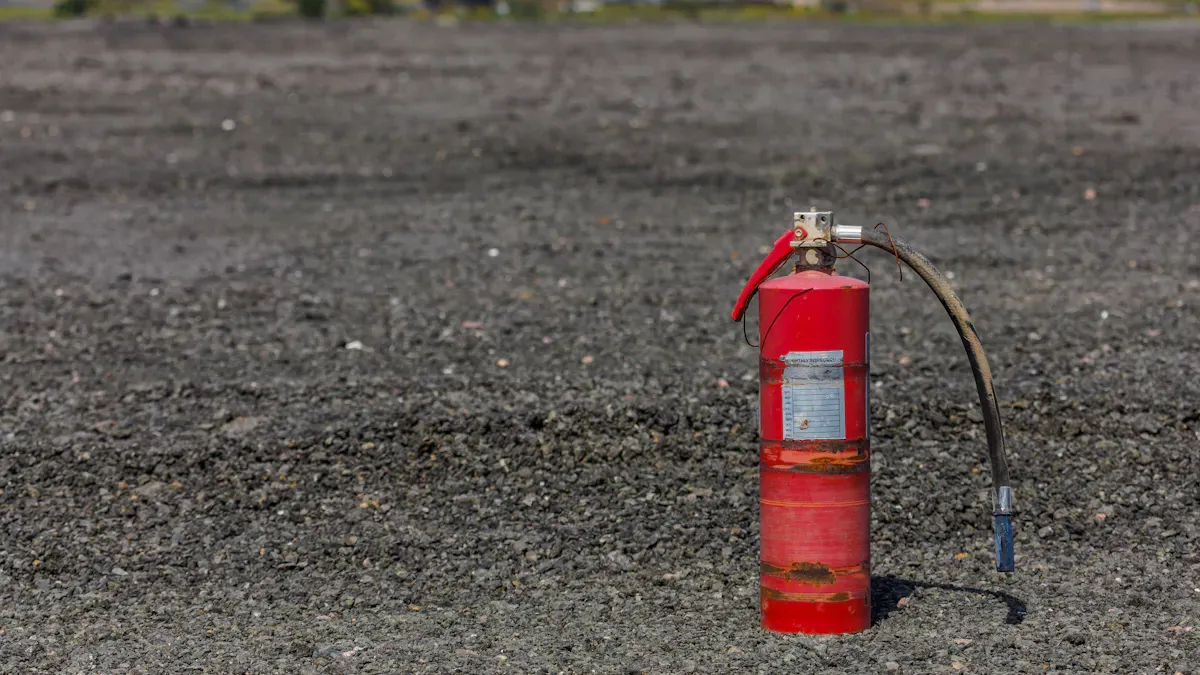
CO2 fire extinguishers are essential tools for fighting fires involving flammable liquids and electrical equipment. They work by displacing oxygen, which is crucial for combustion. This makes CO2 extinguishers particularly effective in environments where traditional extinguishing agents may pose risks, such as electrical fires.
The operation of a CO2 fire extinguisher involves releasing carbon dioxide gas, which cools the flames and suffocates the fire. This method prevents re-ignition, making CO2 extinguishers a reliable choice for industrial facilities. They are lightweight and easy to handle, allowing quick deployment during emergencies.
However, safety precautions are vital when using CO2 fire extinguishers, especially in confined spaces. Here are some important guidelines:
- Ensure prompt ventilation in confined spaces to dissipate hazardous atmospheres effectively, as CO2 is heavier than air.
- Always assess the area before deploying the extinguisher to avoid potential hazards.
- Train employees on the proper use of CO2 extinguishers to enhance their preparedness.
The following table summarizes the advantages and limitations of CO2 fire extinguishers:
| Advantages | Limitations |
|---|---|
| Leaves no residue, minimizing cleanup | Ineffective on Class A fires |
| Safe for electrical equipment | Limited range; requires close proximity |
| Lightweight and portable | Can cause frostbite if misused |
Clean Agent Fire Extinguisher
Clean agent fire extinguishers play a vital role in protecting sensitive electronic equipment in industrial facilities. These extinguishers utilize eco-friendly agents like FM-200, Novec 1230, and Inergen. They suppress fires effectively without leaving harmful residues, making them ideal for environments such as data centers and healthcare facilities.
The benefits of clean agent fire extinguishers include:
- Rapid Response: They provide a quick reaction to fires, crucial for minimizing damage to valuable equipment.
- No Residue: These extinguishers do not leave behind any residue, ensuring that electronic devices remain unharmed.
- Water Damage Prevention: They effectively suppress fires without the risk of water damage, which is essential for protecting sensitive technology.
In 2026, clean agent fire extinguishers are expected to comply with stringent environmental regulations. Their design minimizes environmental impact while ensuring efficient fire suppression. This compliance is crucial in sectors where traditional methods could cause significant damage. The use of clean agents aligns with the global shift towards sustainable fire suppression solutions.
When selecting a clean agent fire extinguisher, facility managers should consider the specific needs of their operations. Regular training on the proper use of these extinguishers is essential. Employees must understand how to deploy them effectively in emergencies. By prioritizing clean agent fire extinguishers, industrial facilities can enhance their fire safety measures while protecting valuable assets.
Tip: Ensure that all staff members are familiar with the location and operation of clean agent fire extinguishers. Regular drills can help reinforce their importance in fire safety protocols.
Having the right fire extinguishers is crucial for ensuring safety in industrial facilities. These tools are essential for addressing specific fire hazards effectively. Regular maintenance and staff training enhance preparedness and response during emergencies. Facility managers should take proactive steps to assess their fire safety equipment.
Consider the following actions:
- Conduct comprehensive fire risk assessments.
- Regularly test and inspect fire extinguishers.
- Train staff on emergency procedures and equipment usage.
By prioritizing these measures, facilities can significantly improve their fire safety protocols and protect their assets.
Tip: Regularly review and update fire safety equipment to comply with evolving regulations and best practices.
FAQ
What is the importance of having multiple types of fire extinguishers in an industrial facility?
Having multiple types of fire extinguishers ensures comprehensive coverage against various fire hazards. Different extinguishers target specific fire classes, enhancing safety and minimizing damage during emergencies.
How often should fire extinguishers be inspected?
Facilities should inspect fire extinguishers at least once a month. Regular checks ensure that extinguishers are fully charged, accessible, and in good working condition.
Can employees use any type of fire extinguisher on any fire?
No, employees must use the correct type of fire extinguisher for each fire class. Using the wrong extinguisher can worsen the situation or cause injury.
What training do employees need for using fire extinguishers?
Employees should receive training on identifying fire classes and using the appropriate extinguishers. Regular drills help reinforce their skills and preparedness for emergencies.
How can facilities ensure compliance with fire safety regulations?
Facilities can ensure compliance by conducting regular fire risk assessments, maintaining fire extinguishers, and providing ongoing training for staff. Staying updated on local regulations is also essential.