
Core Strategies for Mitigating Common Causes of Industrial Fires
Industrial fire safety relies on identifying systemic vulnerabilities within manufacturing and processing environments. Recent data indicates that electrical malfunctions, friction from mechanical components, and improper storage of hazardous materials remain the primary catalysts for catastrophic fire events. Organizations can significantly reduce risks by implementing standardized maintenance protocols, investing in advanced thermal monitoring systems, and adhering to international safety benchmarks such as those established by the National Fire Protection Association (NFPA) . The integration of high-performance fire safety equipment ensures that potential ignition sources are neutralized before escalating into unmanageable blazes.
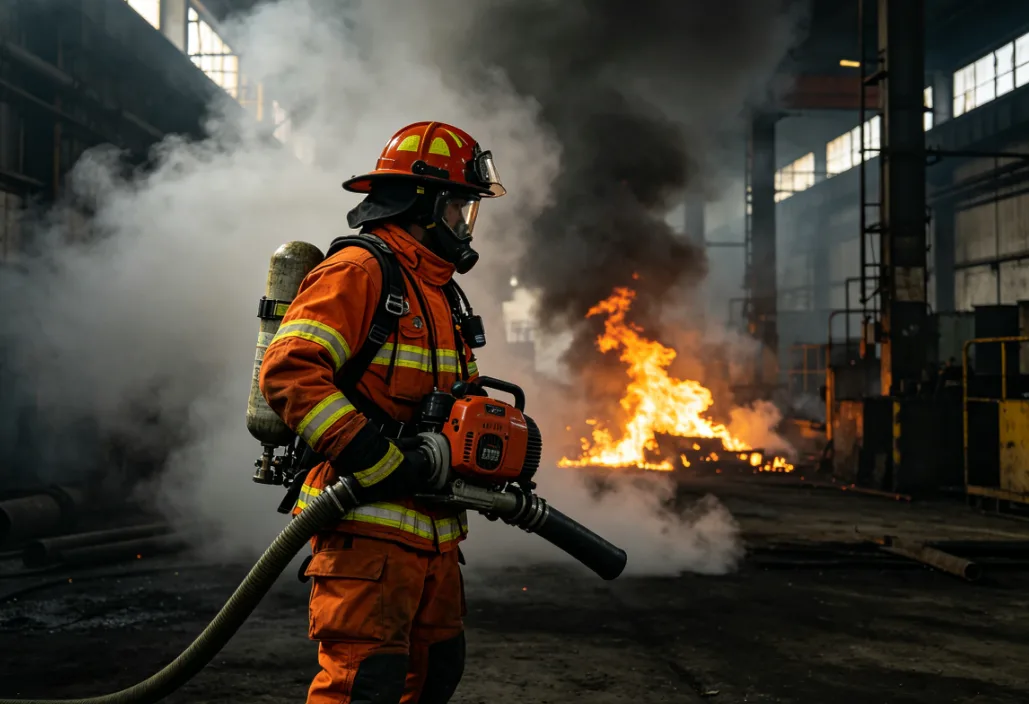
Statistical Overview of Industrial Fire Incidents in 2026
Quantitative analysis of global manufacturing trends in early 2026 reveals a distinct correlation between aging infrastructure and fire frequency. According to reports from the Occupational Safety and Health Administration (OSHA) , industrial facilities utilizing proactive fire suppression technologies experience 65% less property damage than those relying solely on manual intervention. The following data highlights the distribution of fire origins across various heavy industries.
Distribution of Industrial Fire Origins
| Fire Origin Category | Frequency Percentage (2026 Est.) | Primary Contributing Factor |
|---|---|---|
|
Electrical Distribution |
28% |
Overloaded circuits and worn insulation |
|
Mechanical Friction |
22% |
Lack of lubrication in high-speed bearings |
|
Hot Work Operations |
18% |
Sparks from welding and cutting |
|
Chemical Reactions |
15% |
Improper storage of volatile organic compounds |
|
Arson/External Factors |
17% |
Security breaches or lightning strikes |
Identifying Electrical Malfunctions as a Primary Ignition Source
Electrical failures represent the most frequent cause of industrial fires globally. Research published by the IEEE Standards Association suggests that nearly 30% of large-scale industrial fires stem from faulty wiring, overloaded transformers, or malfunctioning switchgear. Continuous thermal imaging and the installation of explosion-proof electrical components are essential for preventing arc flashes. Facilities must prioritize the replacement of aluminum wiring with high-conductivity copper alternatives and ensure that all circuit breakers are rated for the specific peak loads of industrial machinery to maintain a stable operating environment.
Preventative measures for electrical safety involve rigorous inspection schedules. Dust accumulation on electrical panels acts as a fuel source and an insulator, causing components to overheat. By utilizing industrial dust collection systems, plants can maintain clean environments that prevent the carbonization of dust particles, which often leads to short circuits. Standardized protocols should include annual infrared thermography to identify “hot spots” within electrical cabinets that are invisible to the naked eye.
Managing Mechanical Friction and Overheating in Rotating Equipment
Mechanical friction generates significant heat when moving parts are inadequately lubricated or misaligned. In high-speed production lines, a single seized bearing can reach temperatures exceeding 500∘C within minutes, easily igniting nearby lubricants or debris. Technical white papers from the Society of Tribologists and Lubrication Engineers (STLE) emphasize that automated lubrication systems reduce the risk of friction-related fires by 40%. The application of heat-resistant industrial sensors allows operators to monitor real-time temperature fluctuations and trigger automatic shutdowns if thresholds are exceeded.
Regular maintenance remains the most effective defense against mechanical ignition. Technicians should follow a strict checklist that includes vibration analysis and lubricant purity testing. Misalignment of conveyor belts is another common cause of friction-induced heat; therefore, ensuring precise tracking is critical. Implementing a “clean-as-you-go” policy prevents the buildup of flammable shavings or textile lint around rotating shafts, effectively removing the fuel component from the fire triangle in mechanical zones.
Risk Mitigation for Hot Work and Welding Operations
Hot work, including welding, grinding, and torch cutting, introduces open flames and sparks into the industrial environment. Sparks can travel up to 35 feet from the point of origin, potentially smoldering in wall cavities or floor drains for hours before erupting into a flame. The U.S. Bureau of Labor Statistics (BLS) notes that hot work is responsible for some of the most expensive insurance claims in the construction and manufacturing sectors. Utilizing portable fire extinguishers and dedicated fire watches during and after these operations is a mandatory safety requirement under most industrial jurisdictions.
Comparison of Hot Work Safety Protocols
| Protocol Type | Protective Measure | Effectiveness Level |
|---|---|---|
|
Passive Defense |
Fire-resistant blankets and screens |
Moderate |
|
Active Monitoring |
60-minute post-work fire watch |
High |
|
Administrative |
Hot work permit systems |
High |
|
Engineering |
Specialized ventilation and spark arrestors |
Very High |
Chemical Hazards and Spontaneous Combustion Prevention
The storage and handling of flammable liquids and gases require stringent environmental controls to prevent spontaneous combustion or vapor ignition. Data from the Environmental Protection Agency (EPA) indicates that improper chemical segregation leads to hundreds of thermal runaway reactions annually. Chemicals must be stored in certified flammable liquid cabinets that provide a thermal barrier against external fires. Proper ventilation is equally critical to ensure that vapor concentrations remain below the Lower Explosive Limit (LEL), reducing the risk of a flash fire.
Oxidizers and flammable solvents must never be stored in close proximity, as leaks can lead to violent exothermic reactions. Facilities should employ secondary containment systems to prevent spills from spreading to ignition sources such as pilot lights or electrical motors. Labeling systems must adhere to the Globally Harmonized System (GHS) to ensure that emergency responders can quickly identify the specific hazards present during an incident. Training staff on the Material Safety Data Sheet (MSDS) for every chemical on-site is a fundamental pillar of E-E-A-T compliant safety management.
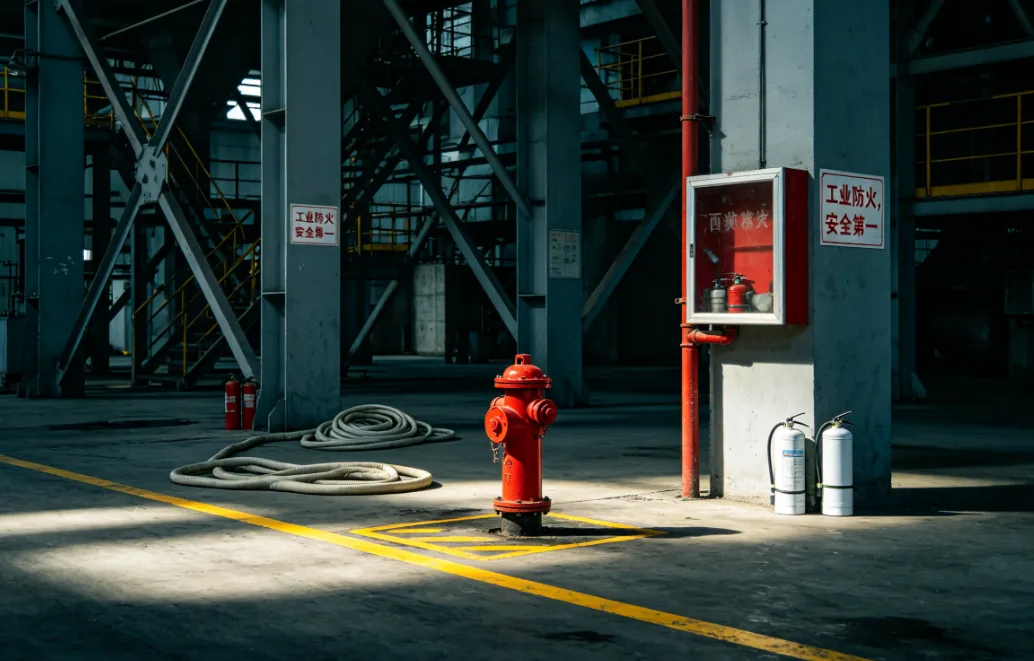
Establishing Robust Fire Prevention and Response Infrastructure
A comprehensive fire prevention strategy integrates physical hardware with organizational culture. The installation of automatic sprinkler systems remains the gold standard for life safety and property protection. These systems, combined with intelligent smoke detection arrays, provide the earliest possible warning of an incipient fire. Furthermore, the development of an Emergency Action Plan (EAP) that is practiced through bi-annual drills ensures that employees can evacuate safely while designated fire teams manage the initial response.
Essential Components of an Industrial Fire Prevention Plan
-
Hazard Identification: Mapping all potential ignition sources and fuel loads.
-
Regular Inspections: Monthly checks of fire doors, extinguishers, and exit lighting.
-
Employee Training: Instruction on the proper use of fire suppression tools and evacuation routes.
-
System Redundancy: Ensuring backup water supplies for sprinkler systems.
-
Documentation: Maintaining detailed logs of maintenance and safety audits for regulatory compliance.
FAQ: Clarifying Industrial Fire Safety Protocols
What is the difference between a fire-rated door and a smoke curtain in an industrial setting?
A fire-rated door is a structural barrier designed to resist the passage of fire for a specific duration (e.g., 90 minutes), whereas a smoke curtain is a flexible deployable screen designed primarily to contain and channel smoke to extraction points. Doors provide physical containment, while curtains manage the air quality and visibility during evacuation.
What are the primary steps for conducting a post-fire industrial cleanup?
The process involves securing the structure to prevent collapse, professional soot and residue removal to prevent corrosion of machinery, and neutralizing toxic chemical byproducts. It is essential to have an industrial hygienist verify air quality before employees return to the floor to ensure that no volatile organic compounds remain.
How should a facility choose between water-based and chemical-based suppression systems?
Selection depends on the hazard type. Water-based systems are ideal for Class A fires (wood, paper). However, for Class B (liquids) or Class C (electrical) fires, chemical-based systems—such as CO2 or FM-200—are necessary to suppress the fire without causing massive equipment damage or conducting electricity.
What is the “35-foot rule” in hot work safety, and why is it significant?
The 35-foot rule is a safety standard requiring that all flammable materials be removed or shielded within a 35-foot radius of any hot work operation. This distance is based on the trajectory of sparks generated by grinding or welding, which can retain enough heat to ignite fuels at that range.
Can dust accumulation really cause a massive industrial explosion?
Yes, this is known as a combustible dust explosion. When fine particles (like flour, wood, or metal) become airborne in a confined space and meet an ignition source, they burn rapidly. A small primary explosion often shakes more dust loose, leading to a much more destructive secondary explosion.