
A fire hose reel placement plan should ensure quick access, full coverage of fire-risk zones, safe user movement, and compliance with building fire codes. Incorrect fire hose reel placement can leave dead zones, block escape routes, or delay first response during early-stage fires. Correct placement normally prioritizes corridors, exits, stair lobbies, production areas, and other visible circulation points. According to the National Fire Protection Association (NFPA), accessible first-aid firefighting equipment remains an important part of layered building fire protection. The main placement goals are visibility, reach distance, unobstructed access, and adequate water supply performance.
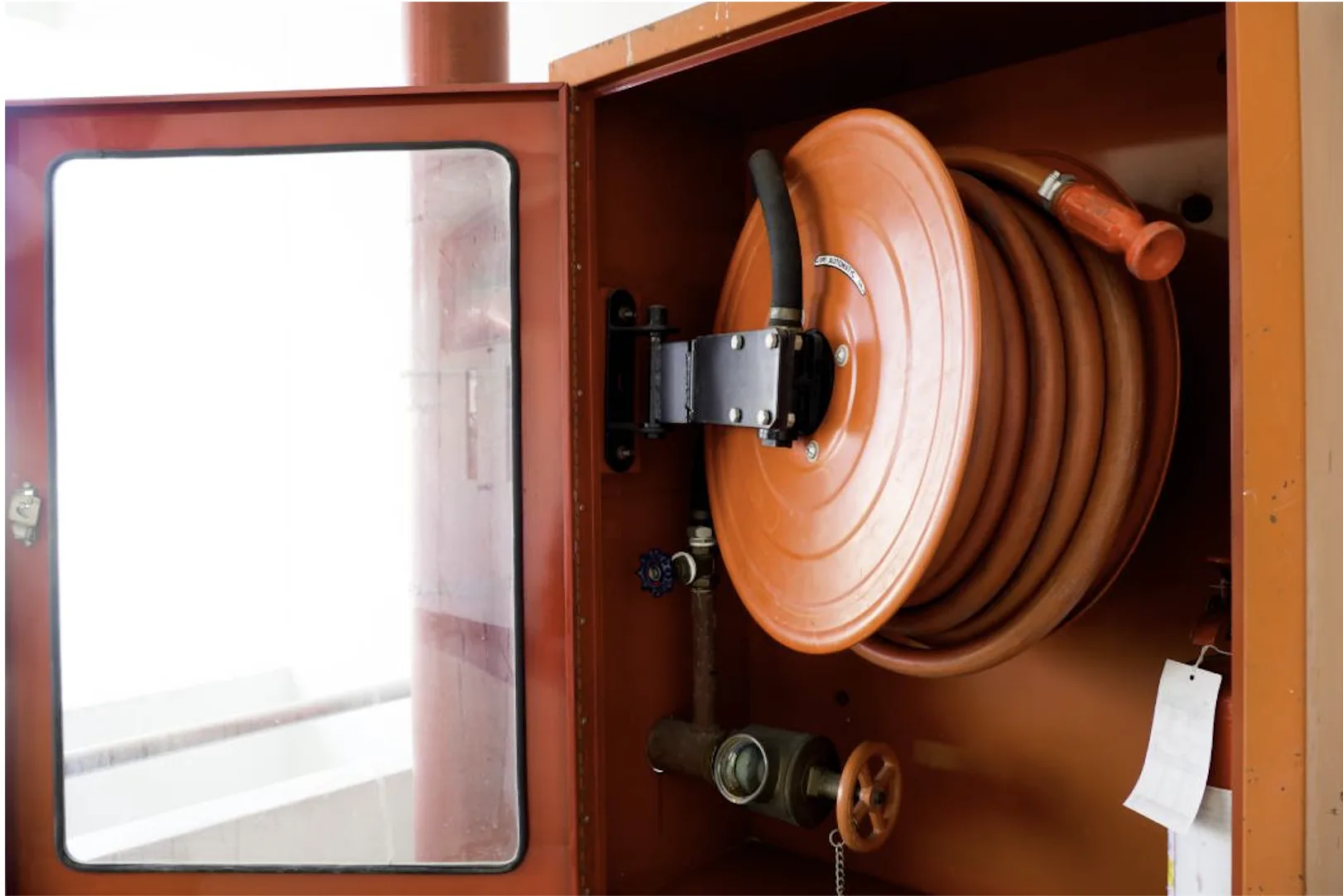
Fire Hose Reel Placement Basics in Commercial Buildings
A fire hose reel is a fixed firefighting device connected to a water supply and designed for Class A combustible fires such as paper, wood, and fabric. Placement determines whether the equipment can be reached quickly and used safely before fire growth accelerates.
Poor fire hose reel placement often creates these problems:
-
Equipment hidden behind storage items
-
Hose unable to reach protected areas
-
Cabinet door blocked by walls or columns
-
Users forced to move toward smoke zones
-
Difficult maintenance access
Many projects install fire hose reel cabinet systems because cabinet placement improves visibility and protects the hose reel from damage.
Where Should Fire Hose Reels Be Located?
The best fire hose reel locations are areas with regular visibility, direct access, and safe travel paths. Building occupants should locate the reel without searching during an emergency.
Common placement zones include:
-
Main corridors
-
Stair landing lobbies
-
Exit route intersections
-
Warehouse aisle entries
-
Loading dock access points
-
Factory production perimeter zones
-
Parking garage pedestrian paths
The U.S. Fire Administration supports clear emergency equipment access because delayed response can increase fire spread. For corridor installations, many facilities choose wall mounted fire hose reel units.
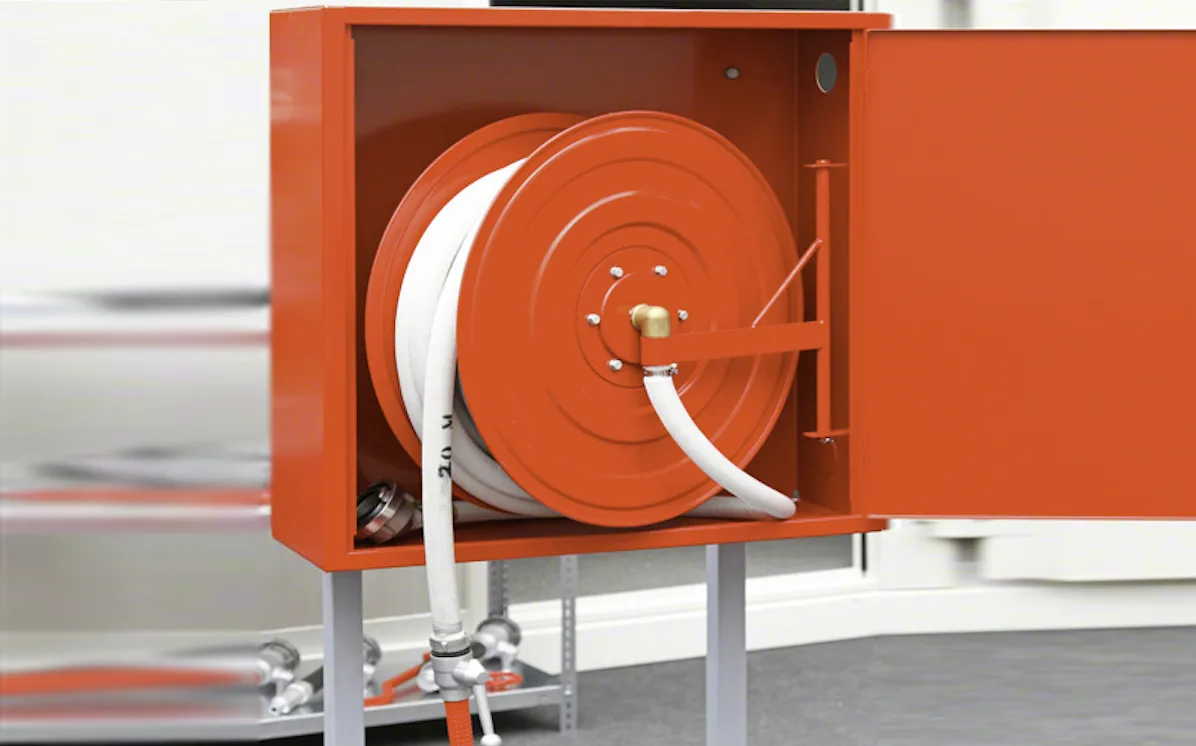
Fire Hose Reel Coverage Distance and Reach Planning
Fire hose reel placement must consider hose length plus effective nozzle stream reach. A reel placed too far from risk areas may technically exist on the floor but still fail practical coverage needs.
| Planning Factor | Why It Matters | Typical Consideration |
|---|---|---|
|
Hose Length |
Physical reach |
20 m–36 m common range |
|
Nozzle Reach |
Final attack distance |
Pressure dependent |
|
Obstacles |
Limits movement |
Racks, walls, machinery |
|
Travel Route |
User access speed |
Clear corridor path |
The National Institute of Standards and Technology (NIST) has repeatedly highlighted the importance of early intervention tools during manageable fire conditions.
Large floor plates often use multiple commercial fire hose reel systems rather than relying on one centrally placed unit.
Fire Hose Reel Placement Near Exits and Escape Routes
Placing a fire hose reel near exits can improve access because occupants already know exit locations. However, placement should not block evacuation movement or narrow required egress width.
Best practice principles:
-
Position beside exits, not in the exit path
-
Maintain door swing clearance
-
Keep signage above visual obstacles
-
Avoid placement behind open doors
-
Preserve wheelchair and stretcher routes
The OSHA emphasizes unobstructed emergency access routes in workplaces. Buildings often combine reels with fire safety cabinet assemblies for organized exit-zone protection.
Fire Hose Reel Placement in Warehouses and Factories
Industrial buildings need different placement logic because racks, machinery, forklifts, and production lines can block access. Hose reels should be visible from operational aisles and protected from collision damage.
| Industrial Zone | Placement Priority | Main Risk |
|---|---|---|
|
Warehouse Aisles |
Aisle entrances |
Rack obstruction |
|
Production Lines |
Perimeter walls |
Heat exposure |
|
Loading Docks |
Door-side walls |
Vehicle impact |
|
Utility Rooms |
Near entry door |
Limited access |
The NIOSH recommends hazard-specific workplace safety planning, including emergency equipment access.
Many industrial sites install industrial fire hose reel systems with reinforced cabinets.
Fire Hose Reel Placement Height and Visibility
Placement height affects whether occupants can operate the valve and unwind the hose quickly. A hose reel mounted too high may reduce accessibility. A hose reel mounted too low may be damaged by carts or cleaning equipment.
Recommended height principles:
-
Valve reachable from standing position
-
Hose can unwind without floor drag
-
Cabinet label visible at approach distance
-
No hidden placement behind columns
-
Lighting sufficient during power loss conditions
For high-traffic corridors, many managers prefer recessed fire hose reel cabinets to reduce protrusion.
Common Fire Hose Reel Placement Mistakes
Several avoidable mistakes reduce real-world usefulness even when equipment is code listed.
-
Installing inside locked rooms
-
Blocking with furniture or pallets
-
Placing behind decorative wall panels
-
Ignoring machinery growth after retrofit
-
Using one reel for oversized floor areas
-
Locating next to high heat sources
The FEMA promotes preparedness measures that improve building emergency readiness. During upgrades, many owners add fire hose reel replacement parts and new signage.
How Many Fire Hose Reels Does a Building Need?
The number of reels depends on floor area, layout complexity, compartment walls, hazard load, and local regulations. Long corridors or separated rooms often require multiple units even on a modest floor plate.
| Building Type | Typical Need Pattern | Design Driver |
|---|---|---|
|
Office Floor |
Corridor based |
Travel distance |
|
Warehouse |
Multi-zone |
Obstructions |
|
Hotel |
Per level |
Room layout |
|
Factory |
Risk-area based |
Process hazards |
For integrated systems, some projects source building fire protection equipment together with hose reels, alarms, and extinguishers.
Fire Hose Reel Inspection After Placement
Correct placement should be reviewed after occupancy changes. Shelving, partitions, and furniture can create new obstructions over time.
Inspection checklist:
-
Access path remains clear
-
Signage visible from corridor
-
Hose reaches target zones
-
Cabinet door opens fully
-
Lighting still adequate
-
Nearby storage not combustible overload
Periodic review is often more valuable than one-time placement approval.
FAQ
1. Can a fire hose reel be placed inside a storage room?
Usually this is a poor choice unless the room remains unlocked, visible, and always accessible. Storage rooms often become blocked with materials, reducing emergency access speed and increasing operational delay.
2. Should fire hose reels always be near exits?
Near-exit placement is common because exits are easy to locate, but the reel must not obstruct evacuation routes. Final placement should balance access, coverage, and egress safety rather than relying only on exit proximity.
3. How far apart should fire hose reels be placed?
Spacing depends on hose length, stream reach, floor obstacles, and local code requirements. Coverage analysis is more accurate than fixed spacing rules because two identical buildings can need different layouts.
4. Can building renovations affect fire hose reel placement?
Yes. New partitions, shelving, machinery, or decorative walls can create dead zones and blocked access. Any renovation should include a fire hose reel coverage review and updated life-safety drawings.
5. Is corridor placement better than room placement?
In many buildings, corridor placement improves visibility and shared access across multiple rooms. However, very high-risk rooms may need dedicated nearby protection depending on occupancy hazards and code requirements.