
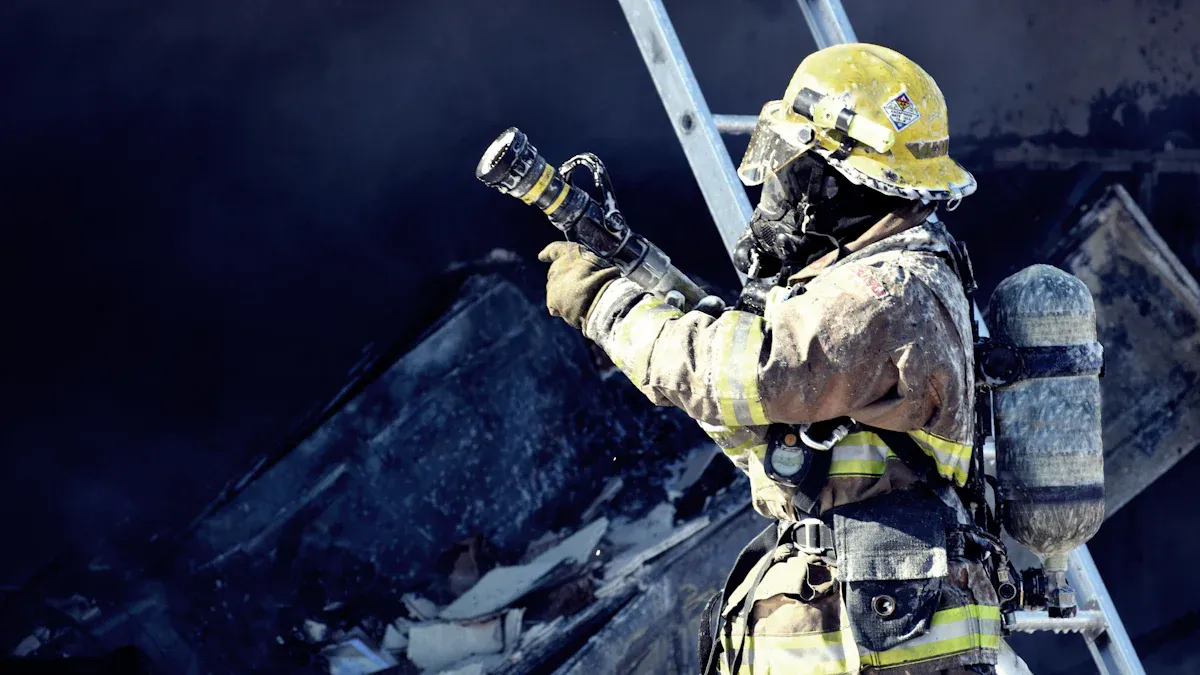
Choosing the right fire fighting equipment is essential for ensuring the safety and effectiveness of the team. Proper fire safety equipment enhances safety knowledge, which directly impacts PPE-related behaviors. Fire extinguishers, particularly CO2 fire extinguishers, are critical in protecting firefighters. By prioritizing the appropriate gear, health outcomes for the entire team can be significantly improved.
Key Takeaways
- Prioritize safety by selecting firefighting gear that meets NFPA standards and local regulations. This ensures compliance and enhances team protection.
- Choose gear that fits well and is made from breathable, durable materials. Proper fit improves mobility and reduces heat stress during operations.
- Gather feedback from firefighters on gear performance. Involving the team in the selection process leads to better comfort and operational effectiveness.
Understanding Safety Standards
NFPA Guidelines
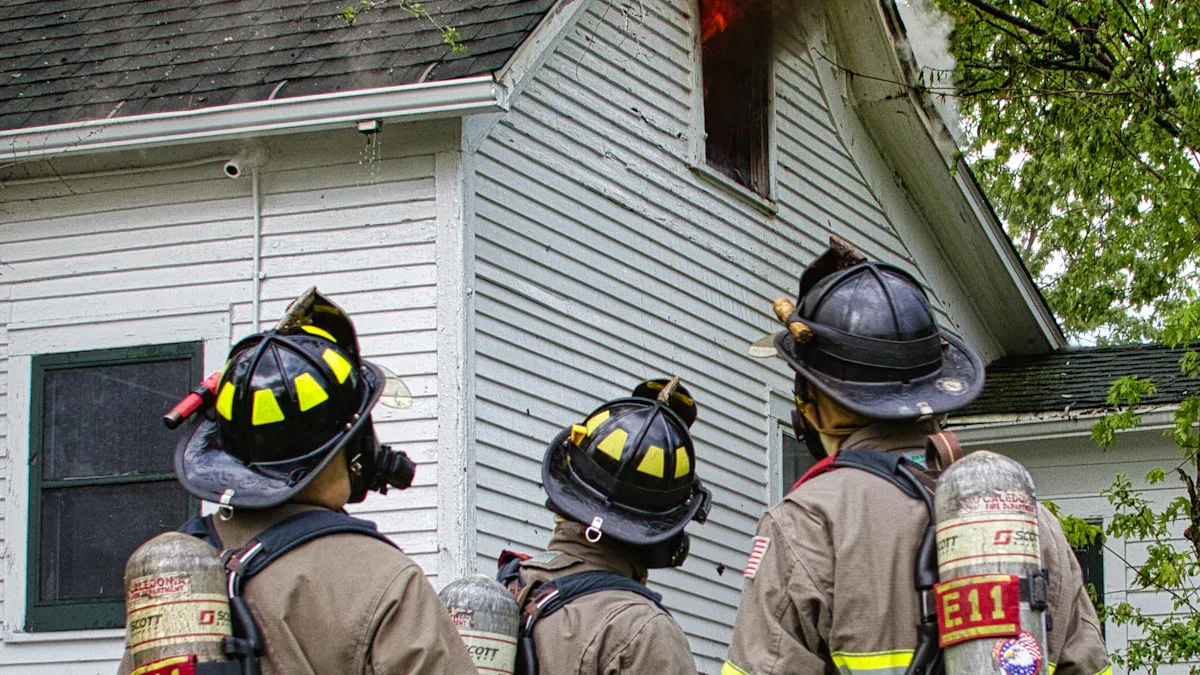
The National Fire Protection Association (NFPA) sets critical standards for firefighting gear, ensuring safety and performance. As of 2026, several updates to the NFPA 1970 standard have emerged, reflecting the evolving needs of firefighting professionals. Key updates include:
- Stricter rules on restricted substances, particularly per- and polyfluoroalkyl substances (PFAS).
- New requirements for cleanability and contamination resistance, ensuring that gear can be effectively cleaned after exposure to hazardous environments.
- Revised tests for breathability, which help mitigate heat stress while maintaining protective capabilities.
- An emphasis on performance over the service life of gear, particularly after exposure to various conditions.
- Enhanced sizing and fit requirements to accommodate new materials and ensure a better fit for firefighters.
- More detailed labeling requirements for transparency regarding chemical content.
These updates signify a shift towards prioritizing firefighter health and safety, making compliance with NFPA standards essential for all fire departments.
Local Regulations Compliance
In addition to NFPA guidelines, local regulations play a crucial role in determining the appropriate firefighting gear. Fire departments must ensure compliance with these regulations to maintain operational effectiveness and safety. Key considerations include:
- Understanding Local Laws: Each state or municipality may have specific laws governing the use of firefighting equipment. Departments should familiarize themselves with these regulations to avoid penalties.
- Regular Training: Firefighters must receive ongoing training to stay updated on local compliance requirements. This training should cover the latest gear specifications and safety protocols.
- Documentation: Maintaining accurate records of gear inspections and compliance checks is vital. This documentation can serve as proof of adherence to local regulations during audits or inspections.
By aligning with both NFPA guidelines and local regulations, fire departments can ensure that their teams are equipped with the best fire fighting equipment available, ultimately enhancing safety and performance on the job.
Assessing Risks and Needs
Identifying Hazards
Firefighting teams encounter various hazards depending on their operational environment. Understanding these hazards is crucial for selecting appropriate fire fighting equipment.
-
Industrial Hazards:
- Industrial firefighters face risks from volatile substances, high-pressure systems, and complex machinery.
- The presence of flammable materials and chemicals significantly increases the risk of fire in industrial settings.
- Heavy equipment in these environments poses additional challenges during firefighting operations.
-
Residential Hazards:
- Residential firefighting teams typically deal with less complex environments, focusing on structural fires and rescue operations.
- Common hazards include smoke inhalation and the risk of structural collapse, although they generally lack the high-risk materials found in industrial settings.
By identifying these hazards, fire departments can tailor their gear selection to meet the specific challenges their teams face.
Evaluating Team Structure
The structure of a firefighting team directly influences the types of gear required for optimal safety and performance. Each role within the team has unique responsibilities that necessitate specific gear features.
- Properly fitting personal protective equipment (PPE) enhances movement and reduces physiological stress for all firefighters, regardless of their specific roles.
- Ergonomic design in gear, such as flex points and elasticized materials, facilitates natural movement, reducing strain during firefighting operations.
- Gear that fits well can boost firefighter morale and job satisfaction, leading to improved performance on the fire ground.
Understanding the team structure allows fire departments to select gear that not only meets safety standards but also supports the operational effectiveness of each firefighter.
Selecting Fire Fighting Equipment Styles
Types of Gear
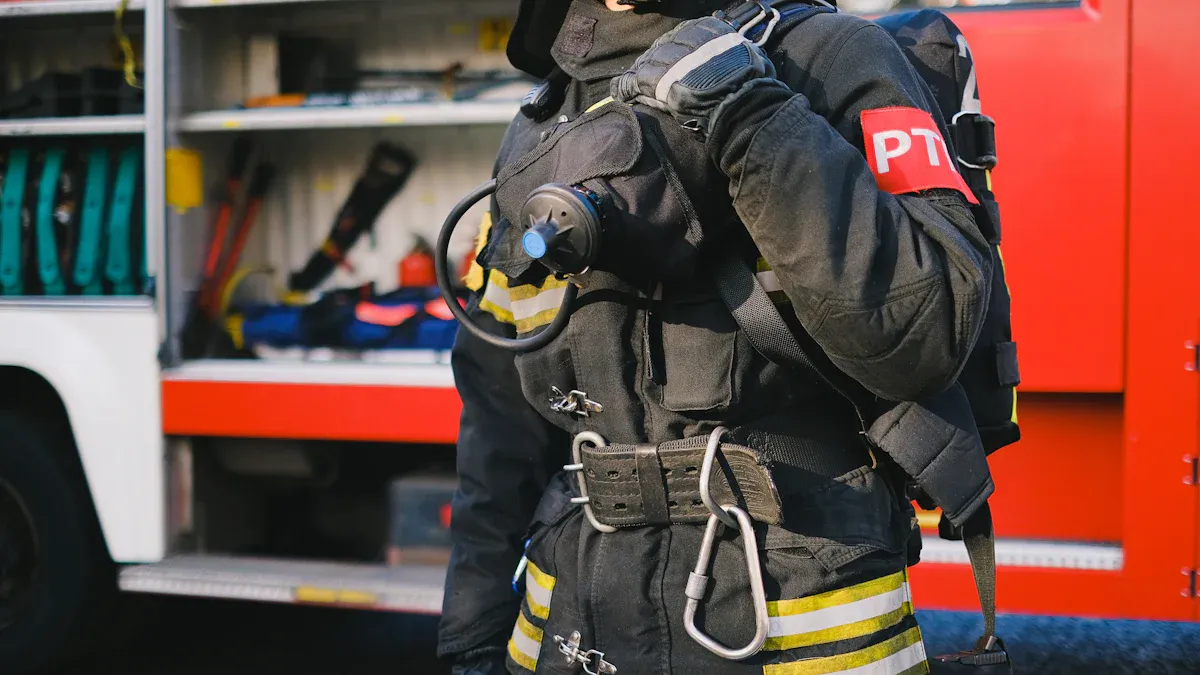
Firefighting gear comes in various styles, each designed for specific applications. Understanding these categories helps teams select the right equipment for their unique challenges. The following table outlines two primary types of firefighting suits:
| Feature | Fire Entry Suits | Fire Proximity Suits |
|---|---|---|
| Primary Purpose | Direct exposure to flames or flashover | Protection from radiant heat near fire |
| Exposure Type | Flame engulfment, molten metal splash | Radiant and convective heat exposure |
| Outer Fabric | Z-Flex® Aluminized Glass Fabric | Z-Flex® II Aluminized Zetex® Fabric |
| Construction | Multi-layer insulation system | Single or multi-layer (depending on model) |
| Mobility | Limited, designed for short-duration use | High, suitable for extended operations |
| Typical Applications | Fire entry, kiln maintenance, and emergency rescue | Foundries, ARFF, furnace work, metal pouring |
Additionally, specialized gear addresses unique operational challenges. For instance, wildland firefighters require clothing that meets CGSB and NFPA standards. This compliance ensures protection against intense radiant heat and vertical flammability.
Essential Modern Features
Modern firefighting gear must incorporate several essential features to enhance safety and functionality. Key attributes include:
- Durability: High-quality materials withstand harsh conditions.
- Organization: Multiple compartments and easy-access pockets facilitate quick gear retrieval.
- Safety Enhancements: Reflective trim and high-visibility colors improve visibility in low-light situations.
- Functionality: Features like wheels and ergonomic handles simplify transport.
Moreover, integrated communication systems and thermal imaging capabilities significantly enhance gear performance. These technologies improve situational awareness and allow firefighters to coordinate effectively in real-time. They also enable firefighters to see in low visibility conditions, enhancing safety during operations.
By selecting the right types of gear and ensuring modern features are included, firefighting teams can optimize their performance and safety in the field.
Learning About Materials
Fire-Resistant Fabrics
Firefighting gear relies heavily on fire-resistant fabrics to ensure safety and comfort. The most widely used materials include:
- Sigma: This fabric combines 45% meta-aramid, 32% Lenzing® FR, 17% polyamide, and 6% para-aramid. It offers excellent flash and thermal protection while maintaining durability and comfort.
- Kevlar: Known for its high melting point, Kevlar provides exceptional thermal protection. Firefighters commonly use it in gloves and hoods to resist heat and flames.
- Tecasafe® Plus: This fabric features COOLDERM technology, which wicks moisture and provides evaporative cooling. It is ideal for high-heat environments.
- CarbonX: Made from oxidized polyacrylonitrile fibers, CarbonX offers flame resistance and high-temperature protection, making it suitable for hoods and gloves.
Advancements in fire-resistant fabric technology significantly enhance firefighter safety and comfort. For instance, flame-retardant fabrics can withstand temperatures exceeding 1000°F, which is crucial for protecting firefighters in extreme conditions. Additionally, smart gear now monitors hazards and physiological conditions, improving decision-making during emergencies.
Durability Considerations
Durability is a critical factor when selecting firefighting gear materials. Fire departments evaluate several benchmarks to ensure longevity and performance. Key parameters include:
| Parameter | Verification Method |
|---|---|
| Mechanical resistance of fabrics and seams | Abrasion resistance tests assess material durability against rough surfaces. |
| Tensile strength | Determines the maximum force a fabric can withstand before breaking. |
| Tear strength | Tear tests evaluate how easily an existing cut enlarges under load. |
| Seam strength | Ensures seams hold layers together under stress. |
| Resistance to pilling | Assesses the tendency of fabric surfaces to form balls when rubbed. |
| Thermal resistance | Evaluates resistance to flame and thermal radiation. |
The expected lifespan of firefighting gear materials influences procurement decisions. The NFPA 1851 recommends a ten-year retirement timeframe for gear, impacting budget planning. Investing in durable gear can reduce long-term costs, making it essential for fire departments operating within budget constraints.
Evaluating Options
Comparing Brands
When selecting firefighting gear, comparing brands is essential for ensuring safety and reliability. Recent industry reviews highlight several brands that consistently receive high ratings:
- eWorldtrade
- Tyco Fire Protection Products
- Siemens Fire Safety
- Honeywell Fire Systems
- Kidde Fire Safety
- Ansul
- Minimax
- Securiton
- Gamewell-FCI
- Firecom
These brands have established themselves as leaders in the market, offering durable and effective fire fighting equipment. However, departments must also consider the costs associated with maintenance and replacement cycles. Timely replacements can protect lives and improve service while ultimately saving money. Factors such as regional differences and maintenance practices significantly influence these decisions.
Seeking Team Feedback
Gathering feedback from firefighters is crucial for selecting the right gear. Effective methods include:
- Organizing ‘Experience Days’ where firefighters can test gear in real-world conditions.
- Utilizing survey platforms like Zigpoll to collect insights on gear comfort.
- Analyzing feedback on competitor gear to identify performance gaps.
Incorporating team feedback not only enhances gear comfort but also influences purchasing decisions. As noted, support team marketing acts as a strategic catalyst for growth, empowering staff to guide choices through expert communication and trust-building interactions.
By evaluating options through brand comparisons and team feedback, fire departments can make informed decisions that prioritize safety and operational effectiveness.
Choosing the right firefighting gear requires careful consideration of several factors. Fire departments must prioritize:
- Safety: Advanced materials enhance protection and reduce risks.
- Comfort: Breathable fabrics and proper fit support mobility and reduce heat stress.
- Team Needs: Gear should align with specific operational requirements.
Investing in thorough research and selection leads to improved safety and operational efficiency, ultimately benefiting both personnel and budget.
FAQ
What is the lifespan of firefighting gear?
Firefighting gear typically has a lifespan of ten years, according to NFPA 1851 guidelines. Regular inspections can help determine if gear needs replacement sooner.
How often should gear be inspected?
Fire departments should inspect gear at least once a year. Regular checks ensure compliance with safety standards and identify any wear or damage.
Can firefighters customize their gear?
Yes, firefighters can customize gear to fit their specific needs. Customization may include adjustments for fit, additional pockets, or specialized features for unique environments.