
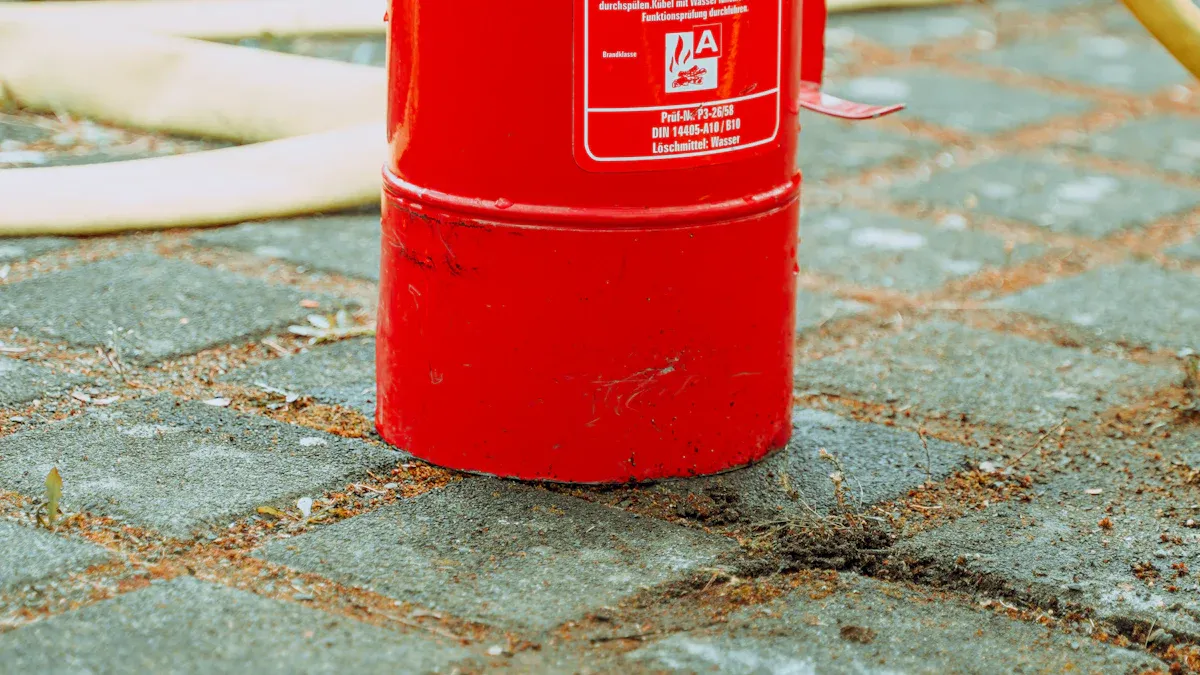
UL/FM certifications are non-negotiable for fire extinguishers; they establish the baseline for safety and compliance. For fire fighting equipment manufacturing, understanding selection criteria beyond these basic approvals is crucial. This ensures reliable fire safety solutions for global fire safety procurement, from a fire hose nozzle to UL/FM/CE certified fire equipment.
Key Takeaways
- UL and FM certifications mean fire extinguishers are safe and work well. These approvals show the equipment passed tough tests.
- Match the fire extinguisher to the type of fire. Different fires need different extinguishers to put them out safely.
- Install fire extinguishers correctly and check them often. Also, train people how to use them so they are ready for an emergency.
Understanding UL and FM Certifications for Fire Fighting Equipment
Choosing the right fire fighting equipment goes beyond just picking a device. It involves understanding the rigorous testing and certification processes that ensure these tools perform when lives depend on them. Two of the most respected names in this field are Underwriters Laboratories (UL) and Factory Mutual (FM) Approvals. They set the benchmarks for safety and reliability in fire protection.
What UL Certification Signifies
Underwriters Laboratories, or UL, has a long history of working for a safer world. It began in 1894, evolving from the Underwriters’ Electrical Bureau. Initially, UL focused on electrical safety because electricity caused many fires in the late 19th century. However, its mission quickly grew. For example, William Henry Merrill Jr., UL’s founder, inspected electrical installations at the 1893 World’s Columbian Exposition. This showed how important electrical safety testing was. Soon after, UL expanded its work to include devices that stop fire, like fire extinguishers, and those that resist fire, such as fire doors. This foundational work in fire and electrical safety has continued for over 130 years.
When a fire extinguisher carries UL certification, it means the product has undergone extensive testing to meet strict safety and performance standards. UL evaluates various aspects of fire fighting equipment. They look at specific standards for different extinguishing agents:
- Water-Based Agent Fire Extinguishers: ANSI/UL 8 CAN/ULC-S554
- Carbon-Dioxide Fire Extinguishers: ANSI/UL 154 CAN/ULC-S503
- Dry Chemical Fire Extinguishers: ANSI/UL 299 CAN/ULC-S504
- Water Fire Extinguishers: ANSI/UL 626 CAN/ULC-S507
- Halocarbon Clean Agent Extinguishers: ANSI/UL 2129, CAN/ULC-S566
UL also uses the ANSI/UL 711 CAN/ULC-S508 standard for rating and fire testing of fire extinguishers. This ensures the extinguisher performs effectively in a real fire scenario. Beyond the complete product, UL also certifies individual components. This means even the smallest parts meet high safety standards.
| System Component | UL Database Search Category |
|---|---|
| Cylinder – Fire Extinguisher Cylinder | GAVH2 / GAVH8 |
| Seals and Gaskets | GMCQ2 / GBMS2 / GBMS8 |
| Extinguishing Agents | GMQC2 / GMQC8 / GARZ2 / GARZ8 |
| Hose Assemblies | GLUX2 / GLUX8 |
| Pressure Gauges | QUWR2 / QUWR8 |
Finally, UL also considers installation and maintenance. They refer to NFPA 10, which provides guidelines for installing and maintaining portable fire extinguishers. This comprehensive approach ensures safety from manufacturing to everyday use.
What FM Approval Means
Factory Mutual Laboratories, now known as FM Approvals, also plays a crucial role in fire safety. John R. Freeman founded it in 1886. His mission was to test and certify products and services that reduce losses in commercial and industrial buildings from events like fires or floods. The company’s roots go back even further to 1835. Zachariah Allen, a textile mill owner, wanted to lower his insurance premiums by making his factory safer from fire. When his insurer refused, he joined other mill owners. They created a mutual insurance company that only insured “good risk” factories. This group, known as Factory Mutuals, championed fire prevention and inspections. They significantly reduced losses and later pushed for fire sprinklers in 1874. Today, FM continues to lead as a major commercial property insurance company, focusing on integrating resilience into businesses.
FM Approval means a fire extinguisher has undergone rigorous testing to ensure utmost reliability and performance. This includes extreme scenarios, providing robust defense against fire. FM Approvals certifies various types of fire extinguishers, including:
- Foam fire extinguishers
- Dry chemical fire extinguishers
- Carbon dioxide fire extinguishers
The approval process is thorough. It involves several key steps:
- Initial Facility Assessment: Examiners check the manufacturing facility. They ensure consistent, quality product production and evaluate quality control.
- Product Design Examination: Experts scrutinize the product’s design. They assess if specifications meet safety and performance criteria.
- Rigorous Physical Testing: Products undergo tests that simulate real-world conditions and stresses. This pushes them to their limits to ensure reliability.
- Documentation and Sample Submission: Manufacturers provide comprehensive documentation, technical specifications, and product samples.
- Continuous Compliance and Surveillance Audits: Regular audits and re-tests happen even after initial approval. This ensures ongoing compliance with standards.
The Combined Assurance of UL/FM
When fire fighting equipment carries both UL and FM certifications, it offers an unparalleled level of assurance. Each organization brings its unique strengths and testing methodologies to the table. UL focuses on product safety and performance against specific fire classes, ensuring the extinguisher works as expected. FM Approvals, on the other hand, emphasizes loss prevention and resilience, testing products under extreme conditions to ensure they protect property effectively.
Together, these certifications mean a fire extinguisher has met two distinct, yet equally stringent, sets of criteria. This dual approval provides confidence that the equipment is not only safe and effective but also highly reliable in diverse and challenging environments. For facility managers and business owners, choosing UL/FM certified fire fighting equipment simplifies decision-making. It guarantees a higher standard of protection for their premises and personnel.
Matching Extinguisher to Specific Fire Hazards
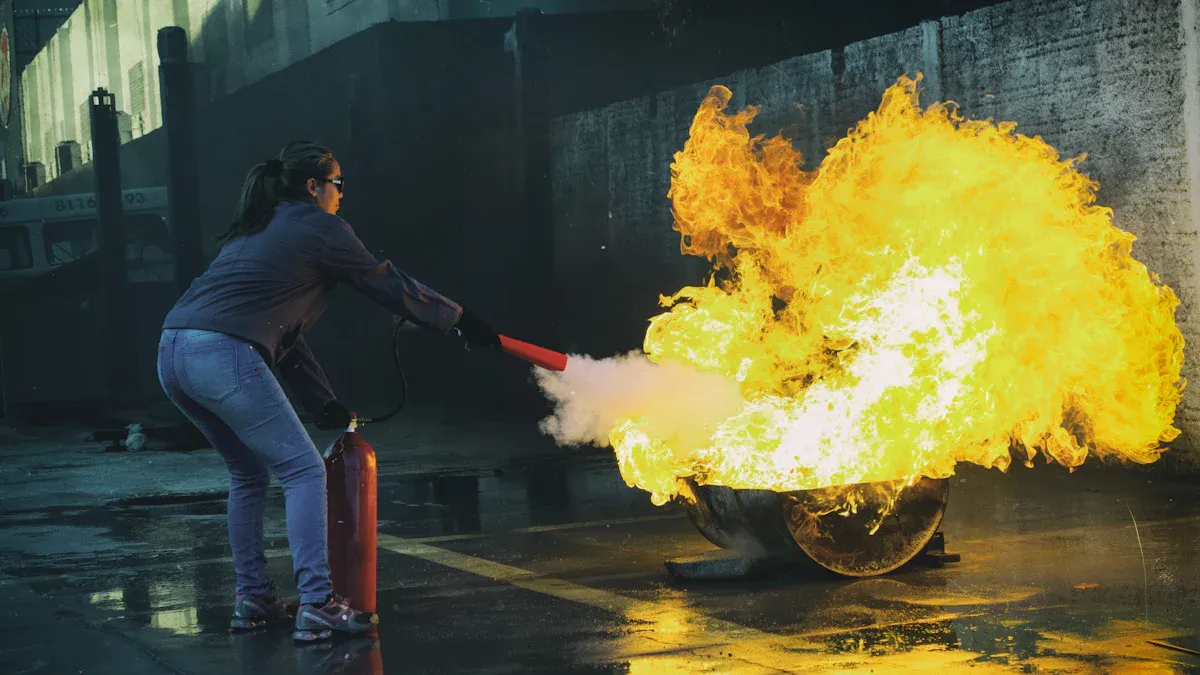
Choosing the right fire extinguisher means understanding the specific fire risks in your space. Not all fires are the same, and different types require different approaches. Matching the extinguisher to the hazard ensures effective fire suppression and keeps everyone safe.
Identifying Fire Classes (A, B, C, D, K)
Fires fall into different classes based on the fuel type. Knowing these classes helps you pick the correct fire fighting equipment. Here is a breakdown of the main fire classes:
| Fire Class | Fuel Type | Common Materials |
|---|---|---|
| Class A | Common combustibles | Paper, wood, cloth, rubber, trash, plastics |
| Class B | Flammable liquids and gases | Gasoline, diesel fuel, oil, propane, paint, solvents |
| Class C | Energized electrical equipment | Wiring, controls, motors, computers, electrical sources |
| Class D | Combustible metals | Magnesium, titanium, aluminum, zirconium, potassium, lithium |
| Class K | Cooking oils and fats | Hot oils, grease, vegetable oils, animal fats |
Class C fires, or electrical fires, often occur in places with lots of electrical equipment. Data centers, for example, face a clear risk for Class C fires. They must have strong safeguards to handle these types of blazes.
Class D fires involve flammable metals like titanium, aluminum, magnesium, and potassium. These fires are less common but need special attention. They can be very difficult to put out. Laboratories often encounter these metallic fires.
Class K fires involve flammable liquids, similar to Class B fires. However, Class K specifically relates to the food service and restaurant industry. These fires start from burning liquid cooking materials, such as grease, oils, and animal fats.
Selecting the Right Extinguishing Agent
Once you know the fire class, you can choose the right extinguishing agent. Different agents work best on different types of fires. Using the wrong agent can make a fire worse or put people in danger.
Here are some common extinguishing agents:
- A dry chemical agent called mono ammonium phosphate (for A, B, C fires).
- Regular Dry Chemical (sodium bicarbonate) (for B, C fires).
- Carbon Dioxide (for B, C fires).
- Halotron (a vaporizing liquid) (for A, B, C fires).
- Foam (for A, B fires).
- Purple K Dry Chemical (potassium bicarbonate) (for B, C fires).
- Water (for A fires).
Consider which agent works best for each fire class:
| Fire Class | Most Effective Extinguishing Agent |
|---|---|
| A | Water-based or multipurpose extinguishers |
| B | CO2 or dry chemical extinguishers, foam fire extinguishers |
| C | Carbon Dioxide (CO2) fire extinguishers, clean agent fire extinguishers |
| D | Dry powder agents |
| K | Class K fire extinguishers |
For example, CO2 fire extinguishers smother fires by removing oxygen. They are safe for electrical wiring. Clean agent fire extinguishers use a rapidly evaporating liquid. This agent is non-conductive, non-corrosive, and leaves no residue. These are excellent choices for Class C fires.
Determining Appropriate Size and Capacity
The size and capacity of your fire fighting equipment also matter greatly. A small extinguisher might not be enough for a large fire. The right size depends on several factors.
- Extinguisher Size: The amount of extinguishing agent an extinguisher holds is important. A 5-pound extinguisher is too small for a large commercial space. Consider the physical ability of users. Sometimes, multiple smaller extinguishers work better than one large one.
- Classification & Hazard Type: Fire extinguishers must suit the fire class (like Class A, B, or K). They also need to match the building’s hazard level (light, ordinary, or extra hazard). These classifications come from NFPA 10. They depend on the type and amount of combustible materials present.
- Size and Layout of the Building: The total area and design of a building directly affect how many fire extinguishers you need.
- Fire Hazard Level: Public buildings get a hazard level (Light, Ordinary I and II, Extra I and II, Commercial kitchens). This level depends on the building’s purpose and the types and amounts of flammable materials inside. This dictates the type and size of extinguishers needed.
Commercial fire extinguishers use labels like 2A:10B. These labels show their effectiveness against different fire types. The number before ‘A’ (e.g., 2 in 2A) means the water equivalency. Each unit equals 1.25 gallons of water. So, a 2A-rated extinguisher has the firefighting power of 2.5 gallons of water. The number before ‘B’ (e.g., 10 in 10B) shows the square footage the extinguisher can cover. A 10B-rated extinguisher can fight a fire covering 10 square feet. Class C ratings do not have a numerical value. They simply mean the extinguisher works for electrical fires. Larger spaces with higher fire risks need extinguishers with higher A and B ratings.
For smaller commercial spaces, such as offices or retail areas, a 5-pound fire extinguisher rated 2A:10B usually works well. It is easy to handle and covers most small fires. Larger areas, like warehouses or manufacturing floors, need extinguishers with higher ratings. For example, 4A:60B or 10A:80B effectively combat larger fires over wider areas.
Operational and Maintenance Considerations
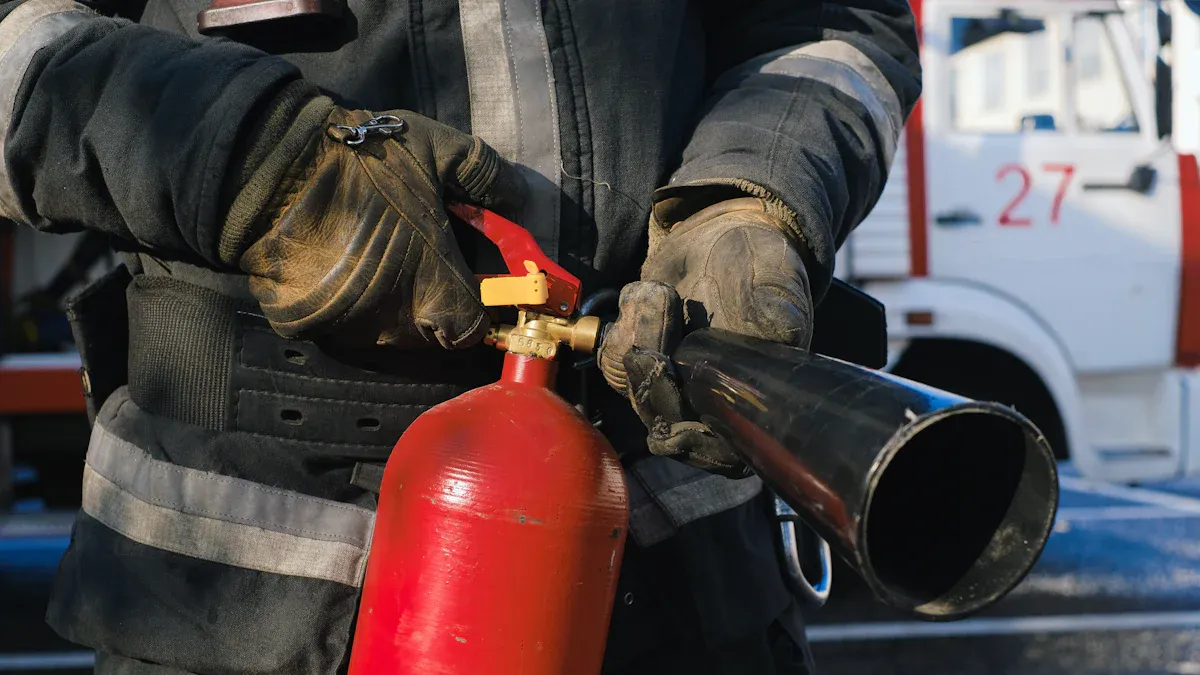
Choosing the right fire extinguisher is only the first step. Proper installation, regular maintenance, and user training ensure these vital tools work when needed. These operational aspects are just as important as the initial selection.
Installation and Placement Requirements
Correct placement of fire extinguishers makes a big difference during an emergency. Regulations from organizations like the National Fire Protection Association (NFPA), the International Building Code (IBC) from the International Code Council (ICC), and the Occupational Safety and Health Administration (OSHA) guide these requirements. Extinguishers must be easy to reach, clearly visible, and close to high-risk areas. For example, Class A extinguishers need placement within 75 feet of potential hazards. Class B extinguishers require placement within 50 feet. For Class K extinguishers, NFPA suggests installation within 30 feet of any kitchen fire hazard.
Mounting height also matters. Extinguishers weighing less than 40 pounds should have their top no more than 5 feet from the floor. Heavier units, 40 pounds or more, should have their top no higher than 3.5 feet. The bottom of any extinguisher must be at least 4 inches from the floor. Pathways to these units must stay clear of obstacles like furniture or equipment.
| Fire Class | Maximum Travel Distance |
|---|---|
| Class A | 75 feet (22.8 m) |
| Class B | 30-50 feet (9-15 m) |
| Class C | 30-50 feet (9-15 m) |
| Class K | 30 feet (9 m) |
Inspection and Maintenance Protocols
Regular checks keep fire fighting equipment ready for action. Facility staff should perform monthly visual inspections. This check ensures the extinguisher is in its correct spot, unobstructed, and has an intact tamper seal. They also confirm the pressure gauge reads in the operable range. Keep records of these checks on a tag or in a log.
A certified professional must conduct annual maintenance. This thorough check goes beyond a visual inspection. It examines all mechanical parts, the extinguishing agent, and the expelling mechanism. After this, a new tamper seal is installed, and the inspection is documented with a signed, dated tag. Some extinguishers also need hydrostatic testing every 5, 6, or 12 years, depending on their type. This test checks the extinguisher’s strength against rupture. OSHA violations often occur due to missing inspection records.
Training and User Accessibility
Even the best fire extinguisher is useless if people do not know how to use it. Training employees is crucial. This training should cover basic fire sources and how to stop combustion. It also teaches how to identify different fire classes and which extinguisher to use for each. Employees learn to assess fire risks and decide whether to fight a fire or evacuate. Hands-on practice with fire extinguishers is vital. It builds confidence and helps people understand the equipment’s limits. This practical experience is much more effective than just watching videos or demonstrations.
Selecting fire extinguishers demands a comprehensive approach. This ensures long-term safety and compliance for any facility. Facility managers and business owners must prioritize these critical factors. Informed choices protect both personnel and property effectively. They also meet regulatory standards.
FAQ
What does UL/FM certification mean for fire extinguishers?
UL/FM certification shows fire extinguishers meet strict safety and performance tests. It guarantees reliability and effectiveness in emergencies. This dual approval offers top-level assurance.
Why is it important to match the extinguisher to the fire class?
Different fires need specific agents. Using the wrong extinguisher can make a fire worse or create danger. Matching ensures effective suppression and keeps everyone safe.
How often should businesses inspect their fire extinguishers?
Businesses should do monthly visual checks. A certified professional must perform a thorough annual inspection. This ensures the equipment stays ready for use.