
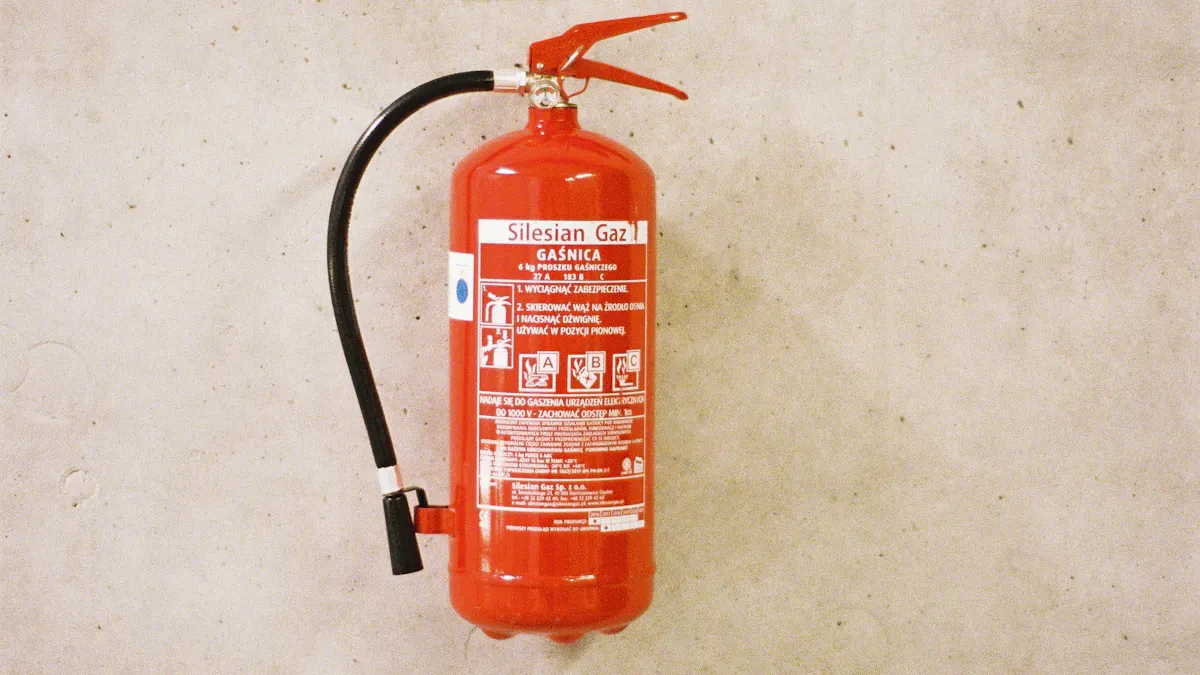
Fire fighting equipment standards, including EN, UL, NFPA, and CE, are vital for ensuring safety and effectiveness in firefighting operations. Each standard has distinct requirements that affect the design and performance of the equipment. For example, the EN standard fire equipment focuses on ergonomic comfort and thermal protection, while UL NFPA CE certification guarantees adherence to safety regulations in their respective regions. It is important for both professionals in the field and consumers seeking reliable equipment to understand these standards. Additionally, knowledge of what certifications importers need for fire extinguishers can greatly influence safety outcomes during emergencies. Furthermore, it is essential to recognize the difference between EN and UL fire equipment standards, as well as what is the difference between EN and NFPA for fire equipment, to ensure compliance and optimal performance.
Key Takeaways
- Understand the differences between EN, UL, NFPA, and CE standards to choose the right firefighting equipment.
- Always check for certification marks like EN, UL, or CE when purchasing equipment to ensure safety and compliance.
- Recognize that EN standards focus on ergonomic design, while UL emphasizes rigorous testing for safety in the U.S.
- Stay updated with NFPA standards to improve operational effectiveness and safety protocols in fire departments.
- CE marking indicates compliance with EU regulations, ensuring that firefighting equipment meets essential safety standards.
EN Standards
Definition and Scope
EN standards, or European Norms, establish a framework for the design, testing, and performance of firefighting equipment across Europe. These standards cover a wide range of equipment, ensuring that it meets specific safety and operational criteria. The following table highlights some key EN standards relevant to firefighting:
| EN Standard | Description |
|---|---|
| EN 1846 | Firefighting and rescue service vehicles. |
| EN 1486 | Protective clothing for firefighters – Test methods and requirements for reflective clothing for specialized firefighting. |
Significance in Europe
EN standards play a crucial role in enhancing fire safety across Europe. They ensure that firefighting equipment is reliable and effective in emergency situations. Compliance with these standards helps manufacturers produce high-quality products that protect both firefighters and the public. Furthermore, these standards facilitate trade within the European market by providing a common set of requirements that all manufacturers must meet.
Common Misconceptions
Many people mistakenly believe that EN standards are merely suggestions rather than mandatory requirements. In reality, compliance with these standards is essential for manufacturers who wish to sell their products in Europe. Another misconception is that EN standards are equivalent to other international standards, such as NFPA or UL. However, EN standards often emphasize ergonomic comfort and breathability, while NFPA focuses on higher thermal protection. Understanding these differences is vital for selecting the right firefighting equipment.
Practical Applications
EN standards find extensive application in various aspects of firefighting equipment. These standards guide manufacturers in creating products that meet safety and performance requirements. Here are some practical applications of EN standards in firefighting:
-
Protective Clothing: EN standards dictate the design and testing of firefighter gear. This includes jackets, pants, and helmets that protect against heat and flames. Compliance ensures that firefighters can operate safely in hazardous environments.
-
Firefighting Vehicles: EN standards also apply to the design of firefighting vehicles. These vehicles must meet specific criteria for safety, functionality, and ergonomics. This ensures that firefighters can respond quickly and effectively during emergencies.
-
Fire Extinguishers: EN standards govern the manufacturing of fire extinguishers. They specify the types of extinguishing agents and the testing methods for effectiveness. This guarantees that extinguishers perform reliably when needed.
Tip: When selecting firefighting equipment, always check for EN certification. This certification indicates that the product meets rigorous safety and performance standards.
In addition to these applications, EN standards facilitate international trade. Manufacturers who comply with these standards can market their products across Europe, ensuring a consistent level of quality. This not only benefits manufacturers but also enhances safety for firefighters and the communities they serve.
Overall, understanding the practical applications of EN standards helps professionals and consumers make informed decisions. By choosing equipment that adheres to these standards, they contribute to safer firefighting practices and improved outcomes during emergencies.
UL Standards
Definition and Scope
UL standards, established by Underwriters Laboratories, serve as enforceable documents that specify essential quality requirements and testing procedures for products, including firefighting equipment. These standards ensure that equipment meets rigorous safety and performance criteria. UL and FM certifications are crucial for many fire protection system components. Specific firefighting equipment requiring these listings includes:
- Fire pumps
- Fire sprinklers
- Various valves
Significance in the United States
UL standards hold significant importance in the U.S. firefighting equipment market. They provide a framework that enhances safety and reliability for both manufacturers and end-users. The consolidation of various NFPA standards into the NFPA 1970 represents a pivotal change in the firefighting equipment landscape. This initiative harmonizes multiple standards and updates them to reflect the latest technological advancements. As a result, all personal protective equipment (PPE) must meet modern safety requirements. This comprehensive framework boosts user confidence in the equipment’s protective capabilities.
Common Misconceptions
A common misconception about UL standards is that they are optional for manufacturers. In reality, many authorities having jurisdiction (AHJs) require UL-certified products for code compliance. Additionally, some believe that UL certification guarantees absolute safety. While UL ensures performance under extreme conditions, no certification can eliminate all risks. Understanding these nuances is essential for making informed decisions regarding firefighting equipment.
Tip: Always verify UL certification when selecting firefighting equipment. This certification indicates that the product meets stringent U.S. and global fire codes, enhancing reliability in critical situations.
Practical Applications
UL standards have significant practical applications in the realm of firefighting equipment. These standards guide manufacturers in creating products that enhance safety and operational effectiveness. Here are some key areas where UL standards play a crucial role:
-
Personal Protective Equipment (PPE): UL standards ensure that firefighter gear, such as helmets, gloves, and suits, meets rigorous safety criteria. This compliance protects firefighters from heat, flames, and hazardous materials.
-
Fire Suppression Systems: UL certification applies to fire pumps and sprinklers. These systems must perform reliably under extreme conditions. The certification process verifies that these systems can effectively suppress fires, thereby safeguarding lives and property.
-
Cleaning Facilities for PPE: UL-certified products significantly impact the effectiveness of firefighting operations. They ensure that cleaning facilities for firefighter PPE are verified for their ability to remove contaminants. This verification process directly affects the health and safety of firefighters, improving their operational effectiveness during firefighting activities.
-
Valves and Fittings: Fire protection systems rely on various valves and fittings. UL standards ensure that these components function correctly under pressure and temperature variations. This reliability is essential for maintaining the integrity of fire suppression systems.
Tip: When selecting firefighting equipment, always look for UL certification. This certification indicates that the product has undergone rigorous testing and meets essential safety standards.
NFPA Standards
Definition and Scope
NFPA standards, established by the National Fire Protection Association, provide a comprehensive framework for fire safety in North America. These standards cover various aspects of firefighting, including equipment, training, and operational procedures. They ensure that fire departments maintain high levels of safety and effectiveness. The following table highlights some key NFPA standards relevant to firefighting:
| NFPA Standard | Description |
|---|---|
| NFPA 1720 | Standard for the Organization and Deployment of Fire Suppression Operations, Emergency Medical Operations, and Special Operations to the Public by Volunteer Fire Departments |
| NFPA 1730 | Standard on Organization and Deployment of Fire Prevention Inspection and Code Enforcement, Plan Review, Investigation, and Public Education Operations |
| NFPA 1851 | Standard on Selection, Care, and Maintenance of Protective Ensembles for Structural Fire Fighting and Proximity Fire Fighting |
| NFPA 1901 | Standard for Automotive Fire Apparatus |
Significance in Fire Safety
NFPA standards play a vital role in enhancing fire safety across North America. Compliance with these standards helps reduce fire-related casualties and property damage. Organizations that adhere to NFPA standards often experience lower insurance premiums, as insurers recognize their commitment to safety. This compliance fosters a culture of risk management and accountability within fire departments.
Common Misconceptions
Several misconceptions exist regarding NFPA standards among fire departments. One common belief is that NFPA 1710 and 1720 are static documents. In reality, these standards are dynamic and updated regularly, with the latest edition released in 2020. Another misconception is that staffing requirements for tankers and tenders are unclear. The 2020 edition clarifies these requirements, specifying a crew of two firefighters.
Tip: Understanding NFPA standards is crucial for fire departments aiming to improve their operational effectiveness and safety protocols.
By addressing these misconceptions, fire departments can better align their practices with established safety standards, ultimately enhancing their response capabilities.
Practical Applications
NFPA standards have significant implications for various aspects of firefighting operations. They guide fire departments in implementing best practices that enhance safety and efficiency. Here are some key practical applications of NFPA standards:
-
Training and Education: NFPA standards dictate the training requirements for firefighters. Departments must ensure that personnel receive proper instruction on equipment use, safety protocols, and emergency response. This training prepares firefighters to handle diverse situations effectively.
-
Equipment Selection: Fire departments rely on NFPA standards to select appropriate firefighting equipment. Compliance with these standards ensures that gear, such as hoses, nozzles, and protective clothing, meets safety and performance criteria. This selection process enhances the overall effectiveness of firefighting efforts.
-
Operational Procedures: NFPA standards outline operational procedures for fire suppression and emergency response. These procedures help departments establish clear protocols for various scenarios, ensuring that firefighters can respond quickly and efficiently during emergencies.
-
Maintenance and Inspection: Regular maintenance and inspection of firefighting equipment are crucial for safety. NFPA standards provide guidelines for the care and upkeep of gear and apparatus. Following these guidelines helps prevent equipment failure during critical moments.
Tip: Fire departments should regularly review and update their practices to align with the latest NFPA standards. Staying current with these standards enhances safety and operational effectiveness.
- Community Engagement: NFPA standards also emphasize the importance of community education and prevention programs. Fire departments can use these standards to develop outreach initiatives that inform the public about fire safety, prevention measures, and emergency preparedness.
By applying NFPA standards, fire departments can create a culture of safety and accountability. These standards not only protect firefighters but also safeguard the communities they serve. Understanding and implementing NFPA standards is essential for improving fire safety and reducing risks associated with firefighting operations.
CE Standards
Definition and Scope
CE standards, or Conformité Européenne standards, represent a crucial regulatory framework in the European Union. The CE marking signifies that a product complies with all relevant legal requirements established by the European Union. This compliance ensures that firefighting equipment meets essential safety and performance standards. The scope of CE marking encompasses various aspects of firefighting equipment, including:
| Aspect | Details |
|---|---|
| Technical Assessment Body | UL has been designated as a technical assessment body for fire safety products. |
| Product Scope | Includes firefighting equipment, fire and smoke control, firestopping, fire sealing, and fire protection products. |
| CE Marking Role | UL assists manufacturers in achieving CE marking for their products. |
Significance in the European Market
CE standards hold significant importance in the European market. They ensure that firefighting equipment adheres to strict safety regulations, which protects both users and the public. Compliance with CE standards is mandatory for most construction products, including firefighting equipment. The CE mark indicates that a product meets essential characteristics covered by harmonized standards or European Technical Assessments (ETA). This certification fosters consumer confidence and facilitates trade within the European Union.
Common Misconceptions
Several misconceptions surround CE standards. One common belief is that CE marking is merely a formality. In reality, it represents a rigorous assessment process that verifies compliance with safety and performance criteria. Another misconception is that CE marking guarantees absolute safety. While it indicates adherence to standards, it does not eliminate all risks associated with firefighting equipment. Understanding these nuances is essential for manufacturers and consumers alike.
Tip: Always check for CE marking when purchasing firefighting equipment. This certification ensures that the product meets the necessary safety and performance standards required in the European market.
Practical Applications
CE standards play a vital role in ensuring the safety and effectiveness of firefighting equipment across Europe. These standards guide manufacturers in various practical applications, enhancing both product quality and user safety. Here are some key areas where CE standards are applied:
-
Firefighting Equipment Design: CE standards dictate the design parameters for equipment such as fire extinguishers, hoses, and protective gear. Manufacturers must ensure that their products meet specific safety and performance criteria before they can bear the CE mark.
-
Quality Assurance: The CE marking process involves rigorous testing and assessment. This ensures that firefighting equipment can withstand extreme conditions. For instance, fire hoses must endure high pressure without bursting, while protective clothing must resist heat and flames.
-
Market Access: CE certification is mandatory for selling firefighting equipment in the European market. This requirement helps maintain a consistent level of safety across products. Manufacturers who comply with CE standards can market their equipment throughout the EU, facilitating trade and enhancing consumer trust.
-
User Safety: CE standards prioritize user safety by ensuring that equipment is reliable and effective. For example, fire extinguishers must be easy to operate and clearly labeled. This clarity helps users respond quickly during emergencies.
Tip: Always look for the CE mark when purchasing firefighting equipment. This mark indicates that the product has undergone thorough testing and meets essential safety standards.
In summary, EN, UL, NFPA, and CE standards each play a unique role in the realm of fire fighting equipment standards. EN standards focus on ergonomic design and safety within Europe, while UL standards emphasize rigorous testing and compliance in the U.S. NFPA standards provide comprehensive guidelines for fire safety practices, and CE standards ensure compliance with EU regulations.
Understanding these differences is crucial for professionals and consumers alike. Selecting equipment that meets these standards enhances safety and effectiveness during firefighting operations.
Tip: Always consider these standards when choosing firefighting equipment to ensure optimal performance and safety.
| Aspect | UL Certification | CE Certification |
|---|---|---|
| Region | U.S., Middle East, parts of Asia | European Union, EEA, parts of Africa |
| Standards | NFPA 72, UL 864 | EN 54 series |
| Approval Type | Third-party independent testing and audits | Self-declaration + notified body testing |
FAQ
What do EN, UL, NFPA, and CE stand for?
EN stands for European Norms, UL is Underwriters Laboratories, NFPA is the National Fire Protection Association, and CE signifies Conformité Européenne. Each represents different standards for firefighting equipment safety and performance.
Why are these standards important?
These standards ensure that firefighting equipment meets safety and performance criteria. Compliance protects firefighters and the public, enhancing overall fire safety and effectiveness during emergencies.
How can I verify if equipment meets these standards?
Look for certification marks on the equipment. For example, check for the EN mark in Europe, UL certification in the U.S., NFPA compliance, or CE marking in the EU. These indicate adherence to relevant safety standards.
Are these standards the same worldwide?
No, these standards vary by region. EN standards apply in Europe, UL standards are primarily for the U.S., NFPA standards focus on North America, and CE standards are specific to the European market.
Can manufacturers choose which standards to follow?
Manufacturers must comply with the standards relevant to their target market. For example, a company selling in Europe must adhere to EN and CE standards, while those in the U.S. must follow UL and NFPA standards.