

Fire hose couplings are essential components that connect hoses to various firefighting equipment, including Machino coupling and Italian fire hose connections. These fittings ensure a secure connection, which is vital for maintaining water flow during firefighting operations. Standards in firefighting, such as Japanese fire fitting standards, play a crucial role in ensuring compatibility and reliability among equipment. The global relevance of fire hose coupling standards is evident, as they facilitate seamless integration during emergencies. For instance, the universal fire coupling chart aids firefighters in identifying compatible fittings, while high-pressure hose connectors enhance operational efficiency across different regions.
Key Takeaways
- Fire hose couplings are vital for connecting hoses to firefighting equipment, ensuring effective water flow during emergencies.
- Understanding different coupling types, like threaded, cam lock, and Storz, helps firefighters choose the best option for their needs.
- Materials used in couplings, such as aluminum and brass, affect durability and performance; select based on operational requirements.
- Adhering to standards like NFPA and ISO enhances safety and interoperability, allowing for seamless connections during firefighting operations.
- Regular training and inspections of fire hose couplings are essential to maintain safety and prevent equipment failure.
Overview of Fire Hose Couplings
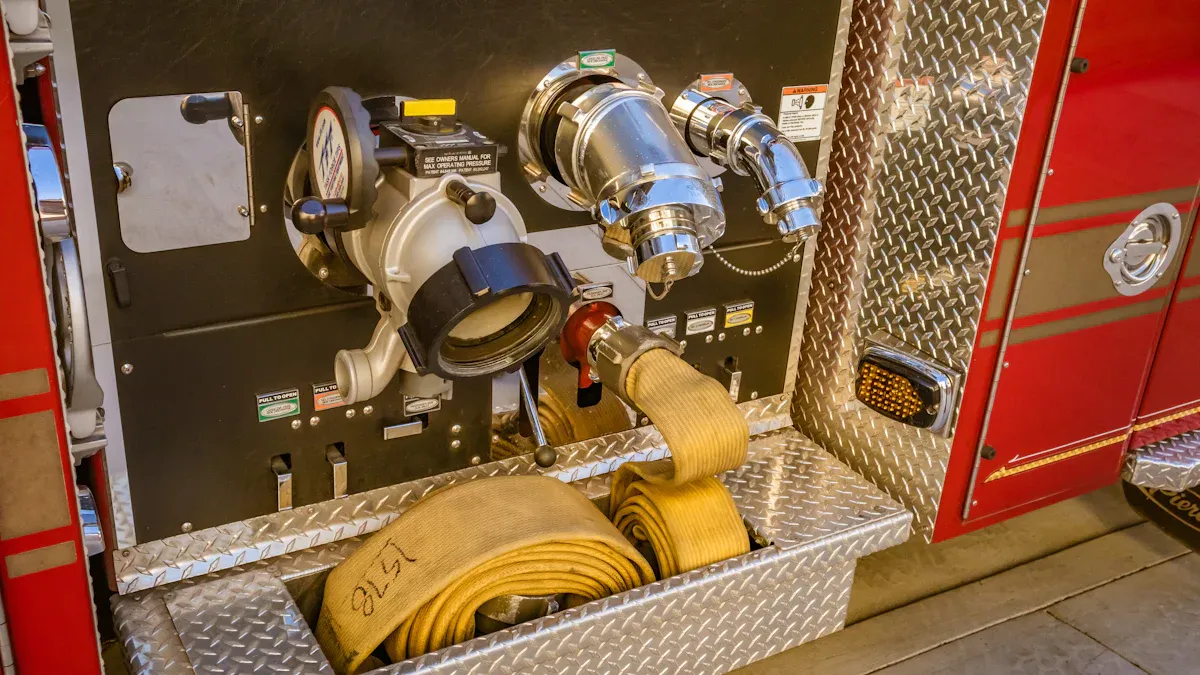
Fire hose couplings come in various types, each designed to meet specific operational needs. Understanding these types is crucial for effective firefighting. The most common types of fire hose couplings include:
- Threaded Couplings: These couplings feature male and female threads that screw together, providing a secure connection. They are widely used in North America.
- Cam Lock Couplings: Known for their quick-connect feature, these couplings allow firefighters to connect hoses rapidly, even under pressure. They are gaining popularity due to their ease of use.
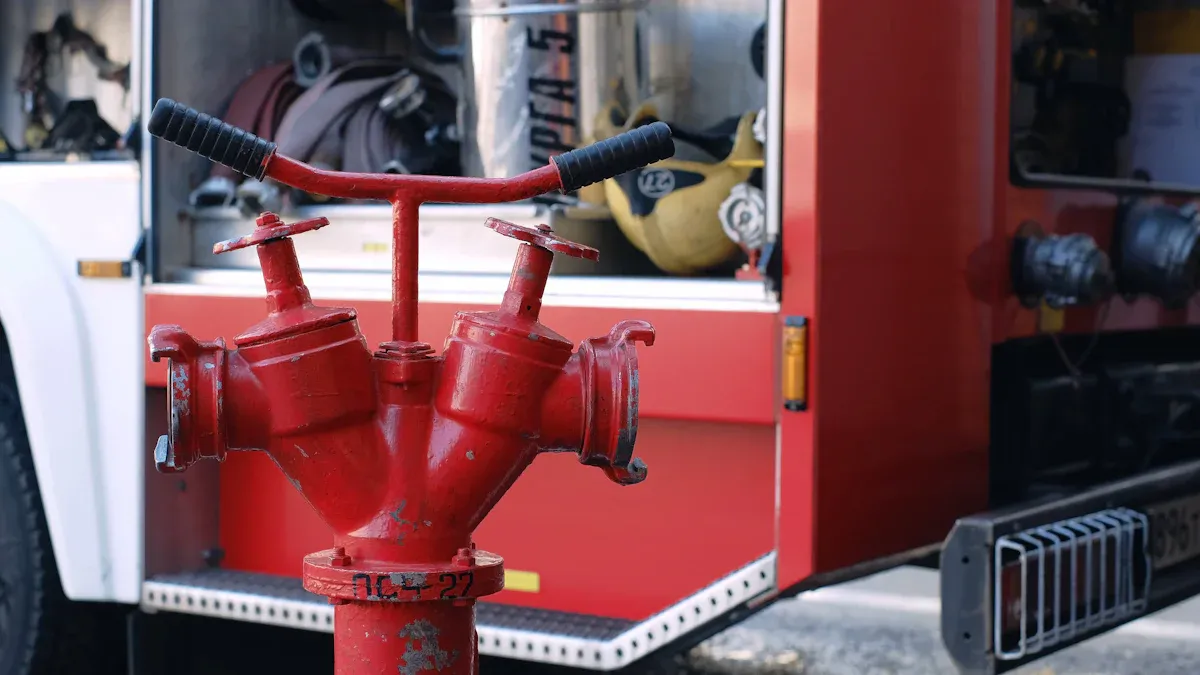
- Storz Couplings: These couplings utilize a locking mechanism that ensures a tight fit. They are prevalent in Europe and are favored for their reliability and speed of connection.
The global fire hose connection market is experiencing growth, particularly in North America and Asia-Pacific regions. This growth is driven by urbanization and stricter building codes. A key trend includes the standardization of couplings across regions, with a shift towards corrosion-resistant materials and increased demand for quick-connect systems like Camlock and Storz-style couplings.
Common Materials Used
The materials used in manufacturing fire hose couplings significantly impact their performance and durability. Below is a table summarizing the primary materials and their respective advantages and disadvantages:
| Material | Advantages | Disadvantages |
|---|---|---|
| Aluminum | Lightweight, corrosion-resistant, affordable, high strength-to-weight ratio | Less durable, can corrode over time |
| Brass | Durable, corrosion-resistant, strong | More expensive, can tarnish over time |
| Stainless Steel | High strength, durable, corrosion-resistant, long lifespan | More expensive, difficult to work with |
| Polypropylene | Cost-effective, lightweight, chemical-resistant | Not as strong, prone to cracking or breaking under stress |
| Nylon | Lightweight, affordable, chemical-resistant | Not as strong, can warp or melt under high temperatures |
Environmental factors also influence the selection of materials for fire hose couplings. For instance, brass offers excellent durability and corrosion resistance, making it suitable for general applications. In contrast, aluminum is significantly lighter, which benefits wildland operations over rough terrain.
Recent advancements in fire hose coupling design focus on faster and more secure connections. Improved anti-kink technologies prevent water flow blockage due to sharp bends or twists in hoses. Additionally, the introduction of flexible joints allows hoses to maintain full flow in tight spaces, enhancing performance and compatibility with modern firefighting equipment.
NFPA Standards (USA)
The National Fire Protection Association (NFPA) establishes critical standards for fire hose couplings in the United States. These standards ensure that couplings are reliable and compatible across various firefighting equipment.
Specifications of NFPA Couplings
NFPA standards, particularly NFPA 1963, outline essential requirements for fire hose couplings. Key specifications include:
- National Hose Thread (NH/NST): This thread pattern is the American standard for fire hose couplings. It guarantees compatibility between equipment from different manufacturers.
- Diameter Matching: Couplings must align with the hose diameter and application requirements. Standard sizes include 1.5", 2.5", and 3" for attack and supply lines.
- Material Requirements: Common materials for couplings include brass, aluminum, and hardened aluminum alloys. Each material offers unique benefits, such as durability and weight reduction.
- Storz Quick-Connect Couplings: These couplings are increasingly popular for large diameter applications. Their quarter-turn connection system allows for rapid deployment, which is crucial during emergencies.
The NFPA standards enhance interoperability among firefighting systems globally. They minimize leaks and ensure robust connections, which lowers the chances of equipment failure during critical operations.
Advantages and Disadvantages
The NFPA standards provide several advantages:
- Interoperability: These standards facilitate compatibility among various firefighting equipment, which is essential during emergencies.
- Safety: By minimizing leaks and ensuring secure connections, NFPA standards enhance operational safety.
- Consistency: The specifications set by NFPA create uniformity in the manufacturing of fire hose couplings, which simplifies training for firefighters.
However, there are some disadvantages to consider:
- Regional Variations: While NFPA standards promote compatibility, regional standards can complicate global interoperability. For instance, differences between NFPA and international standards like ISO 7241 may affect international firefighting efforts.
- Cost Implications: Compliance with NFPA standards may lead to higher manufacturing costs, which can be passed on to consumers.
EN Standards (Europe)
The European standards for fire hose couplings, particularly outlined in BS 336:2010, establish essential specifications that ensure compatibility and performance across various firefighting applications. These standards play a crucial role in maintaining safety and efficiency in emergency situations.
Specifications of EN Couplings
The core specifications for EN fire hose couplings include several critical aspects, as summarized in the table below:
| Specification Aspect | Details |
|---|---|
| Standard Title | BS 336:2010 |
| Relevant ICS Category | 13.220.10 Fire-fighting |
| Working Pressure | Up to 16 bar |
| Applicable Standards | BS 6391, BS 3165, BS EN ISO 14557 |
| Testing Methods | Annex A to Annex E specify methods for testing various aspects of performance |
| Material Standards | Annex F lists the standards specifying the materials for components listed in Table 2a) |
These specifications ensure that fire hose couplings meet rigorous performance criteria, enhancing their reliability during firefighting operations.
Advantages and Disadvantages
EN standards offer several advantages for fire hose couplings used in Europe:
- The Storz connection is designed for quick and easy use, enhancing efficiency in emergency situations.
- It provides a water-tight seal that remains secure under high pressure.
- Storz couplings feature a quick-connect design, allowing for faster connections.
- They are sexless, meaning there are no distinct male and female ends, which simplifies the connection process.
However, there are some limitations to consider:
- Fire hose couplings vary globally, with different standards like NST, BS, and Storz. Adapters can bridge the differences between these standards, enhancing interoperability across European countries.
- While the EN standards promote compatibility, they may not address all regional variations, which can complicate international firefighting efforts.
Overall, understanding EN standards for fire hose couplings is vital for ensuring effective firefighting operations across Europe.
AS Standards (Australia)
The Australian Standards (AS) for fire hose couplings ensure compatibility and reliability in firefighting operations across the country. These standards play a vital role in maintaining safety and efficiency during emergencies.
Specifications of AS Couplings
AS standards, particularly AS 2419.4, outline specific requirements for fire hose couplings. The following table summarizes key specifications for Storz couplings used in Australia:
| Storz size | Lug diameter, inner face (mm) | Hose diameter, internal (mm) | Standard | Fire-fighting usage |
|---|---|---|---|---|
| 25 | 37 | 25 | AS2419.4 | Australia |
| 38 | 52 | 38 | CAN-ULC-S543, AS2419.4 | Australia |
| 100 | 115 | 101 (called 4″ in U.S.) | CAN-ULC-S543, NFPA1963, AS2419.4 | U.S., Australia |
These specifications ensure that fire hose couplings meet rigorous performance criteria, enhancing their reliability during firefighting operations.
Advantages and Disadvantages
AS standards offer several advantages for fire hose couplings used in Australia:
- Interoperability: The AS standards promote compatibility with various firefighting equipment, ensuring seamless integration during emergencies.
- Durability: Couplings made from materials like brass and stainless steel provide high durability and leak-free performance.
- Lightweight Options: Aluminium couplings offer a superior strength-to-weight ratio, making them easier to handle.
However, there are some disadvantages to consider:
- Material Limitations: While aluminium is lightweight, it can be susceptible to galling in abrasive environments. Brass, although durable, may cause operator fatigue due to its weight.
- Cost Factors: Stainless steel couplings, while highly durable, tend to be more expensive than other materials.
Understanding the AS standards for fire hose couplings is essential for ensuring effective firefighting operations in Australia. These standards not only enhance safety but also improve the overall efficiency of firefighting efforts.
Other Global Standards
Fire hose couplings are not only governed by national standards but also by international standards that promote compatibility and safety across borders. The International Organization for Standardization (ISO) plays a significant role in establishing these standards.
ISO Standards
ISO standards for fire hose couplings focus on ensuring interoperability among firefighting equipment globally. The most widely adopted ISO standard is ISO 7241, which specifies the requirements for couplings used in firefighting applications. This standardization push has several benefits:
- Global Adoption: The widespread use of ISO/Storz couplings ensures interoperability across agencies and borders. This compatibility is crucial during international firefighting operations.
- Recognition: ISO standards are recognized in various regions, including Russia, CIS countries, parts of Asia, the Middle East, and Eastern Europe. This global acceptance enhances the reliability of firefighting efforts.
| Evidence Type | Description |
|---|---|
| Standardization Push | Global adoption of ISO/Storz couplings ensures interoperability across agencies and borders. |
| Global Acceptance | Recognized in Russia, CIS countries, parts of Asia, the Middle East, and Eastern Europe. |
ISO standards also address challenges faced during cross-border firefighting operations. They ensure that fire hose couplings are compatible across different regions and countries. This compatibility prevents cross-threading and guarantees secure, leak-free connections during firefighting. Fire departments must adhere to these standards to maintain interoperability. In some cases, the use of adapters becomes necessary for seamless connectivity in multinational emergency scenarios.
National Standards from Various Countries
In addition to ISO standards, many countries have established their own national standards for fire hose couplings. These standards often reflect local needs and conditions while aligning with international guidelines. For example:
- United Kingdom: The British Standards Institution (BSI) sets standards such as BS 336:2010, which governs fire hose couplings and ensures their reliability in emergency situations.
- Canada: Canadian standards, such as CAN/ULC-S543, provide specifications for fire hose couplings that align with both national and international requirements.
- Japan: Japan has its own set of standards that focus on the unique challenges faced in its firefighting operations, ensuring that couplings meet specific performance criteria.
These national standards enhance the effectiveness of firefighting operations by ensuring that equipment is reliable and compatible. They also promote safety by minimizing the risk of equipment failure during emergencies.
| Key Aspect | Description |
|---|---|
| Standardization | Ensures that fire hose couplings are compatible across different regions and countries. |
| Thread Compatibility | Prevents cross-threading and ensures secure, leak-free connections during firefighting. |
| Adherence to Standards | Fire departments must follow regional and national standards to maintain interoperability. |
| Use of Adapters | Necessary for seamless connectivity in multinational emergency scenarios. |
Understanding these global and national standards is essential for ensuring effective firefighting operations. They not only enhance safety but also improve the overall efficiency of firefighting efforts worldwide.
Comparison of Coupling Types
Threaded Couplings
Threaded couplings are a traditional choice in firefighting. They feature male and female threads that screw together, creating a secure connection. However, they have some drawbacks. Connecting these couplings can take longer, often requiring 30 seconds or more due to the screwing process. If not tightened properly, they can be prone to leaks, which affects reliability. Despite these issues, they remain popular in North America due to their widespread use and familiarity among firefighters.
Cam Lock Couplings
Cam lock couplings are designed for quick and reliable connections. They facilitate rapid deployment of firefighting equipment, making them ideal for emergency situations. The design allows for easy operation, enabling fast connection and disconnection. This feature is crucial when every second counts during a fire. Firefighters appreciate cam lock couplings for their efficiency, as they can connect hoses swiftly without the need for tools. Their reliability and ease of use make them a favored choice in many firefighting operations.
Storz Couplings
Storz couplings stand out for their standardized design, enhancing interoperability between different firefighting agencies. They utilize a quick coupling mechanism that allows for rapid connections, which is vital in time-sensitive situations. The universal compatibility of Storz couplings facilitates seamless connections between various equipment types and brands. Below is a summary of their key features and benefits:
| Feature | Benefit |
|---|---|
| Standardized design | Ensures compatibility across different firefighting agencies. |
| Quick coupling mechanism | Allows for rapid connections, crucial in time-sensitive situations. |
| Universal compatibility | Facilitates seamless connections between various equipment types and brands. |
Impact of Standards on Firefighting
Efficiency in Operations
Standards for fire hose couplings significantly enhance operational efficiency in firefighting. Historical accounts illustrate the challenges faced when departments lacked standardized couplings. For example, during major fires in Boston in 1872 and Baltimore in 1904, neighboring fire departments could not assist due to incompatible hose connections. This situation underscored the urgent need for a national standard, which was established in 1913 after extensive advocacy by fire service organizations.
The establishment of a national standard has led to improved collaboration among firefighters. Today, there are over 600 variations of fire hose fittings across the United States. The introduction of standardized connections has streamlined operations, allowing for faster response times during emergencies. Enhanced cooperation among firefighting agencies can lead to quicker deployment of resources, ultimately saving lives and property.
Safety Considerations
Safety is paramount in firefighting, and standardized fire hose couplings play a crucial role in minimizing risks. Non-standardized couplings can lead to severe safety hazards. The table below outlines some documented safety risks associated with the use of non-standardized couplings:
| Safety Risk | Consequence |
|---|---|
| High-Speed Projectiles | Metal fittings can be thrown off at high velocity, endangering anyone nearby. |
| Fluid Injection or Spray | Pressurized fluid may spray out, causing dangerous injection injuries or slippery surfaces. |
| Whiplash of Hose | A ruptured hose can whip around violently, striking people or equipment. |
| Fire or Explosion | Sudden spray of flammable fluid can ignite or explode on contact with ignition sources. |
| Equipment Collapse | A burst hose can drop pressure, causing machinery to move unexpectedly, creating serious danger. |
Regular testing of fire hoses is essential to ensure safety. The National Fire Protection Association (NFPA) recommends annual testing. Inspections should check for fraying or signs of imminent failure before testing. Proper securing of hoses is crucial to prevent thrashing during pressure tests. By adhering to these standards, firefighters can significantly reduce the likelihood of accidents and injuries during operations.
Understanding fire hose coupling standards is crucial for effective firefighting. These standards ensure compatibility and reliability, which are vital during emergencies. They enhance operational efficiency and safety, allowing firefighters to respond swiftly and effectively.
Ongoing education and training play a significant role in improving firefighting outcomes. Firefighters must learn to manage equipment properly, including fire hose couplings. Regular training ensures adherence to standards, ultimately enhancing safety and performance.
Investing in high-quality couplings and maintaining them through regular inspections can prevent leaks and reduce fire risks. Fire departments should prioritize education and training to ensure their teams are well-prepared for any situation.
FAQ
What are fire hose couplings?
Fire hose couplings are fittings that connect hoses to firefighting equipment. They ensure a secure connection, allowing for effective water flow during firefighting operations.
Why are standards important for fire hose couplings?
Standards ensure compatibility and reliability among firefighting equipment. They enhance safety and efficiency, allowing firefighters to respond effectively during emergencies.
What materials are commonly used for fire hose couplings?
Common materials include aluminum, brass, stainless steel, polypropylene, and nylon. Each material offers unique benefits, such as weight, durability, and corrosion resistance.
How do I choose the right coupling type?
Consider the specific needs of your firefighting operations. Evaluate factors like connection speed, compatibility with existing equipment, and the environment in which you will use the couplings.
Are there international standards for fire hose couplings?
Yes, international standards, such as ISO 7241, promote interoperability among firefighting equipment globally. These standards help ensure that couplings are compatible across different regions and countries.