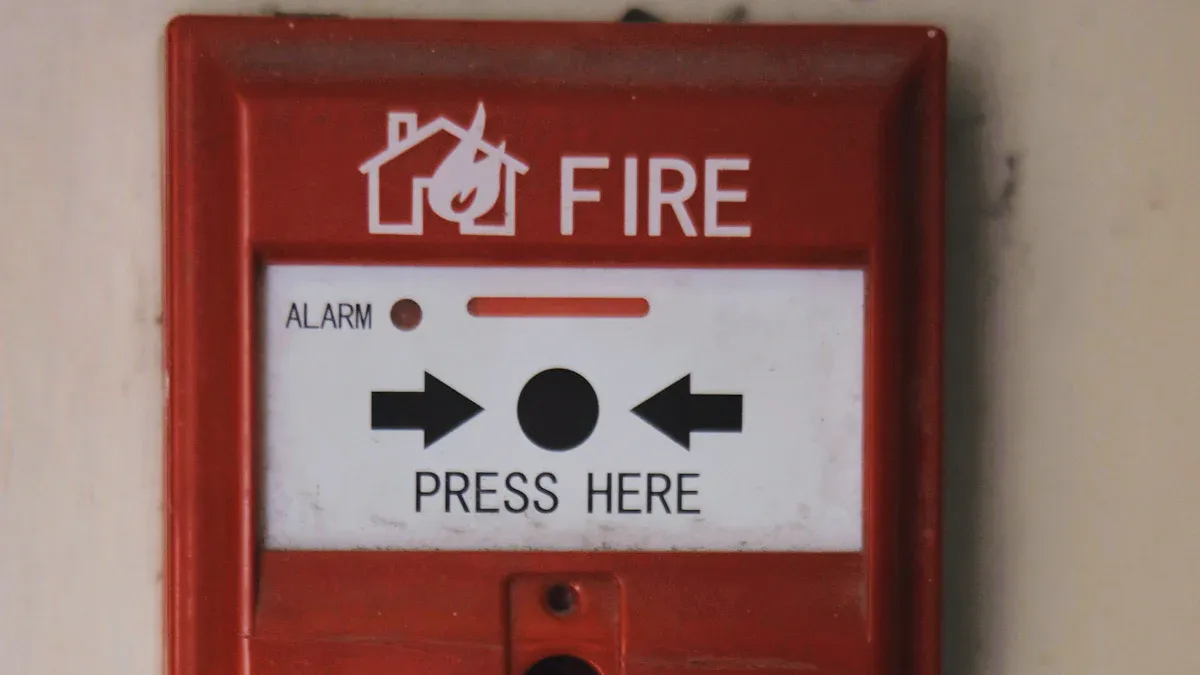
Fire fighting equipment certifications play a crucial role in ensuring compliance with international standards. Key certifications such as NFPA 10 and EN 3 are essential for manufacturers of fire protection equipment seeking access to global markets. These fire safety equipment certifications enhance product credibility and reduce compliance risks, facilitating smoother market entry. Non-compliance with fire extinguisher certification requirements can lead to severe consequences, including legal penalties and loss of market opportunities. As urbanization increases, the demand for fire protection equipment compliance grows, making adherence to export certification for fire protection equipment more critical than ever.
Key Takeaways
- Fire safety equipment certifications, like NFPA 10 and EN 3, are essential for accessing international markets and ensuring compliance with safety standards.
- Certified fire safety equipment reduces risks and enhances safety, helping to prevent costly incidents and legal penalties.
- Understanding regional certification requirements is crucial for manufacturers to avoid compliance issues and market setbacks.
- Engaging early with certification bodies and utilizing technology can streamline the certification process and improve outcomes.
- Regularly reviewing compliance strategies ensures manufacturers stay updated with evolving regulations and maintain safety standards.
Importance of Fire Safety Equipment Certifications
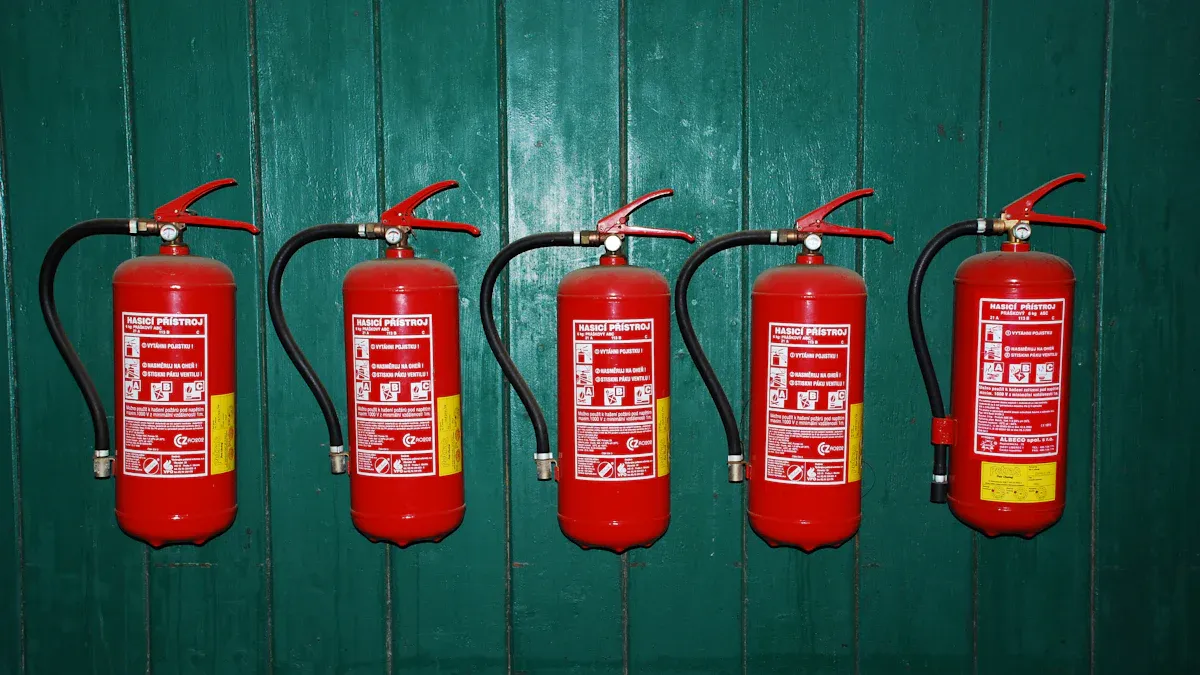
Fire safety equipment certifications serve as a cornerstone for ensuring safety in both commercial and industrial settings. These certifications not only validate the quality and reliability of fire fighting equipment but also play a significant role in reducing fire-related incidents. According to statistics, workplace fires and explosions result in over 5,000 injuries and 200 fatalities each year. This alarming data underscores the necessity of fire safety training and compliance with established standards.
Organizations that prioritize certified fire fighting equipment can significantly mitigate risks. In 2022, non-residential fire losses reached a staggering $3.74 billion in direct property damage. Such financial implications highlight the importance of adhering to legal and regulatory requirements. Compliance is not merely a formality; it is a critical component of workplace safety mandated by state and federal occupational safety and health agencies.
Certified fire safety equipment enhances safety outcomes by ensuring compliance with established standards. Testing services provided by organizations like Intertek help manufacturers verify their products against national and international benchmarks. This verification builds trust among consumers and improves safety in international markets.
Insurance companies also recognize the value of certified fire safety equipment when assessing coverage for businesses. They often evaluate the presence of certifications as part of their risk assessment process. The following table outlines key standards that influence insurance evaluations:
| Standard | Description |
|---|---|
| APSAD | Published by the French National Center for Prevention and Protection (CNPP), these standards harmonize risk prevention for insured businesses. Only certified businesses can install fire protection systems and issue compliance certificates. |
| NFPA | A US nonprofit that develops safety standards to protect against fire and other hazards, influencing international safety practices. |
| FM Global | A mutual insurance company that conducts research, approves fire protection equipment, and publishes installation regulations, aiding multinational businesses. |
Key International Standards
International standards for fire safety equipment play a vital role in ensuring safety and compliance across various markets. These standards provide guidelines that manufacturers must follow to ensure their products meet safety and performance requirements. Below are some of the most recognized international standards in the fire safety equipment industry:
| Standard | Description | Main Requirements |
|---|---|---|
| UL (Underwriters Laboratories) | A leading organization for safety testing and certification of fire protection equipment. | Compliance with UL standards is often required for fire protection components to be ‘listed’ and reliable. |
| NFPA (National Fire Protection Association) | Provides codes and standards for fire safety practices. | Requires components to be ‘listed’ for system performance, ensuring safety and reliability. |
| ISO (International Organization for Standardization) | Develops international standards across various industries, including fire safety. | Focuses on quality and safety benchmarks for fire safety equipment. |
These standards differ significantly from regional or national standards. For instance, the NFPA focuses specifically on fire protection and life safety, providing detailed technical requirements. In contrast, the International Code Council (ICC) covers broader areas of construction and building safety. The following table highlights these differences:
| Aspect | NFPA | ICC |
|---|---|---|
| Scope and Application | Specialized in fire protection and life safety with detailed technical requirements. | Comprehensive, covering broader areas of construction and building safety. |
| Code Development Process | Consensus-based with heavy public input, ensuring technical rigor. | Emphasizes governmental input and public hearings for adaptability. |
| Fire and Life Safety Focus | Detailed standards for specific systems and practices, especially in high-risk environments. | General fire prevention as part of a larger model code framework. |
| International Reach | Strong international presence, especially in industrial sectors. | Gradually gaining international traction as a comprehensive building code framework. |
Obtaining ISO certification for fire safety equipment intended for international markets involves several steps:
- Establish written quality and safety policies outlining objectives, legal obligations, and roles of responsible personnel.
- Maintain process documentation for system design, installation procedures, inspection checklists, and maintenance schedules.
- Implement risk assessment and hazard-control measures for electrical, confined-space, and working-at-height tasks.
- Track supplier evaluation, calibration of instruments, and testing of components such as valves, nozzles, and control panels.
- Record customer complaints, non-conformities, and corrective actions to ensure continuous improvement.
- Conduct environmental monitoring for chemical storage, firefighting foam discharge, and waste handling.
- Schedule internal audits, management reviews, and follow-up actions to verify compliance and system performance.
- Start certification with one business function — such as service and maintenance — before extending the system to manufacturing or design units.
Third-party testing laboratories contribute significantly to the fire safety equipment certification process. They ensure that products meet industry standards through accredited testing, which is essential for compliance with regulations such as ISO 17025. This accreditation guarantees that the laboratory possesses the technical competence to perform necessary tests, vital for the certification of fire fighting equipment.
Regional Certification Requirements
Different regions impose unique certification requirements for fire safety equipment. Understanding these requirements is crucial for manufacturers aiming to enter international markets. Below is a summary of key standards and certifications across various regions:
| Region | Standard/Certification | Key Requirements |
|---|---|---|
| European Union | EN 14604 | Smoke sensitivity testing, 85dB minimum alarm volume, Temperature range: -10°C to +40°C, Battery life requirements, Environmental durability tests |
| CE Mark | Product safety compliance, EMC directive conformity, RoHS environmental standards, Low voltage directive (LVD), Radio Equipment Directive (RED) | |
| USA / Canada | UL 217 / UL 268 | Ionization/photoelectric testing, Nuisance alarm resistance, Environmental testing, Long-term performance, NFPA 72 compliance support |
| FCC Certification | RF emissions compliance, ISM band operation (915MHz), EMC testing, Antenna performance, Coexistence verification | |
| International | ISO 9001:2015 | Process control systems, Continuous improvement, Customer satisfaction focus, Supplier management, Annual third-party audits |
| European Union | RoHS / REACH | Lead-free manufacturing, Hazardous substance limits, Material declarations, Environmental impact reduction, Supply chain compliance |
In the U.S. and Middle East, UL certification is typically mandatory for fire fighting equipment. In contrast, Europe and the European Economic Area (EEA) legally require CE certification. For multinational projects, some owners may even demand dual-certified systems (UL + CE) to ensure comprehensive compliance.
Manufacturers must stay informed about these regional requirements. Non-compliance can lead to significant setbacks, including product recalls and legal penalties. Therefore, understanding the nuances of each market’s certification process is essential for successful international operations.
Tip: Regularly review updates to certification standards. Changes in regulations can impact compliance and market access.
Challenges in the Certification Process
Manufacturers face several challenges during the fire safety equipment certification process for international markets. Understanding these obstacles is crucial for successful compliance.
| Challenge | Description |
|---|---|
| Budgeting | Gaining budget approval for fire safety systems proves difficult. These systems often do not generate revenue and remain unnoticed until an emergency arises. |
| Installation and Maintenance | Planning installation without disrupting operations presents challenges. Systems may need to be installed alongside existing ones, which can incur additional costs if a fire watch is required during downtime. |
| Access Issues | Fire protection equipment can become obstructed by poorly stored items. This leads to accessibility problems, as these systems often remain out of sight and are not regularly maintained or understood by personnel. |
The costs associated with obtaining fire safety certifications can vary significantly. Factors such as the specific certification, the certifying organization, and the resources utilized influence these costs. Training methods, whether online or in-person, also affect expenses. The time required to complete certifications can range from a few weeks to several months, depending on the complexity of the program and the individual’s learning style.
Changes in international regulations can further complicate the recertification process. For example, the European Union’s Pressure Equipment Directive (PED) necessitates rigorous assessment and documentation for fire safety equipment. This directive categorizes pressure equipment into different risk levels, impacting how fire safety systems are recertified. Compliance requirements vary by category, with higher categories demanding third-party verification, which can significantly affect the recertification process for manufacturers.
Tip: Staying informed about regulatory changes is essential for manufacturers to navigate the certification landscape effectively.
Strategies for Successful Compliance
Achieving successful compliance with fire safety equipment certifications requires a strategic approach. Manufacturers can implement several effective strategies to streamline their certification processes and enhance their chances of success.
-
Early Engagement with Certification Bodies: Initiating communication with certification organizations early in the process can significantly improve outcomes. Understanding the specific requirements for various certifications, such as product or service provision certifications, allows manufacturers to align their processes accordingly.
Certification Type Description General or specific quality management Operated by certification bodies using standards like ISO 9001 to audit companies. Product certification Certification bodies create schemes to meet ISO/IEC 17065 requirements for product certification. Service provision certification Similar to product certification, but focused on services, adhering to ISO/IEC 17065. Competent person certification Operated under ISO/IEC 17024, focusing on certifying individuals’ competencies. -
Utilizing Technology: Implementing advanced technologies can enhance compliance efforts. For instance, the Indianapolis Fire Department uses Tyler Technologies’ MobileEyes software to improve inspection processes. This transition from manual methods to an electronic workflow boosts accuracy and efficiency in fire inspections. Similarly, FieldInsight automates inspection schedules, simplifying data collection through mobile devices. This not only saves time but also ensures adherence to the latest fire safety regulations.
-
Centralized Training Management: Establishing a centralized structure for managing training and compliance is essential. This approach connects all requirements and training activities, allowing fire safety agencies to efficiently track and manage their compliance efforts. Training programs enhance awareness and understanding of fire safety standards among professionals. They equip staff with the necessary knowledge and skills for effective implementation.
-
Continuous Improvement: Regularly reviewing and updating compliance strategies is vital. Organizations should conduct audits and assessments to identify areas for improvement. This proactive approach ensures that companies remain compliant with evolving regulations and standards.
By adopting these strategies, manufacturers can navigate the complexities of fire safety equipment certification more effectively, ensuring compliance and enhancing safety in international markets.
Obtaining the right fire safety equipment certifications is essential for manufacturers aiming to succeed in international markets. These certifications ensure compliance with global standards, which is crucial for accessing diverse markets.
The benefits of compliance include:
- Improved customer satisfaction
- Increased trust between businesses and customers
- Enhanced market confidence
- Generation of new business opportunities
International buyers often evaluate suppliers based on their certification status. They look for specific documents, such as EN 54 test certificates and third-party lab test reports.
Proactive engagement with certification processes not only mitigates risks but also positions businesses for long-term success.
FAQ
What are the main benefits of obtaining fire safety equipment certifications?
Obtaining fire safety equipment certifications enhances product credibility, ensures compliance with international standards, and reduces risks associated with fire incidents. These certifications also improve customer trust and open doors to new market opportunities.
How long does the certification process typically take?
The certification process duration varies based on the specific certification and complexity of the product. Generally, it can take anywhere from a few weeks to several months to complete all necessary evaluations and documentation.
Are there specific certifications required for different regions?
Yes, different regions have unique certification requirements. For example, the European Union mandates CE marking, while the United States often requires UL certification. Manufacturers must understand these regional differences to ensure compliance.
Can manufacturers expedite the certification process?
Manufacturers can expedite the certification process by engaging with certification bodies early, maintaining thorough documentation, and utilizing technology for efficient inspections. Proactive planning and organization can significantly reduce delays.
What role do third-party testing laboratories play in certification?
Third-party testing laboratories verify that fire safety equipment meets industry standards. Their accredited testing ensures compliance with regulations, providing manufacturers with the necessary documentation to support their certification applications.