
A fire hose reel installation must ensure fast access, correct water pressure, code-compliant coverage distance, and safe user operation. Poor installation can delay first response, restrict hose movement, or reduce discharge flow during an emergency. A correctly installed fire hose reel supports early-stage fire control in offices, warehouses, schools, factories, and residential towers. According to the National Fire Protection Association (NFPA), accessible first-aid firefighting equipment remains an important layer of building fire protection. Key installation priorities include location planning, mounting height, hydraulic performance, signage visibility, and routine testing after commissioning.
Fire Hose Reel Installation Basics and Why It Matters
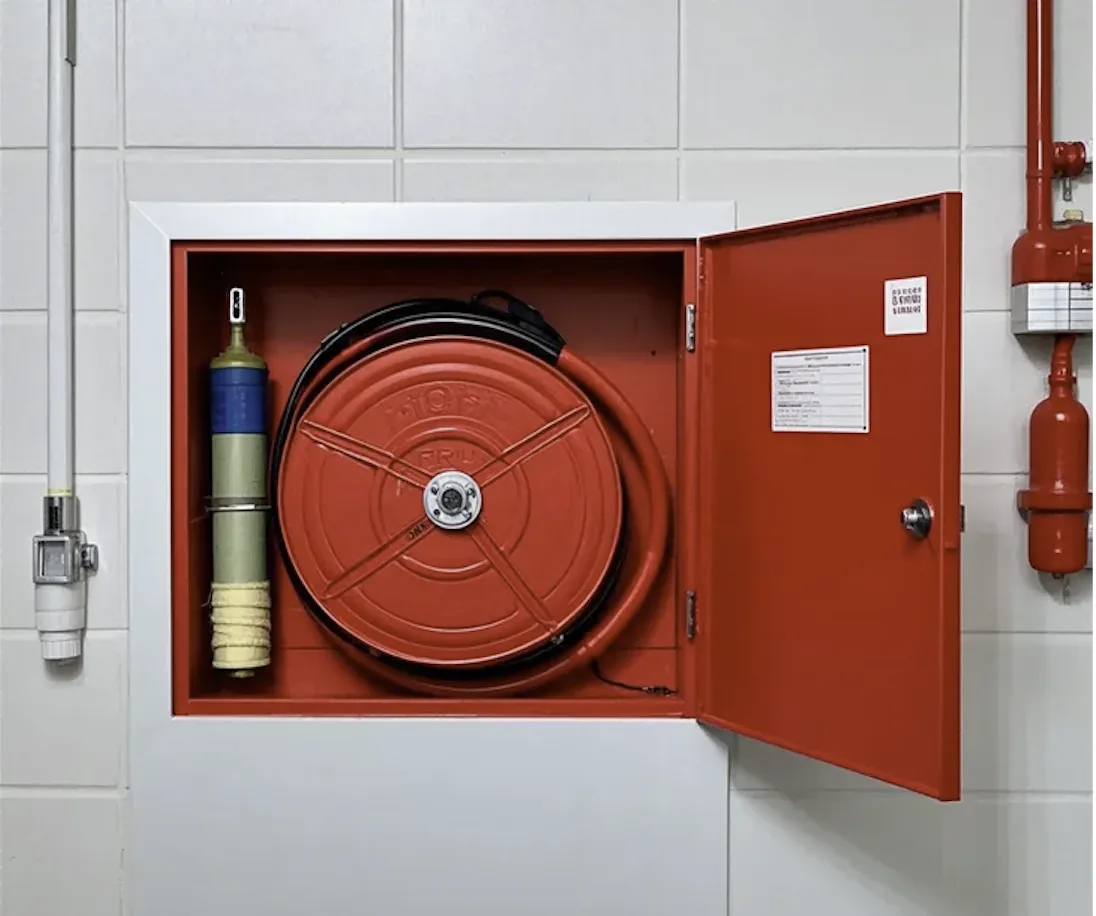
A fire hose reel is a fixed firefighting appliance connected to a building water supply. The reel stores a semi-rigid hose on a rotating drum and allows occupants to attack small Class A fires before growth accelerates. Installation quality directly affects whether the equipment can be deployed in seconds or becomes obstructed and ineffective.
Common risks caused by poor installation include:
Cabinet blocked by furniture or storage
Insufficient hose reach to protected zones
Low pressure at nozzle outlet
Door opening conflict in corridors
Corrosion in outdoor environments
Many commercial projects specify fire hose reel cabinet systems to combine protection, visibility, and organized placement.
Where Should a Fire Hose Reel Be Installed?
The best fire hose reel location is near escape routes, circulation corridors, stair lobbies, loading areas, or zones with moderate combustible load. Placement should allow safe access without forcing users to move toward heavy smoke or flame.
Typical installation locations:
Building corridors near exits
Warehouse access aisles
Factory production zones
Parking garage entrances
School common areas
Hotel service corridors
The U.S. Fire Administration supports clear emergency equipment access because blocked devices delay response. For visible corridor placement, many facilities use wall mounted fire hose reel units.
Fire Hose Reel Coverage Distance Guidelines
A fire hose reel must reach all intended protected areas within the floor zone. Designers usually consider hose length plus effective water stream reach. Local codes vary, so final design should follow authority having jurisdiction requirements.
| Item | Common Range | Design Purpose |
|---|---|---|
|
Hose Length |
20 m – 36 m |
Physical reach |
|
Jet Stream Reach |
Several meters |
Final attack distance |
|
Clearance Radius |
Site dependent |
User movement |
The National Institute of Standards and Technology (NIST) notes that rapid access to suppression tools improves initial incident control when conditions remain manageable.
Projects covering wider floor plates often select commercial fire hose reel systems with longer hose configurations.
Fire Hose Reel Mounting Height and Position Rules
Correct mounting height improves usability for a broad range of occupants and maintenance staff. A reel mounted too high can be difficult to deploy. A reel mounted too low may be damaged by carts, trolleys, or cleaning equipment.
Recommended placement principles:
Handle and valve reachable from standing position
Cabinet visible from corridor approach
Door opens fully without obstruction
Reel swing arm rotates freely if applicable
Signage mounted above line of sight barriers
The OSHA emphasizes that emergency equipment must remain readily accessible and unobstructed in workplaces.
Fire Hose Reel Water Pressure and Flow Requirements
A fire hose reel only performs well when supply pressure and flow meet design intent. Low pressure creates weak stream reach. Excessive pressure can make hose control difficult for untrained occupants.
| Hydraulic Factor | Installation Check | Operational Impact |
|---|---|---|
|
Static Pressure |
Measure at inlet |
Baseline supply |
|
Residual Pressure |
Measure during flow |
Real performance |
|
Valve Condition |
Inspect operation |
Reliable start |
|
Pipe Size |
Confirm design |
Stable flow |
The NIOSH regularly highlights risk reduction through proper maintenance of workplace safety systems.
Facilities upgrading legacy systems often replace valves with industrial fire hose reel assemblies built for higher-duty environments.
Fire Hose Reel Cabinet Installation Guidelines
Cabinet installation should protect the reel while preserving fast operation. Recessed cabinets save corridor width, while surface-mounted cabinets reduce wall modification cost.
| Cabinet Type | Best Use | Main Consideration |
|---|---|---|
|
Recessed Cabinet |
Finished corridors |
Wall depth needed |
|
Surface Mounted |
Retrofit projects |
Projects into corridor |
|
Stainless Cabinet |
Coastal / wet zones |
Higher corrosion resistance |
For retrofit buildings, surface mounted fire hose reel cabinets are commonly selected because installation is faster than wall recess construction.
Fire Hose Reel Installation Step-by-Step Process
A controlled installation process reduces rework and commissioning delays.
Confirm approved layout drawings
Verify wall strength or structural support
Install bracket or cabinet frame
Connect inlet piping and isolation valve
Mount reel drum and hose assembly
Pressure test piping joints
Flow test nozzle discharge
Apply signage and identification label
Record commissioning data
The FEMA promotes preparedness measures that support quicker emergency response in occupied buildings.
Common Fire Hose Reel Installation Mistakes
Several repeated mistakes reduce system value even when products are compliant.
Reel hidden behind doors or storage racks
Incorrect hose length for floor layout
Missing drainage in wet rooms
Cabinet door blocked by handrails
Nozzle damaged during construction phase
Pressure not tested under flow conditions
Avoiding these issues lowers maintenance costs and improves readiness. Many managers specify fire hose reel replacement parts during refurbishment projects.
Fire Hose Reel Inspection After Installation
Commissioning should verify both mechanical and functional performance. A newly installed reel should not enter service without documented testing.
Post-installation checklist:
Hose unwinds smoothly
Valve opens fully
No leaks at joints
Stream pattern stable
Cabinet signage visible
Access route clear
Service log created
For ongoing compliance programs, many sites pair reels with building fire safety equipment such as extinguishers and alarms.
FAQ
1. How high should a fire hose reel be installed?
Exact height depends on local code and user accessibility standards. The practical goal is easy valve access, clear hose deployment, and visible signage. The reel should be reachable by adults without climbing or excessive bending.
2. Can a fire hose reel be installed outdoors?
Yes, but outdoor installation requires weather-resistant cabinets, corrosion-resistant components, freeze protection where relevant, and regular inspection. Stainless steel or coated steel cabinets are often preferred in coastal or wet environments.
3. How far can a fire hose reel reach?
Reach depends on hose length, nozzle stream distance, floor obstacles, and water pressure. Designers normally assess total coverage area rather than hose length alone. Final layout should satisfy local fire code travel-distance requirements.
4. Does every building need a fire hose reel?
Not every building requires a hose reel. Requirements depend on occupancy type, height, floor area, local fire code, and alternative suppression systems such as sprinklers. Regulatory review is necessary for project-specific compliance.
5. What is the most common installation error?
The most common error is blocked access caused by storage, furniture, or poor cabinet placement. Even a compliant hose reel loses practical value when occupants cannot reach or deploy the equipment immediately.