
How to Choose the Right Fire Hose
Selecting the right fire hose depends on three core variables: application scenario, pressure requirements, and material durability. A fire hose is a flexible conduit designed to convey water or fire-retardant fluid to extinguish fire, and each specification directly affects performance and safety. Incorrect hose selection can reduce flow efficiency, increase friction loss, and compromise firefighting operations. Key conclusions include: 1) match hose diameter to required flow rate, 2) align pressure rating with pump capacity, and 3) choose materials based on environmental exposure.
Authoritative guidance from the National Fire Protection Association (NFPA) and Occupational Safety and Health Administration (OSHA) emphasizes compliance with safety standards for fire equipment. These frameworks define minimum performance thresholds and testing protocols.
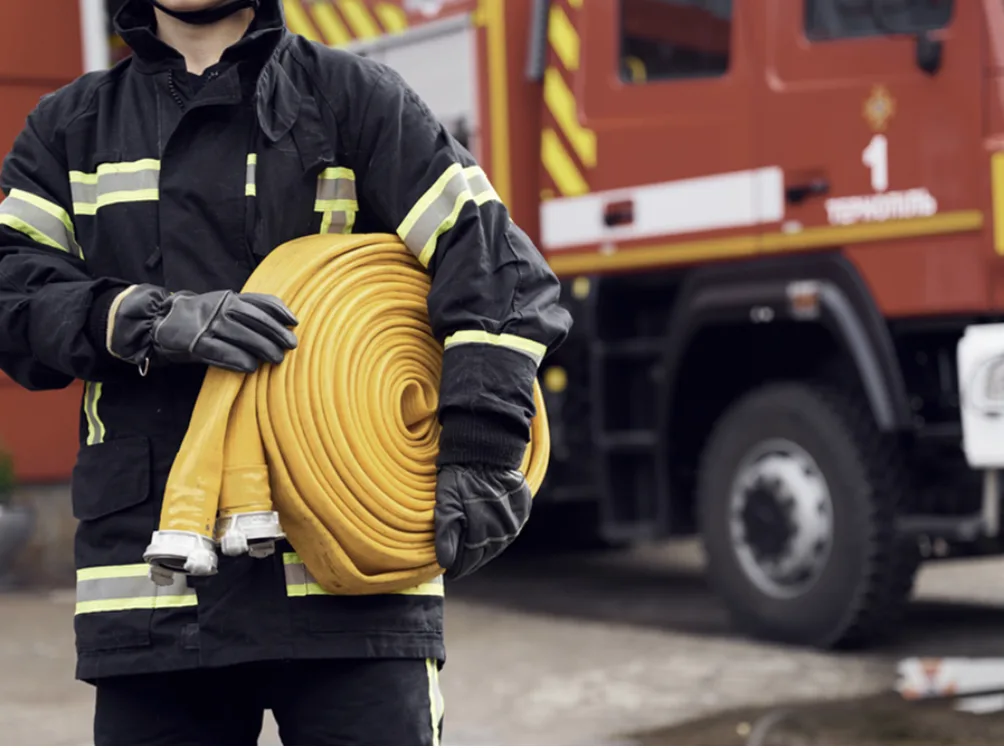
Fire Hose Types and Applications: Choosing the Right Fire Hose Type
Fire hoses are categorized into attack hoses, supply hoses, and forestry hoses. Each type is engineered for distinct operational contexts.
Attack hoses: Designed for high-pressure use near the fire source. Typically lightweight and flexible.
Supply hoses: Used to transport large volumes of water over long distances. Larger diameters reduce friction loss.
Forestry hoses: Lightweight and portable, used in wildland firefighting where mobility is critical.
For industrial procurement, options such as industrial fire hose solutions and high-pressure fire hose systems are commonly evaluated based on operational demands.
Data from U.S. Fire Administration (FEMA) indicates that hose deployment efficiency significantly impacts response time in structural fires.
Fire Hose Diameter and Flow Rate Optimization
Fire hose diameter directly influences water flow capacity. Larger diameters deliver higher flow rates but reduce maneuverability.
| Hose Diameter | Typical Use Case | Flow Rate Range |
|---|---|---|
|
1.5 inch |
Interior attack |
95–125 GPM |
|
2.5 inch |
Exterior attack |
200–325 GPM |
|
4–5 inch |
Water supply |
500–1500 GPM |
The relationship between diameter and flow aligns with hydraulic principles documented by National Institute of Standards and Technology (NIST). Larger hoses minimize friction loss, improving efficiency over long distances.
Applications requiring optimized flow often rely on large diameter fire hose configurations for municipal or industrial water supply systems.
Fire Hose Pressure Ratings and Safety Standards
Pressure rating defines the maximum safe operating pressure of a fire hose. Three key ratings include:
Service Test Pressure: Maximum recommended operating pressure
Proof Test Pressure: Pressure used during testing
Burst Pressure: Failure threshold
| Pressure Type | Typical Range |
|---|---|
|
Service Pressure |
150–300 psi |
|
Proof Pressure |
300–600 psi |
|
Burst Pressure |
600–1200 psi |
Standards from NFPA Codes and Standards specify testing requirements to ensure safety and reliability.
Industrial buyers often evaluate fire hose pressure rating guide resources to ensure compatibility with pumping systems.
Fire Hose Materials and Durability Considerations
Fire hose materials determine resistance to abrasion, chemicals, and environmental exposure. Common materials include:
Rubber-lined hoses: High durability and flexibility
PVC-lined hoses: Lightweight and cost-effective
Polyurethane hoses: High resistance to abrasion and chemicals
According to research from Environmental Protection Agency (EPA), material selection impacts long-term environmental resistance and lifecycle cost.
Applications requiring extended durability often use durable fire hose materials designed for harsh industrial environments.
Fire Hose Standards and Compliance Requirements
Compliance with international standards ensures safety and interoperability. Key standards include:
NFPA 1961 – Fire Hose Standard
UL (Underwriters Laboratories) Certification
ISO 9001 Manufacturing Standards
These standards define testing procedures, material quality, and performance benchmarks. The International Organization for Standardization (ISO) provides global frameworks for quality assurance.
Selecting certified products such as certified fire hose equipment ensures alignment with regulatory requirements.
Fire Hose Maintenance and Lifecycle Management
Proper maintenance extends service life and ensures operational readiness. Key practices include:
Routine pressure testing
Visual inspection for wear and leaks
Proper drying and storage
The OSHA Fire Protection Guidelines recommend periodic inspection schedules to prevent equipment failure.
Lifecycle management reduces replacement costs and ensures compliance with safety regulations.
Cost vs Performance: Fire Hose Investment Analysis
Fire hose selection requires balancing upfront cost with long-term performance. Lower-cost hoses may have shorter lifespans, increasing replacement frequency.
| Factor | Low-Cost Hose | High-Performance Hose |
|---|---|---|
|
Initial Cost |
Low |
Higher |
|
Durability |
Moderate |
High |
|
Maintenance Cost |
Higher |
Lower |
Data from U.S. Bureau of Labor Statistics indicates that equipment durability significantly impacts operational costs in fire services.
Investment in quality materials often results in lower total cost of ownership over time.
Conclusion: Structured Approach to Fire Hose Selection
Fire hose selection requires a structured evaluation of application, pressure, diameter, and material. Each factor directly influences safety, efficiency, and cost. Key decision steps include:
Define operational environment
Determine required flow rate
Match pressure ratings with equipment
Select durable materials
Ensure compliance with standards
A systematic approach improves performance outcomes and aligns with industry best practices.
FAQ
What is the difference between attack hose and supply hose?
Attack hose is used near the fire and requires flexibility and high pressure tolerance. Supply hose transports water over long distances and focuses on volume capacity. The primary difference lies in diameter, pressure handling, and operational use.
How to calculate the correct fire hose diameter?
Diameter selection depends on required flow rate and distance. Larger diameters reduce friction loss and improve efficiency. Hydraulic calculations based on gallons per minute (GPM) and pressure loss are typically used in system design.
What pressure rating is suitable for industrial fire hoses?
Industrial fire hoses generally require service pressures between 150 and 300 psi. The exact requirement depends on pump capacity and system design. Safety standards recommend selecting hoses with higher burst pressure margins.
How often should fire hoses be inspected and tested?
Fire hoses should undergo visual inspection after each use and pressure testing annually. Regulatory bodies recommend more frequent testing in high-risk environments to ensure safety compliance.
What are common mistakes when choosing a fire hose?
Common mistakes include selecting incorrect diameter, ignoring pressure compatibility, and overlooking material durability. Another frequent issue is failing to verify compliance with safety standards, which can lead to operational risks.