
Industrial Fire Protection Systems Overview for Factory Safety and Warehouse Fire Systems
Industrial fire protection systems are engineered infrastructures designed to detect, control, and suppress fires in high-risk environments such as factories, logistics hubs, and large-scale storage facilities. These systems integrate industrial fire protection technologies, including automated detection, suppression, and emergency response coordination. The primary objective is to reduce ignition probability, limit fire spread, and protect both human life and high-value assets in industrial operations.
Modern industrial fire protection is no longer limited to basic alarms and sprinklers. It now includes integrated warehouse fire system architectures combining IoT-based sensors, real-time monitoring, and automated suppression. Regulatory frameworks such as and guidance from define baseline compliance requirements for industrial facilities. Research institutions such as further contribute data-driven fire modeling used in modern factory safety engineering.
Key conclusion: industrial fire protection systems are a layered safety architecture combining detection, suppression, compliance design, and operational risk management tailored for high-density industrial environments.
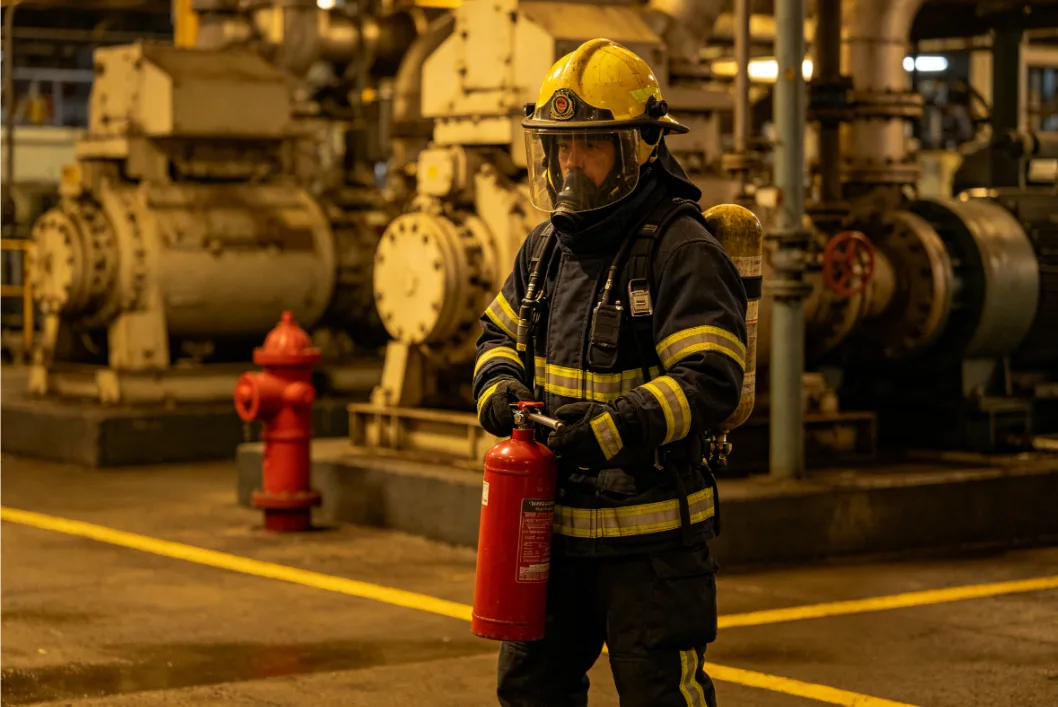
Warehouse Fire Suppression System Types and Industrial Fire Protection Architecture
Warehouse fire environments present unique challenges due to high storage density, vertical stacking, and combustible packaging materials. A warehouse fire suppression system must respond rapidly while minimizing water or chemical damage to stored goods. Common suppression technologies include wet pipe sprinklers, dry pipe systems, pre-action systems, foam suppression, and gas-based extinguishing systems.
Industrial facilities increasingly adopt hybrid suppression strategies aligned with fire load distribution and commodity classification. Standards from emphasize risk-based suppression design rather than uniform system deployment.
Table 1: Common Warehouse Fire Suppression System Types
| System Type | Mechanism | Best Use Case | Key Advantage |
|---|---|---|---|
|
Wet Pipe Sprinkler |
Water-filled pipes release immediately |
General warehouses |
Fast response |
|
Dry Pipe System |
Air-filled pipes release water after activation |
Cold storage |
Freeze protection |
|
Pre-Action System |
Requires dual activation |
Data centers, high-value goods |
False alarm reduction |
|
Foam Suppression |
Foam blanket suppresses oxygen |
Chemical storage |
High fire containment |
|
Clean Agent System |
Gas-based oxygen displacement |
Electronics storage |
No residue damage |
Internal reference: warehouse engineering standards can be explored via /products/warehouse-fire-suppression-systems and /products/industrial-sprinkler-systems for system configuration comparisons.
Industrial fire protection effectiveness depends on aligning suppression type with combustible classification and storage geometry, ensuring compliance with warehouse fire system engineering principles.
Factory Fire Prevention Solutions and Industrial Fire Alarm Installation
Factory environments introduce additional fire hazards due to heat-generating machinery, electrical systems, and chemical processing. Factory fire prevention solutions rely on early detection, automated shutdown systems, and zoned alarm integration.
Industrial fire alarm installation typically includes smoke detectors, heat sensors, flame detectors, and control panels connected through centralized monitoring systems. According to , early detection significantly reduces industrial fire damage severity when integrated with automated suppression.
Table 2: Industrial Fire Alarm System Components
| Component | Function | Industrial Application |
|---|---|---|
|
Smoke Detector |
Detects particulate matter |
Warehouses, factories |
|
Heat Detector |
Responds to temperature rise |
Manufacturing zones |
|
Flame Detector |
Detects infrared/ultraviolet flames |
Chemical plants |
|
Control Panel |
Central monitoring hub |
Entire facility |
|
Alarm Notification System |
Alerts personnel and emergency services |
Site-wide safety |
Internal system guides such as /products/industrial-fire-alarm-installation and /products/factory-safety-monitoring provide structured deployment frameworks for scalable alarm integration.
Factory fire prevention solutions also include electrical load monitoring, machine thermal shutdown protocols, and combustible dust management systems, which are critical in industrial fire protection engineering.
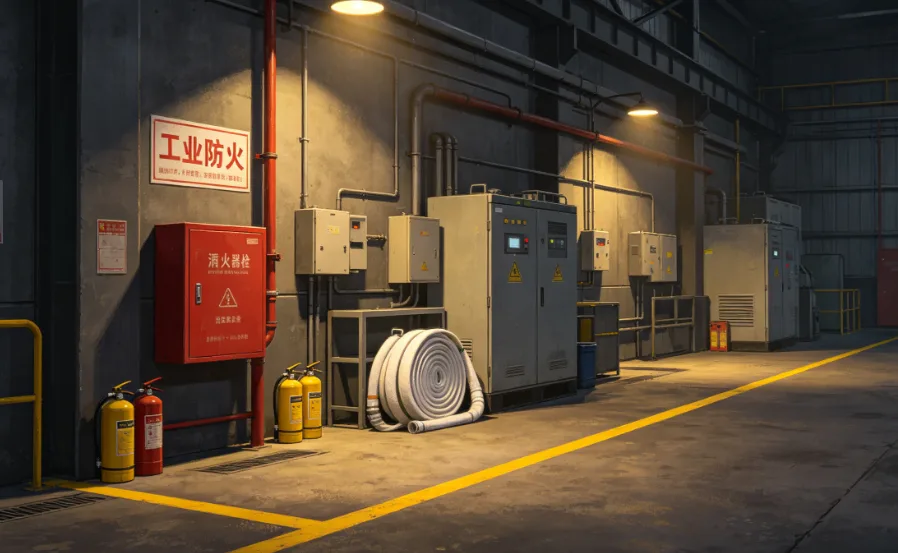
Industrial Fire Protection Design Standards and Compliance Framework
Compliance is a foundational pillar of industrial fire protection systems. Regulatory standards ensure consistency in design, installation, and operational readiness across factory safety and warehouse fire systems. In the United States, OSHA provides enforceable workplace fire safety requirements, while NFPA codes define technical system design criteria.
Additional guidance from FEMA emergency preparedness programs and UL Solutions testing frameworks ensures equipment reliability and performance validation under simulated fire conditions.
Key external compliance references include:
Industrial fire protection compliance typically requires:
1.Fire risk assessment documentation
2.System design verification
3.Equipment certification
4.Routine inspection schedules
5.Emergency response integration
Internal compliance resources include /products/fire-safety-compliance-audit and /products/industrial-fire-risk-assessment-tools for structured evaluation workflows.
Implementation Process for Industrial Fire Protection Systems
Deploying industrial fire protection systems requires a phased engineering approach that integrates risk analysis, system design, installation, and validation testing. Factory safety performance depends on accurate hazard classification and correct system zoning during initial design stages.
Implementation typically begins with fire load analysis, followed by system selection based on occupancy type and material classification. Warehouse fire system engineering then progresses into hydraulic calculations, alarm zoning, and suppression coverage mapping.
Internal deployment guides such as /products/industrial-fire-protection-design and /products/warehouse-safety-planning-tool support structured implementation planning.
A standard implementation sequence includes:
Site fire risk assessment
-
System architecture design
-
Equipment procurement and certification
-
Installation of detection and suppression systems
-
Commissioning and compliance validation
Industrial fire protection success is strongly correlated with early integration into facility design rather than retrofitting after construction.
Common Mistakes in Industrial Fire Protection and Warehouse Fire Systems
Despite advancements in industrial fire protection, several recurring design and operational errors reduce system effectiveness. One major issue is underestimating fire load in high-density warehouse environments, leading to insufficient suppression coverage.
Another common failure is improper industrial fire alarm installation, where sensor placement does not align with airflow patterns or heat accumulation zones. Maintenance neglect is also a critical factor, as suppression systems require periodic testing to maintain operational readiness.
Typical industrial fire protection errors include:
Inadequate zoning of warehouse fire system networks
-
Incorrect suppression system selection for stored materials
-
Lack of integration between alarm and suppression systems
-
Failure to comply with updated NFPA standards
-
Insufficient employee fire safety training
Internal diagnostic tools such as /products/fire-system-diagnostic-tool and /products/factory-safety-audit-checklist help identify system inefficiencies before failure occurs.
Industrial fire protection reliability depends not only on system design but also on continuous inspection, compliance updates, and operational discipline.
Conclusion: Industrial Fire Protection as a Multi-Layer Safety Engineering System
Industrial fire protection systems represent an integrated safety framework combining detection, suppression, compliance, and operational readiness. Factory safety and warehouse fire system performance depend on selecting appropriate technologies, aligning with regulatory standards, and implementing structured maintenance cycles.
Modern industrial fire protection engineering is increasingly data-driven, leveraging research from institutions such as NIST and FM Global to optimize suppression efficiency and reduce industrial fire risk exposure. A well-designed system ensures continuity of operations while minimizing loss of life and property damage.
FAQ: Industrial Fire Protection Systems and Warehouse Fire Safety
1. What is the primary purpose of industrial fire protection systems?
Industrial fire protection systems are designed to detect, control, and suppress fires in high-risk environments such as factories and warehouses. Their primary purpose is to minimize fire spread, protect human life, and reduce property damage through automated detection and suppression technologies.
2. How does a warehouse fire suppression system work?
A warehouse fire suppression system activates when heat, smoke, or flame detectors identify abnormal conditions. Depending on system type, water, foam, or gas is released to suppress fire. The system is typically zoned to ensure only affected areas are activated, reducing collateral damage.
3. What standards regulate factory fire prevention solutions?
Factory fire prevention solutions are regulated primarily by OSHA workplace safety rules and NFPA fire codes. These frameworks define requirements for system installation, inspection intervals, alarm integration, and suppression system performance across industrial environments.
4. What are common mistakes in industrial fire alarm installation?
Common mistakes include incorrect sensor placement, lack of system zoning, failure to integrate alarms with suppression systems, and insufficient maintenance schedules. These issues reduce detection speed and increase fire spread risk in industrial facilities.
5. What factors influence the choice of industrial fire protection systems?
Selection depends on fire load type, storage density, facility layout, and regulatory requirements. Chemical storage requires foam or gas systems, while general warehouses often use sprinkler systems. Proper risk assessment ensures optimal system configuration and compliance.