
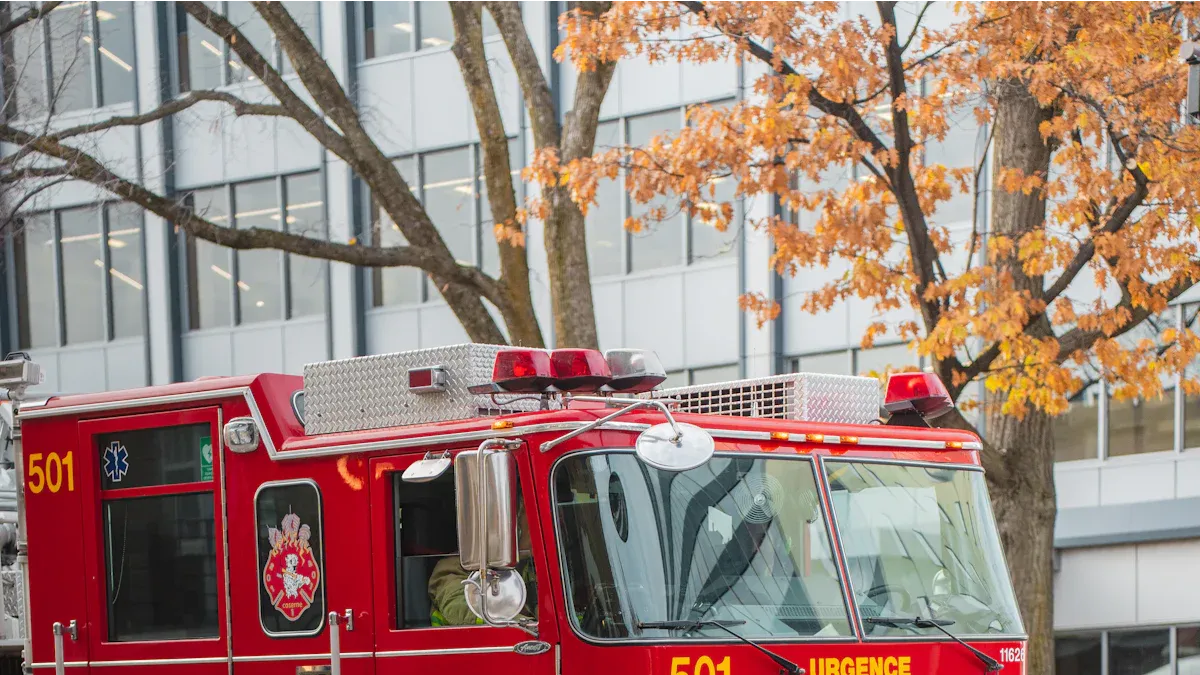
Reliability remains paramount for fire fighting equipment procurement in 2026 projects. The China Fire Fighting Equipment market projects an 8.3% Compound Annual Growth Rate, highlighting significant opportunities. The China fire protection-systems market also projects a 12.32% CAGR from 2024 to 2035. Finding reliable fire fighting equipment suppliers China becomes crucial. ZheJiang World Fire fighting equipment, a leading Fire fighting equipment manufacturer, exemplifies the quality available from China fire fighting equipment manufacturers. Identifying the best fire fighting equipment suppliers in China requires strategic effort to secure high-quality partnerships.
Key Takeaways
- Check for international safety certificates like UL, NFPA, and CE. These show a manufacturer’s commitment to quality.
- Look for strong quality control systems. This includes checking raw materials, watching production, and testing finished products.
- Visit factories and test product samples. This helps you see how products are made and if they work well.
- Verify business licenses and supplier details. Use official government websites and B2B platforms to check their legitimacy.
- Understand shipping rules and customs. Make sure products follow all local and international safety laws.
Establishing Core Criteria for Reliable Fire Fighting Equipment Partners
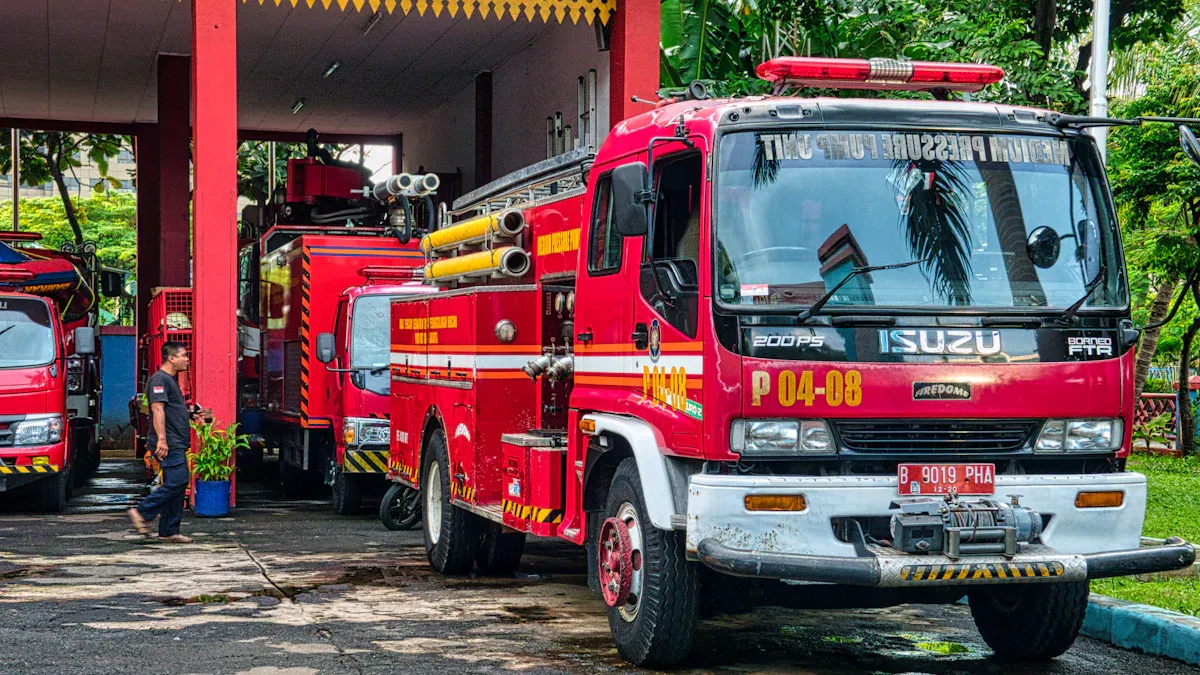
Finding a reliable partner in China for your 2026 projects requires a clear set of criteria. Businesses must look beyond initial cost. They need to focus on long-term quality, compliance, and manufacturing integrity. This approach ensures the safety and effectiveness of all procured equipment.
Understanding International Certifications for Fire Fighting Equipment
International certifications are crucial indicators of a manufacturer’s commitment to quality and safety. These certifications confirm products meet global standards. Key safety certificates for fire fighting equipment include:
- UL certificate (Underwriters Laboratories)
- NFPA certificate (National Fire Protection Association)
- CE certificate (Conformité Européenne)
Manufacturers holding these certifications demonstrate their products undergo rigorous testing and meet strict performance benchmarks. For example, ZheJiang World Fire Fighting Equipment Co., Ltd. holds certifications like MED, LPCB, BSI, TUV, and UL/FM. This shows their dedication to international compliance. These certifications are not just labels; they represent a product’s ability to perform reliably in critical situations.
Evaluating Quality Control Systems for Fire Fighting Equipment
A robust quality control system is essential for any reliable manufacturer. It ensures consistency and high standards throughout the production process. An effective system involves several critical steps:
- Raw Material Inspection: This initial step checks the chemical composition, purity of additives, and physical properties of base liquids. Advanced analytical equipment, such as gas chromatography and viscosity meters, ensures materials meet specifications before production.
- Production Process Monitoring: Automated control systems closely monitor critical factors like temperature, pressure, and mixing speed during manufacturing. In-process sampling tests basic properties, including foam expansion ratio and drainage time.
- Quality Testing of Finished Products: Comprehensive tests simulate real-world scenarios. These include fire-extinguishing performance tests for Class A and B fires, storage stability tests (accelerated aging), and compatibility tests with other materials.
- Packaging and Labeling Checks: This stage ensures the durability and integrity of packaging materials. It also verifies labels provide accurate information regarding foam type, use, mixing ratios, storage, and safety precautions.
- Documentation and Traceability: Detailed records of test results, production parameters, and raw material batch numbers are maintained. This documentation allows for tracking quality, identifying root causes of issues, and continuous improvement.
Manufacturers also conduct specific tests to ensure product durability and performance. Durability testing involves materials like duplex stainless steel and Ni-Al-Bronze. These materials undergo rigorous testing to withstand corrosive saltwater, extreme weather, and humidity. Power and pump efficiency tests ensure efficient operation under maximum load. System redundancy and safety checks confirm the presence of backup features. Integration with vessel systems is also critical, ensuring harmonious operation with propulsion and maneuvering systems. Self-protection systems, such as deluge systems, are tested for effective operation. Foam system integration ensures proper foam-to-water ratios and smooth switching. Stringent component testing inspects individual parts like transmissions and pumps before assembly. Finally, comprehensive system testing involves full-scale load testing, including pressure and functional evaluations, often supervised by class surveyors.
Assessing Manufacturing Capabilities and Capacity for Fire Fighting Equipment
A partner’s manufacturing capabilities and capacity directly impact their ability to deliver high-quality products on schedule. A strong manufacturer possesses advanced equipment and a skilled workforce. The process of producing high-quality fire pumps illustrates this well:
- Design and Engineering: This initial phase creates a blueprint. It considers pump capacity, pressure, materials, and power sources. This is critical for performance.
- Material Selection: High-quality materials like cast iron, stainless steel, and aluminum are chosen. They provide durability, corrosion resistance, and strength.
- Casting and Machining: Molten metal is cast into molds to form basic components. Precision machining, often using CNC machines, refines these parts.
- Assembly: Skilled technicians meticulously put together components. These include impellers, housings, shafts, and seals. They ensure proper alignment for efficiency.
- Testing: Rigorous quality control includes pressure testing, flow rate measurement, operational checks, and endurance tests. This meets safety and performance standards.
- Painting and Coating: Protective layers are applied. These enhance durability and prevent corrosion.
- Packaging and Shipping: Pumps are carefully packaged. This prevents damage during transport and handling. Proper documentation for identification and installation is also included.
ZheJiang World Fire Fighting Equipment Co., Ltd. exemplifies such capabilities. They operate a 30,000 m² facility with over 150 workers and professional technicians. This scale and expertise allow them to handle large orders while maintaining strict quality control. Their advanced equipment and adherence to international standards ensure all products meet global customer expectations.
Strategic Sourcing Approaches for Chinese Fire Fighting Equipment Suppliers
Businesses must employ strategic sourcing methods to identify and partner with reliable Chinese fire fighting equipment suppliers. These approaches help companies navigate the vast market and secure high-quality products.
Leveraging B2B Platforms and Industry Directories
B2B platforms offer a broad reach to potential suppliers. Leading platforms for sourcing fire fighting equipment from China include:
- Alibaba.com
- Made-in-China.com
- Global Sources
These platforms allow buyers to browse product catalogs, compare suppliers, and initiate contact. Additionally, industry-specific directories provide targeted access to specialized manufacturers.
Register your business in local directories (e.g., Yelp, YellowPages) and firefighting industry-specific platforms (e.g., FireRescue1). Consistent NAP information across these citations strengthens your local search authority.
Submitting your business to trusted local directories like Yelp, YellowPages, and industry-specific platforms such as FireRescue1 helps identify reputable suppliers. Buyers ensure their NAP (Name, Address, Phone) information remains identical across all listings to avoid confusion. They also claim and regularly update these listings to maintain relevance.
Attending Chinese Fire Fighting Equipment Trade Shows
Attending trade shows provides invaluable opportunities for direct engagement with manufacturers. The China Fire expo stands as the largest and most influential international fire protection exposition in China. This biennial event attracts numerous exhibitors and visitors, showcasing advanced technologies and facilitating significant business. Recent editions include China Fire 2023 and China Fire 2025 in Beijing. Other events, like the Shanghai Labor Insurance Exhibition, feature advancements in fire fighting equipment, particularly air respirators. The China International Occupational Safety & Health Goods Expo (CIOSH) also introduces innovations in respiratory protection and firefighting equipment.
Engaging Specialized Sourcing Agents for Fire Fighting Equipment
Specialized sourcing agents offer comprehensive support throughout the procurement process. They provide a range of services, including:
- Supplying and servicing fire suppression systems, fire extinguishers, emergency lighting, and fire hoses.
- Inspection, servicing, and maintenance of fire fighting equipment throughout its lifecycle.
- Design, installation, repair, and maintenance of fire suppression systems.
- Procurement, installation, maintenance, and repair of portable monitors.
- Sourcing and certification for procurement, inspection, maintenance, and repair of equipment and their recharge agents.
These agents streamline the sourcing process, ensuring compliance and quality.
Conducting Thorough Due Diligence on Fire Fighting Equipment Manufacturers
Thorough due diligence is essential when selecting fire fighting equipment manufacturers. This process involves a deep dive into a supplier’s operations, product quality, and legitimacy. It helps ensure a reliable partnership for your 2026 projects.
Performing Factory Audits and Site Visits
Factory audits and site visits provide direct insight into a manufacturer’s capabilities and quality control. During an audit, businesses should inspect several critical elements. They should verify process documentation and adherence to Standard Operating Procedures (SOPs). This ensures production reliability and repeatability. Checking equipment maintenance records confirms optimal machinery operation and prevents downtime. Quality checks at key production stages prevent defects and ensure product consistency.
Auditors also monitor key safety parameters. They check fire safety equipment, proper use of personal protective equipment (PPE), and clear emergency exits. Adherence to machinery safety guidelines and ventilation in hazardous areas are also important. An evaluation of the Quality Management System (QMS) assesses consistent quality standards. This includes quality policies, employee training, document control, and process control. Finally, verifying compliance with safety measures and industry regulations is crucial. This involves checking workplace safety protocols, emergency preparedness, hazardous material management, and occupational health and safety standards. Accurate documentation of production processes and quality control tasks is also evaluated. This includes process documentation, work instructions, SOPs, quality control records, and calibration/testing records.
Requesting and Testing Fire Fighting Equipment Samples
Requesting and testing samples is a vital step in assessing product quality. This allows businesses to evaluate the actual performance and build quality of the equipment. For fire extinguishers, standard testing procedures include:
| Procedure | Frequency | Details |
|---|---|---|
| Monthly Visual Inspection | Monthly | Check accessibility, pressure gauge (in green), pin and tamper seal (intact), nozzle (clear), and body (no damage/corrosion). Ensure the inspection tag is present and legible. |
| Annual Professional Inspection | Annually | A certified technician performs a thorough check, including internal examination (if required), hydrostatic testing (every 5 or 12 years depending on extinguisher type), and recharging/refilling. |
| Hydrostatic Testing | Every 5 or 12 years | Required for certain types of extinguishers to ensure the cylinder can withstand high pressure. |
| Recharging/Refilling | After every use or if pressure drops | Even a small discharge requires recharging. Also necessary if the pressure gauge is not in the green zone. |
| Record Keeping | Ongoing | Maintain detailed records of all inspections, maintenance, and testing. This includes dates, findings, actions taken, and the technician’s signature. |
| Training | Regularly | Ensure employees are trained on how to properly use a fire extinguisher and understand the PASS method (Pull, Aim, Squeeze, Sweep). |
| Placement | Strategic | Ensure extinguishers are placed in easily accessible, visible locations, near exits, and away from potential fire hazards. |
| Signage | Clear | Install clear signage indicating the location of fire extinguishers. |
| Mounting | Secure | Mount extinguishers securely on appropriate hangers or brackets, at the correct height. |
| Type Selection | Appropriate | Ensure the correct type of extinguisher is available for the potential fire hazards in the area (e.g., Class A for ordinary combustibles, Class B for flammable liquids, Class C for electrical fires, Class D for combustible metals, Class K for cooking oils). |
| Maintenance of Tags | Ongoing | Ensure inspection tags are properly filled out and attached to the extinguisher after each inspection. |
| Replacement | As needed | Replace extinguishers that are damaged, corroded, or have failed hydrostatic testing. |
| Accessibility | Constant | Ensure nothing obstructs access to fire extinguishers at any time. |
| Environmental Conditions | Regular check | Ensure extinguishers are not exposed to extreme temperatures or corrosive environments that could damage them. |
| Compliance with Regulations | Ongoing | Adhere to local fire codes, NFPA standards, and OSHA regulations regarding fire extinguisher inspection and maintenance. |
The typical lead time for receiving samples varies. For products like 100g CO2 cartridges for CE approved fire extinguishers, production is within 45 days. Samples can be offered depending on the specific product. For a fireproof coating small sample fire resistance testing machine, the general lead time is 7-15 days after the deposit is received. Water-based fire extinguisher samples typically take about 7 days. Mass production for these extends to 20-30 days after deposit payment.
Verifying Business Licenses and Supplier Credentials
Verifying business licenses and supplier credentials is a non-negotiable step. Legitimate Chinese fire fighting equipment suppliers should possess several key certifications. These include ISO 9001 for Quality Management, CE Marking for EU compliance, and UL or FM approval for the North American market. CCC Certification is mandatory in China. Other certifications like EN3 or AS/NZS 1841 may be required for specific regional needs. These certifications confirm products meet international safety standards and can successfully pass customs inspections. Businesses must request test reports and batch-specific documentation before placing any orders. Many leading Chinese manufacturers produce fire extinguishers that comply with international standards such as UL, CE, BS EN, and AS/NZS. However, it is essential to verify this compliance through official test reports rather than relying solely on marketing claims.
The Chinese government provides public databases for verifying supplier legitimacy. The China National Enterprise Credit Information Publicity System is a key resource. It offers detailed company registration, legal status, and financial background information. This system allows businesses to confirm a supplier’s official registration, valid operating license, and any legal history. This provides transparency for initial verification.
Online B2B marketplaces also offer verification tools. Alibaba, a major online marketplace, provides a comprehensive supplier verification process. Its ‘Gold Supplier’ status indicates higher reliability. This status is granted after verifications of business licenses, company backgrounds, and trade history. Alibaba also offers on-site checks, product inspections, and credit reports. Other online B2B marketplaces like Global Sources and Made-in-China offer extensive supplier directories. These include reviews, ratings, and certifications. They allow buyers to search by specific criteria and provide detailed supplier profiles, customer feedback, and quality certifications. Features often include communication tools, sample requests, and secure transaction services. This enables comparison of multiple suppliers and informed decision-making.
Negotiating and Contracting with Fire Fighting Equipment Providers
Businesses must skillfully negotiate and contract with fire fighting equipment providers. This ensures favorable terms and a clear understanding of obligations. A well-structured agreement protects both parties.
Key Considerations for Pricing and Payment Terms
Pricing for fire fighting equipment depends on several factors. These include order volume, customization requirements, and current material costs. Buyers should seek transparent pricing structures. They must understand all components of the cost. Common payment terms often involve an upfront deposit, typically 30-50%. The remaining balance becomes due upon shipment or delivery. Negotiating favorable payment terms improves cash flow. It also builds trust between the buyer and supplier.
Defining Minimum Order Quantities and Production Schedules
Manufacturers often establish Minimum Order Quantities (MOQs). These MOQs ensure production efficiency and cost-effectiveness. Buyers should discuss MOQs early in negotiations. Sometimes, suppliers offer flexibility for initial orders or long-term partnerships. Clearly defining production schedules is also critical. This includes lead times for manufacturing, quality control, and packaging. A detailed schedule helps manage project timelines effectively. It prevents unexpected delays.
Drafting Comprehensive Supply Agreements for Fire Fighting Equipment
A comprehensive supply agreement forms the backbone of any partnership. It outlines responsibilities and expectations. Essential general clauses include:
- Inspection/Acceptance: This clause outlines the government’s right to inspect and test tendered items for conformity. It also requires repair or replacement of nonconforming supplies.
- Disputes: This clause addresses the resolution of disagreements arising under the contract. It ensures performance continues diligently during dispute resolution.
- Excusable Delays: This clause specifies conditions under which nonperformance is excused, such as acts of God or government actions. It requires prompt notification of such delays.
- Invoice: This clause details the requirements for submitting invoices, including the format and designated address.
- Other Compliances: This clause mandates compliance with all applicable Federal, State, and local laws, executive orders, rules, and regulations relevant to contract performance.
- Compliance with Laws Unique to Government Contracts: This clause ensures adherence to specific laws pertinent to government contracts. These include those related to limitations on the use of appropriated funds and contract work hours.
The ‘Fire and Life Safety’ clause is crucial for fire fighting equipment supply agreements. It mandates compliance with fire prevention and life safety standards. This includes the installation and maintenance of fire alarms, sprinkler systems, emergency exits, and other safety equipment. This clause also requires regular inspections and adherence to local fire codes. It ensures occupant and property protection by minimizing fire-related risks.
Managing Logistics and Compliance for Fire Fighting Equipment Imports
Effective management of logistics and compliance is crucial for successful fire fighting equipment imports. Businesses must navigate complex international shipping, customs, and regulatory frameworks. This ensures timely delivery and adherence to safety standards.
Understanding Shipping, Incoterms, and Customs Procedures
Importers must understand shipping methods, Incoterms, and customs procedures. For importing fire fighting equipment into the United States, National Fire Protection Association (NFPA) standards are crucial. These standards form the legal basis for fire safety laws across all government levels. Importers ensure their products meet current editions, as guidelines update every three to five years. Key NFPA standards include NFPA 10 for portable fire extinguishers and NFPA 13 for fire sprinkler systems. Beyond NFPA, the Customs and Border Protection (CBP) agency enforces its own standards for regulatory compliance. Importers expect extra scrutiny for fire safety products, mastering paperwork, inspections, duties, and taxes.
Challenges often arise with Harmonized System (HS) Codes. Fire safety equipment may not fit neatly into single categories, leading to potential misclassification and delays. For example, fire extinguishers classify under ‘Liquid Dispersing Machines.’ Safety certificates also pose challenges. Suppliers provide these certificates to demonstrate products meet high manufacturing and testing standards. Agencies like the U.S. Consumer Product Safety Commission (CPSC) and the Food and Drug Administration (FDA) may also issue or request these. For other target countries, professional agents are crucial. They navigate market access barriers and stay updated on certifications like UL, CE, and CCC. The European Union, for instance, implements EN54 certification, with new regulations significantly impacting imports.
Ensuring Adherence to International and Local Regulations
Adherence to international and local regulations is non-negotiable. North America’s fire protection industry operates under a stringent regulatory environment. Key standards include National Fire Protection Association (NFPA) codes, Occupational Safety and Health Administration (OSHA) regulations, and local building codes. Compliance with these standards is mandatory for product approval and installation. Recent regulatory trends emphasize smart fire detection systems and eco-friendly suppression agents. Local regulations provide essential guidelines for equipment design, installation, and maintenance. These regulations vary significantly across jurisdictions, reflecting specific local risks. Adherence to these local standards is vital for organizations to operate safely and avoid penalties. NFPA Standards are increasingly integrated into local regulations to enhance safety.
Implementing Quality Assurance During Transit and Delivery
Quality assurance extends beyond manufacturing. Businesses implement measures to protect equipment during transit and delivery. This includes proper packaging, secure loading, and appropriate environmental controls. Upon arrival, a thorough inspection verifies product integrity and matches specifications. Any discrepancies require immediate action. Proper handling and storage at the destination also maintain product quality until installation. This continuous quality oversight ensures the equipment performs as expected when needed most.
Securing reliable fire fighting equipment partnerships in China requires strategic effort. Businesses must prioritize thorough due diligence, international certifications, and robust quality control systems. These steps ensure successful procurement for 2026 projects. Continuous engagement with chosen suppliers fosters sustained quality and compliance. This proactive approach builds lasting, trustworthy relationships. It guarantees the delivery of high-performance equipment.
FAQ
What is the best way to verify a Chinese fire fighting equipment supplier’s reliability?
Businesses verify supplier reliability through several key steps. They check for international certifications like UL, CE, or LPCB. Conducting factory audits and requesting product samples for testing also provides crucial insights. Verifying business licenses and credentials via official public databases is essential.
Which international certifications are most important for fire fighting equipment?
Important international certifications include UL (Underwriters Laboratories), NFPA (National Fire Protection Association), and CE (Conformité Européenne). Other valuable certifications are MED, LPCB, BSI, TUV, and UL/FM. These confirm products meet global safety and performance benchmarks.
Why should businesses conduct factory audits and site visits?
Factory audits and site visits offer direct insight into a manufacturer’s operations. They allow businesses to inspect quality control systems, production processes, and safety protocols. This ensures the supplier can consistently deliver high-quality products and adhere to standards.
How do businesses manage logistics and customs for fire fighting equipment imports?
Businesses must understand shipping methods, Incoterms, and customs procedures. They ensure adherence to international and local regulations, such as NFPA standards. Engaging professional sourcing agents can help navigate complex market access barriers and compliance requirements effectively.
What role do specialized sourcing agents play in procurement?
Specialized sourcing agents streamline the procurement process. They offer services like supplier identification, negotiation, quality control, and logistics management. These agents ensure compliance with regulations and help secure reliable partnerships, saving businesses time and resources.