
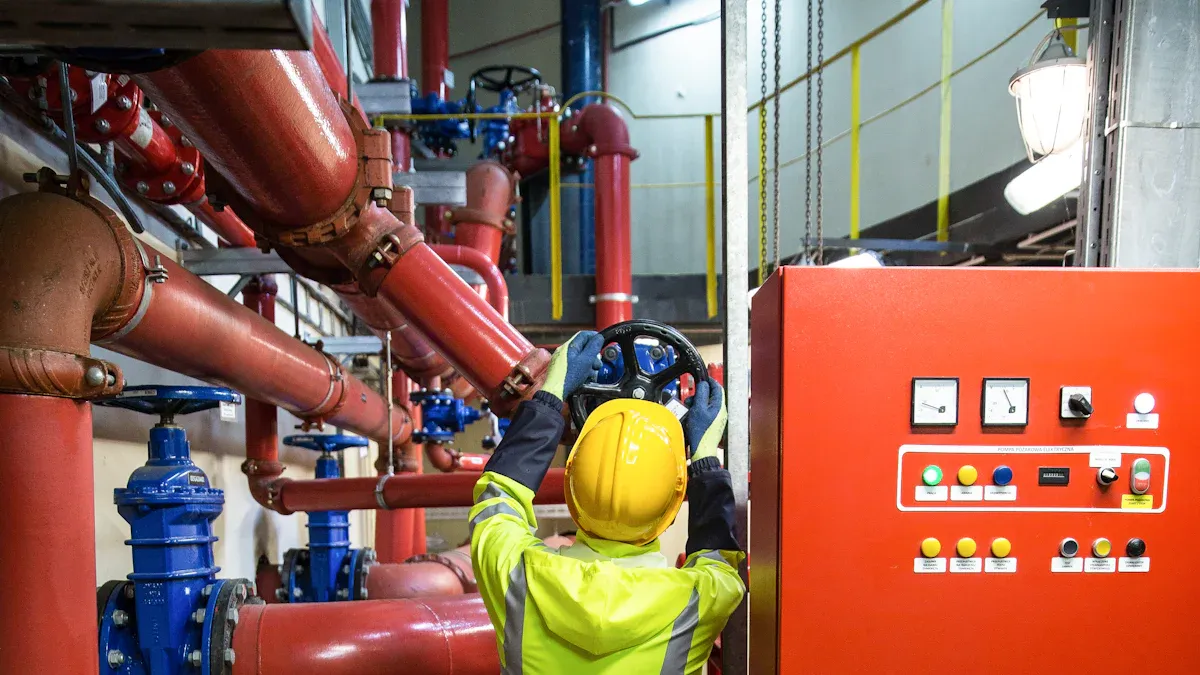
Scaling in firefighting equipment manufacturing is crucial for meeting increasing global safety demands. Companies must recognize key factors that influence annual output, such as production capacity, workforce skills, and supply chain efficiency. Strategic approaches can enhance growth, including setting clear objectives and analyzing market trends. For instance, understanding what factors affect the lead time of fire hydrant valve manufacturing can lead to more efficient operations. Fire equipment direct manufacturers must also verify their monthly output to ensure they meet customer needs, especially for essential products like fire extinguishers that are UL Listed / FM Approved.
Key Takeaways
- Assess production capacity regularly to identify inefficiencies and opportunities for expansion.
- Invest in workforce skills through training and cross-training to enhance productivity and adaptability.
- Optimize supply chain efficiency by diversifying suppliers and conducting regular audits to mitigate risks.
- Set clear, measurable objectives to guide growth and align resources effectively.
- Embrace advanced technologies and automation to improve production capabilities and reduce operational costs.
Understanding Current Manufacturing Capabilities

Assessing Production Capacity
To scale effectively, fire equipment OEM factories must first assess their production capacity. This assessment involves several key metrics that provide insights into operational efficiency. Companies typically evaluate:
- Capacity Utilization: This metric shows how much of the available production capacity is being used. High utilization rates may indicate a need for expansion, while low rates can reveal inefficiencies.
- Overall Equipment Effectiveness (OEE): OEE quantifies production losses and helps identify areas for improvement. By focusing on OEE, manufacturers can enhance their capacity utilization.
- Technical vs. Economic Capacity: Technical capacity represents the maximum output achievable under ideal conditions. In contrast, economic capacity reflects sustainable operations that consider cost factors.
- Data Collection Best Practices: Accurate data collection is crucial. Companies should use longer time periods for data collection to avoid fluctuations and implement real-time tracking systems to ensure data accuracy.
By understanding these metrics, manufacturers can make informed decisions about scaling their operations and optimizing production processes.
Evaluating Workforce Skills
A skilled workforce is essential for maximizing production capabilities in firefighting equipment manufacturing. Companies should regularly evaluate the skills of their employees to ensure they meet industry standards. This evaluation can include:
- Skill Assessments: Regular assessments help identify gaps in knowledge and expertise. Training programs can then be tailored to address these gaps.
- Cross-Training Opportunities: Encouraging cross-training among employees enhances flexibility and adaptability within the workforce. This approach allows workers to fill multiple roles, which can be beneficial during peak production times.
- Continuous Learning: Investing in ongoing education and training keeps employees updated on the latest technologies and manufacturing techniques. This commitment to learning fosters a culture of innovation and improvement.
By prioritizing workforce development, manufacturers can enhance productivity and maintain high-quality standards in their firefighting equipment.
Analyzing Supply Chain Efficiency
Supply chain efficiency plays a critical role in determining the annual output of fire equipment OEM factories. Disruptions in the supply chain can significantly impact production capabilities. The following table illustrates the statistical effects of supply chain disruptions:
| Impact Type | Statistic |
|---|---|
| Average drop in profitability | 107% drop in operating income |
| Lower sales growth | 7% decrease |
| Increase in costs | 11% growth |
To mitigate these risks, manufacturers should focus on building resilient supply chains. Strategies may include:
- Diversifying Suppliers: Relying on multiple suppliers reduces the risk of disruptions. This approach ensures that manufacturers can maintain production levels even if one supplier faces challenges.
- Implementing Just-in-Time Inventory: This strategy minimizes excess inventory while ensuring that materials arrive as needed. It can enhance cash flow and reduce storage costs.
- Regular Supply Chain Audits: Conducting audits helps identify potential vulnerabilities in the supply chain. Manufacturers can then take proactive measures to address these issues.
By analyzing and optimizing supply chain efficiency, manufacturers can improve their annual output and better meet the demands of the firefighting equipment market.
Strategic Planning for Growth
Setting Clear Objectives
Setting clear objectives is vital for scaling operations in fire equipment manufacturing. Companies should adopt effective methods to define their goals. The following table outlines some of the most effective methods for establishing clear objectives:
| Method | Description |
|---|---|
| Specific and Measurable Goals | Define clear production targets using quantifiable metrics. |
| Data-Driven Approaches | Analyze historical performance, demand forecasts, and capacity constraints to determine scaling. |
| Performance Indicators | Establish indicators to track progress towards expansion goals while maintaining quality standards. |
By implementing these methods, manufacturers can create a roadmap for growth. Clear objectives guide decision-making and help align resources effectively.
Market Analysis and Trends
Understanding market dynamics is essential for strategic planning. The fire equipment market is currently experiencing significant growth due to several factors. An increasing number of fire incidents, heightened awareness of fire safety, and stringent government regulations drive demand for firefighting equipment. These elements are crucial as they protect lives and property.
Recent statistical data highlights the market’s potential. The global fire safety equipment market is projected to grow from USD 55.6 billion in 2024 to USD 133.4 billion by 2035, expanding at a compound annual growth rate (CAGR) of 8.5%. Additionally, the fire detection equipment market size reached $8.11 billion in 2024 and is expected to grow to $11.21 billion by 2029 at a CAGR of 6.8%. Government regulations significantly influence this growth, emphasizing the need for compliance and innovation in product offerings.
Financial Planning and Investment
Effective financial planning is crucial for supporting growth initiatives. Manufacturers must assess their financial health and identify areas for investment. Key considerations include:
- Budget Allocation: Companies should allocate budgets for research and development, marketing, and production enhancements. This allocation ensures that resources are available for scaling operations.
- Investment in Technology: Investing in advanced manufacturing technologies can improve efficiency and reduce costs. Automation and innovative production techniques can lead to higher output and better quality products.
- Risk Management: Manufacturers must develop strategies to mitigate financial risks. This includes diversifying revenue streams and maintaining a healthy cash flow to navigate market fluctuations.
By focusing on these financial aspects, fire equipment manufacturers can position themselves for sustainable growth and increased market share.
The Role of Technology and Automation
Implementing Advanced Manufacturing Technologies
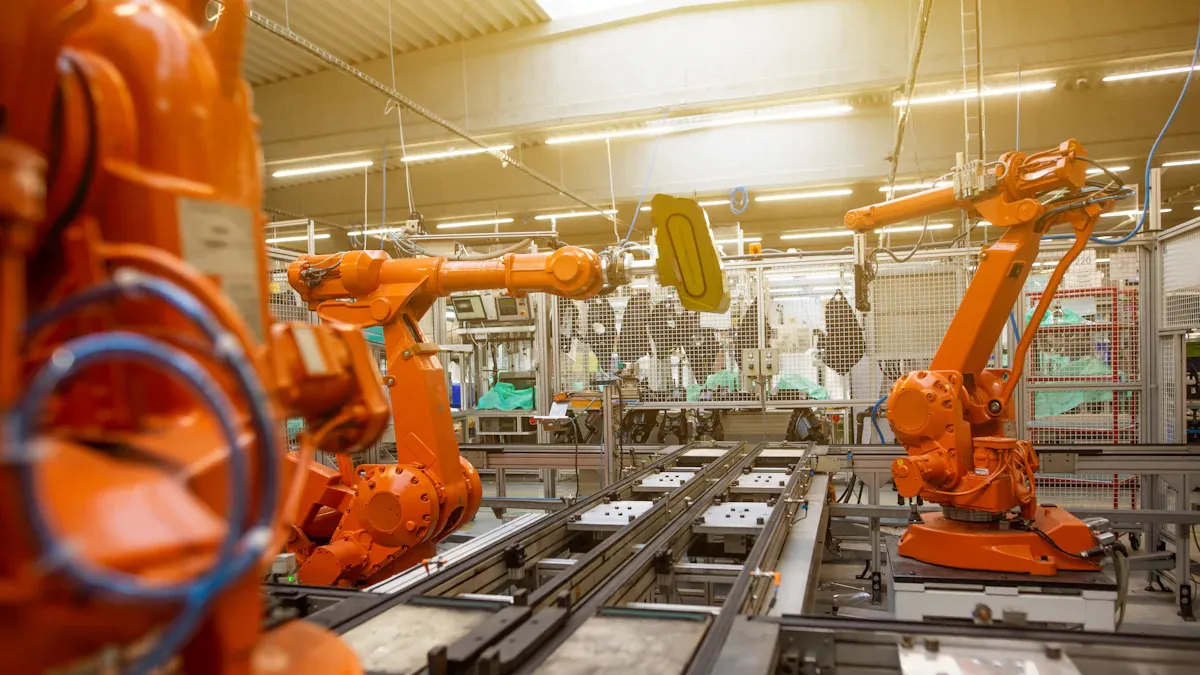
Fire equipment OEM factories increasingly adopt advanced manufacturing technologies to enhance their production capabilities. These technologies include advanced materials such as carbon fiber, titanium, and advanced polymers. These materials improve strength-to-weight ratios and corrosion resistance. Additionally, 3D printing technology allows manufacturers to create complex designs and customized parts efficiently. Smart technology integration, including sensors and data analytics, enhances decision-making and operational efficiency in firefighting.
Benefits of Automation in Production
Automation significantly transforms production processes in fire equipment manufacturing. The following table outlines the quantifiable benefits of automation:
| Benefit | Description |
|---|---|
| Enhanced Responsiveness | Automation allows for rapid activation of fire monitors and water cannons with minimal human intervention, crucial in high-risk environments. |
| Improved Accuracy | AI-driven technologies increase the precision of fire detection and response mechanisms. |
| Optimized Operation and Maintenance | Predictive analytics enable real-time diagnostics, reducing downtime and operational costs. |
| Enhanced Safety Outcomes | Automated systems contribute to safer environments by minimizing human error in fire response. |
| Greater Deployment Efficiency | Smart systems adjust to fire conditions, improving effectiveness in various sectors. |
Automation also reduces dependency on manual labor, lowering operational costs while boosting consistency. It enables scalability, adding capacity without increasing headcount. Furthermore, automation improves quality and repeatability, resulting in fewer errors and better customer satisfaction.
Case Studies of Successful Technology Integration
Several companies have successfully integrated technology into their operations. For instance, HME Fire Apparatus collaborated with IN2 to develop the fully integrated HME Ahrens-Fox fire apparatus, the AF1 model. This project exemplifies how technology can enhance product offerings and operational efficiency in the firefighting equipment sector.
By embracing advanced technologies and automation, fire equipment manufacturers can significantly improve their production capabilities and better serve their customers.
Optimizing Operations
Streamlining Processes
Streamlining processes is essential for enhancing efficiency in firefighting equipment manufacturing. Companies can adopt several techniques to achieve this goal:
- Building Information Modeling (BIM): This technology improves the design and development of fire safety equipment. BIM provides a comprehensive view of systems, automates cost estimation, and enhances quality and reliability.
- Mobile Technology: Transforming fire inspection checklists into digital formats accelerates on-site checks. This process automation ensures consistency and enhances accuracy, eliminating paperwork and reducing manual entry errors.
By implementing these techniques, manufacturers can significantly improve their operational workflows and reduce lead times.
Quality Control Measures
Quality control is a continuous process that begins at the design stage and extends throughout the product lifecycle. Effective measures include:
| Quality Control Measure | Description |
|---|---|
| Third-Party Testing | Independent organizations test products to ensure compliance with NFPA standards. |
| Certification Validation | A third-party registrar validates the manufacturing quality process according to ISO 9001. |
| Random Audits | Audits occur at least twice a year to ensure compliance with all requirements. |
Statistical process control (SPC) enables manufacturers to monitor and control quality proactively. This approach leads to improved product quality and reduced defect rates. Companies that implement effective quality control processes can significantly lower costs associated with defects, such as rework and warranty claims.
Lean Manufacturing Principles
Lean manufacturing principles focus on maximizing efficiency while minimizing waste. Key principles include:
| Lean Manufacturing Principle | Description |
|---|---|
| Right-sized equipment | Equipment designed to meet specific production needs, enhancing energy efficiency. |
| Improved plant layout | Arranging equipment to support smooth material flow, minimizing transport delays. |
| Standard work practices | Establishing agreed-upon procedures to maximize performance. |
| Visual controls | Tools that reinforce standardized procedures and display activity status. |
| Focus on reducing lead times | Strategies aimed at shortening the time from order to delivery. |
Manufacturers that adopt comprehensive lean approaches can achieve a reduction in operating costs by 10% to 30%. These principles not only enhance productivity but also improve overall responsiveness to customer needs.
Measuring Success
Key Performance Indicators (KPIs)
To gauge success in firefighting equipment manufacturing, companies must establish clear key performance indicators (KPIs). These metrics provide insights into operational efficiency and product quality. Common KPIs include:
- Production Volume: Measures the total output of firefighting equipment within a specific timeframe.
- Defect Rate: Tracks the percentage of products that fail to meet quality standards.
- Customer Satisfaction: Assesses feedback from clients regarding product performance and service.
- On-Time Delivery Rate: Evaluates the percentage of orders delivered by the promised date.
By monitoring these KPIs, manufacturers can identify areas for improvement and make informed decisions to enhance their operations.
Continuous Improvement Strategies
Continuous improvement is vital for maintaining competitiveness in the firefighting equipment sector. Effective strategies include:
- Continuous Education: Regular training sessions for staff on fire safety protocols and equipment use.
- Technology Integration: Incorporating advanced fire detection and suppression technologies into safety measures.
- Feedback Loops: Establishing channels for feedback from employees and inspectors to identify improvement areas.
- Data Analysis: Using data analytics to track trends in equipment failures or inspection results.
These strategies foster a culture of ongoing enhancement, ensuring that manufacturers adapt to evolving market demands.
Feedback Loops and Adaptation
Feedback loops play a crucial role in the adaptation and sustained growth of firefighting equipment OEM factories. They enable continuous assessment and refinement of manufacturing operations. Key benefits include:
- Active engagement with customer feedback helps companies adapt to changing demands.
- Improved efficiency and quality result from addressing feedback promptly.
- Enhanced product offerings emerge from insights gained through feedback channels.
By leveraging feedback loops, manufacturers can remain agile and responsive to market needs, ultimately driving growth and success.
Systematic scaling plays a vital role in the growth of firefighting equipment manufacturers. Companies must recognize the importance of optimizing production capabilities and enhancing workforce skills. Strategic approaches, such as setting clear objectives and leveraging technology, can significantly improve operational efficiency.
As the demand for firefighting equipment continues to rise, manufacturers should remain agile and responsive to market trends. Embracing innovation will ensure they meet evolving safety standards and customer needs. The future of firefighting equipment manufacturing looks promising, driven by advancements in technology and a commitment to quality.
FAQ
What is the importance of scaling in fire equipment manufacturing?
Scaling allows manufacturers to meet increasing global safety demands. It enhances production capacity, improves efficiency, and ensures timely delivery of essential firefighting equipment.
How can manufacturers assess their production capacity?
Manufacturers can evaluate production capacity by analyzing metrics such as capacity utilization, overall equipment effectiveness (OEE), and technical versus economic capacity.
What role does technology play in scaling operations?
Technology enhances production capabilities through automation and advanced manufacturing techniques. It improves efficiency, reduces costs, and enables manufacturers to meet evolving market demands.
Why is workforce skill evaluation necessary?
Evaluating workforce skills ensures that employees possess the necessary expertise to maintain high-quality standards. Regular assessments help identify training needs and foster continuous improvement.
How can companies measure their success in scaling?
Companies can measure success through key performance indicators (KPIs) such as production volume, defect rate, customer satisfaction, and on-time delivery rate.