
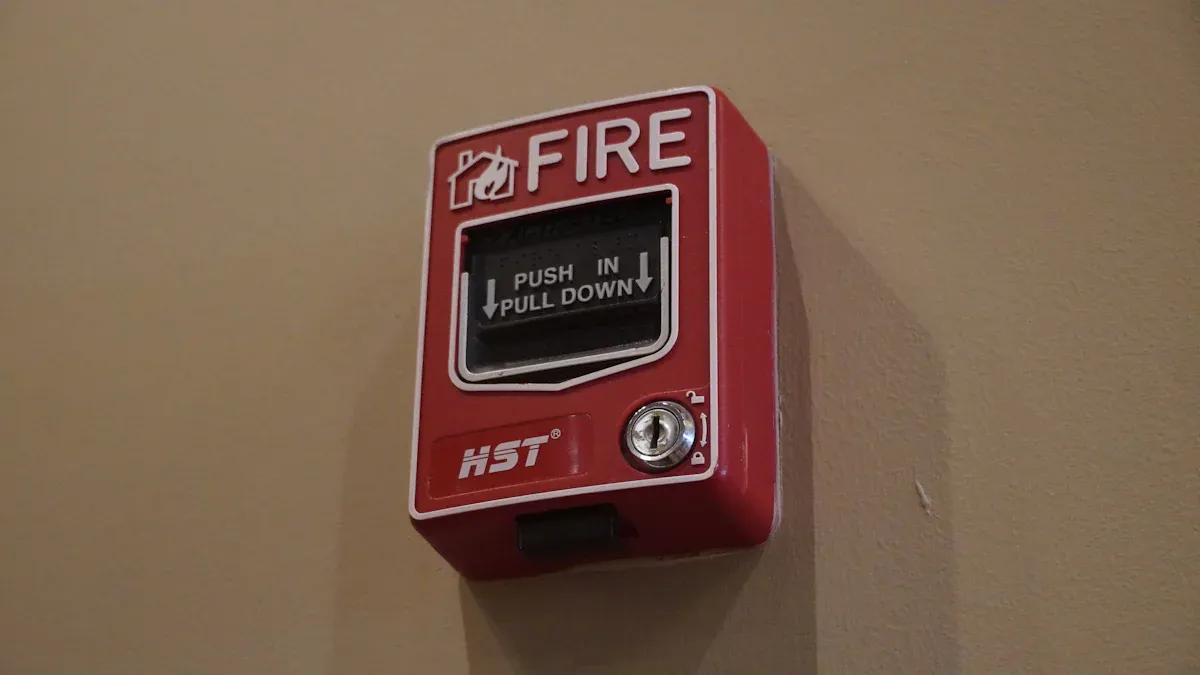
Fire safety equipment is essential for safeguarding warehouses against potential hazards. Key items such as fire extinguishers, smoke detectors, and sprinkler systems are critical for effective warehouse fire protection. Adhering to fire safety regulations is also vital. Warehouses must comply with national and local codes to ensure safety. For instance, the National Fire Protection Association (NFPA) outlines specific requirements regarding which fire safety equipment is mandatory for warehouses. Conducting a thorough warehouse fire risk assessment is crucial to identify specific needs and ensure preparedness for emergencies. Additionally, a fire extinguisher placement guide can help optimize the positioning of fire extinguishers for maximum accessibility during an incident, further enhancing industrial firefighting efforts.
Key Takeaways
- Equip warehouses with essential fire safety equipment like fire extinguishers, smoke detectors, and sprinkler systems to protect against fire hazards.
- Regularly inspect and maintain fire safety equipment to ensure it functions properly during emergencies. Monthly checks for extinguishers and alarms are recommended.
- Understand the different types of fire extinguishers and their applications. Use ABC or BC extinguishers for versatility against various fire types.
- Implement a fire alarm system tailored to your warehouse layout and hazards. Regular testing ensures early detection and prompt response to fires.
- Invest in emergency lighting to guide employees safely during evacuations. Proper lighting can significantly reduce injury rates during emergencies.
Fire Extinguishers
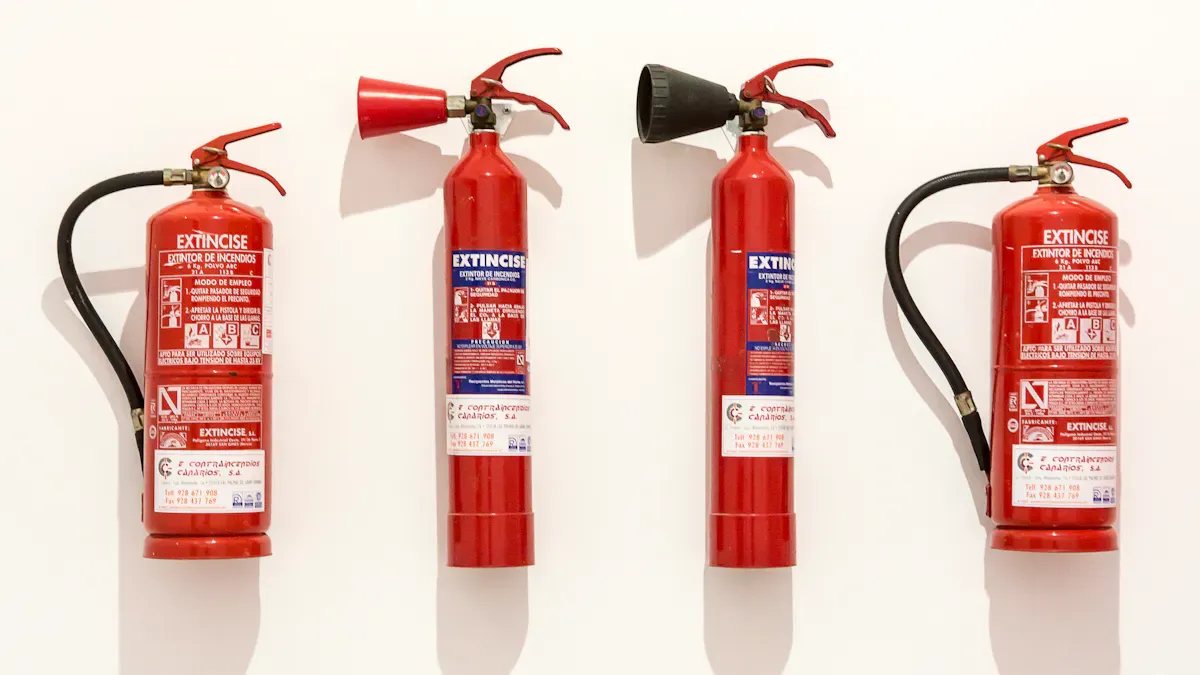
Fire extinguishers serve as a critical component of fire safety equipment in warehouses. They provide immediate response capabilities to control and extinguish small fires before they escalate. Understanding the types of fire extinguishers available and their specific applications is essential for effective fire management.
Different fire extinguishers are designed to combat various types of fires. For instance, the ABC/BC dry powder extinguisher is effective against electrical fires, flammable liquids, and ordinary combustibles. This versatility makes it a popular choice for warehouse environments where multiple hazards may exist.
| Fire Extinguisher Type | Effective Against |
|---|---|
| ABC/BC Dry Powder | Electrical fires, Flammable liquids, Ordinary combustibles |
Proper placement of fire extinguishers is crucial for ensuring safety. Fire safety authorities recommend that extinguishers be strategically positioned throughout the warehouse. They should be easily accessible to all employees, allowing for quick action in case of an emergency. Regular maintenance and inspections are vital to ensure that extinguishers remain in good working condition.
Key placement guidelines include:
- Fire extinguishers must be located within a reasonable distance from potential fire hazards.
- They should be mounted at a height that is easily reachable.
- Specific spacing requirements exist based on the capacity of the extinguishers.
In larger warehouses, placement can be challenging due to space constraints. However, ensuring that extinguishers are visible and accessible can significantly enhance fire safety measures.
By equipping warehouses with the right fire extinguishers and adhering to placement guidelines, businesses can create a safer working environment for all employees.
Fire Alarm Systems
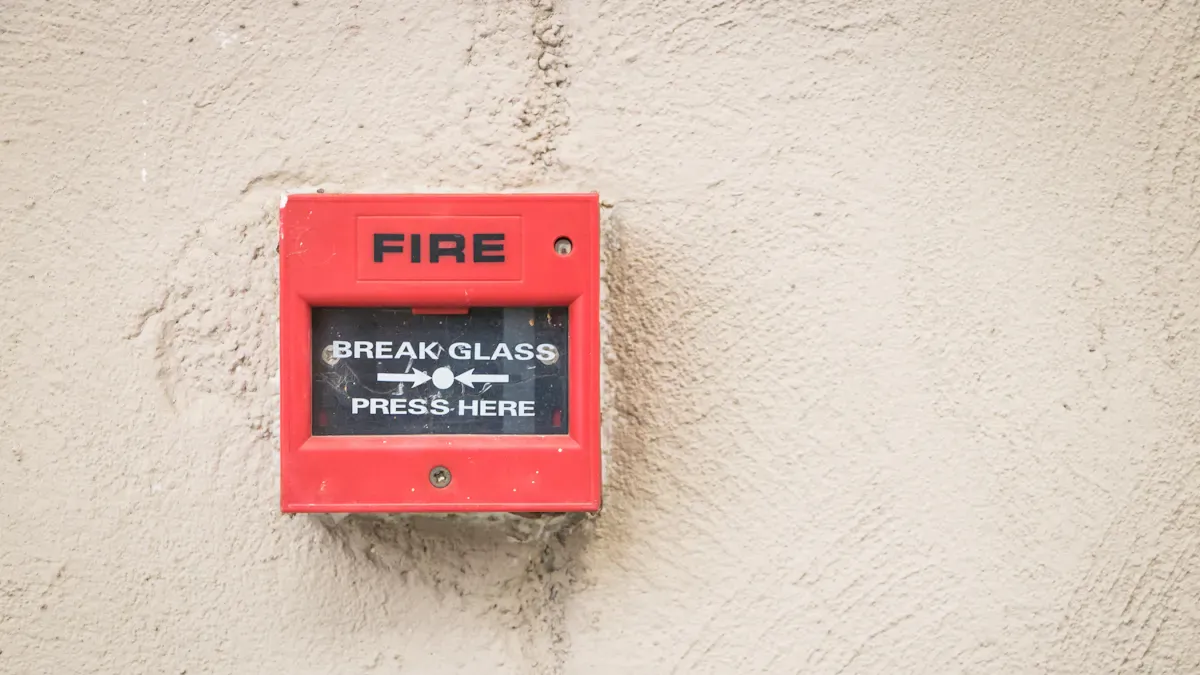
Fire alarm systems play a vital role in warehouse fire safety. They provide early detection of fires, allowing for prompt action to minimize damage and protect lives. A well-designed fire alarm system can significantly enhance a warehouse’s overall safety strategy.
Several types of fire alarm systems are suitable for warehouses, each utilizing different detection technologies. Understanding these systems helps warehouse managers choose the right one for their specific needs. Below is a summary of the main types of fire alarm systems:
| Type of Fire Alarm System | Detection Technology | Description |
|---|---|---|
| Smoke Detectors | Ionization, Photoelectric | Detect smoke particles; ionization is sensitive to flaming fires, photoelectric to smoldering fires. |
| Heat Detectors | Fixed Temperature, Rate-of-Rise | Detect temperature increases; fixed activates at a set temperature, rate-of-rise activates with rapid temperature increase. |
| Manual Pull Stations | N/A | Allows manual activation of the fire alarm system, typically located near exits. |
| Conventional Systems | Zone Identification | Divides the building into zones; identifies the zone but not the specific device. |
| Addressable Systems | Unique Addressing | Each device has a unique address; identifies the exact location of the triggered device. |
| Hybrid Systems | Combination | Combines features of both conventional and addressable systems. |
Implementing a fire alarm system requires careful planning. Warehouse managers should consider factors such as the layout of the facility, potential fire hazards, and the number of employees. Regular testing and maintenance of fire alarm systems are essential to ensure they function correctly during emergencies.
Sprinkler Systems
Sprinkler systems are essential fire safety equipment in warehouses. They provide automatic fire suppression, significantly reducing the risk of extensive damage and loss of life during a fire emergency. These systems activate when they detect heat, releasing water to control or extinguish fires quickly.
Several types of sprinkler systems are commonly used in warehouses. Each type serves a unique function during a fire emergency. Below is a summary of the main types:
| Type of Sprinkler System | Function During Fire Emergency |
|---|---|
| Overhead Sprinklers | Installed on the ceiling, they suppress fires from above. ESFR systems activate quickly to control fires early. |
| In-Rack Sprinklers | Placed within storage racks, they deliver water directly to storage areas, minimizing water waste and damage. |
Recent investigations by Factory Mutual (FM Global) and VdS Schadenverhütung have shown that sprinkler systems can effectively control fires in Automated Storage and Retrieval Systems (ASRS) warehouses under specific conditions. The FM datasheet indicates that if the sprinkler system is designed according to FM specifications, extinguishing a fire in such environments is feasible. This highlights the importance of proper design and installation to maximize the effectiveness of sprinkler systems.
Warehouse managers should regularly inspect and maintain sprinkler systems to ensure they function correctly during emergencies. Regular testing helps identify any issues that may hinder performance. By investing in reliable sprinkler systems, warehouses can enhance their fire safety measures and protect their assets and employees.
Emergency Lighting
Emergency lighting is a crucial component of fire safety equipment in warehouses. It ensures that employees can safely evacuate during emergencies, especially when normal lighting fails. Properly installed emergency lighting illuminates exit routes, stairwells, and other critical areas, guiding individuals to safety.
Regulatory compliance is essential for emergency lighting systems. Various standards outline the requirements for effective emergency lighting in warehouse environments. Below is a summary of key regulations:
| Regulation/Standard | Description |
|---|---|
| Regulatory Reform (Fire Safety) Order 2005 (Article 14(h)) | Requires emergency routes/exits to have adequate emergency lighting when normal lighting fails. |
| Approved Document B (Vols 1 & 2) | Provides statutory guidance on emergency lighting provisions and definitions. |
| Safety Signs and Signals Regulations 1996 | Mandates powered signs to have a guaranteed emergency supply if hazards persist. |
| BS EN 1838:2024 | Technical performance requirements for emergency lighting (European harmonized). |
| BS 5266-1:2025 | US code of practice and application guidance for emergency lighting. |
| BS EN 50172:2024 | Testing and maintenance procedures for emergency lighting. |
| BS EN 60598-2-22:2022 | Luminaire safety and performance standards. |
Implementing emergency lighting not only meets regulatory standards but also enhances safety. Studies show that improved lighting conditions significantly reduce injury rates during evacuations. For example, the following table illustrates the impact of enhanced emergency lighting on various types of injuries:
| Type of Injury | Minimum Code (1.0 lux) | Enhanced Safety (2.0 lux) | Reduction (%) |
|---|---|---|---|
| Fall incidents | 3.1-5.8% | 1.2-2.4% | 61-76% |
| Collision injuries | 1.2-2.3% | 0.4-0.9% | 67-74% |
| Crowd-related injuries | 0.8-1.5% | 0.2-0.5% | 75-83% |
| Total injury rate | 5.1-9.6% | 1.8-3.8% | 65-75% |
| Expected injuries (100-person evacuation) | 5-10 injuries | 2-4 injuries | 60-65% reduction |
By investing in reliable emergency lighting systems, warehouses can significantly improve evacuation times and reduce the likelihood of injuries during fire incidents. Regular maintenance and testing of these systems ensure they function effectively when needed most.
Fire Blankets
Fire blankets are an essential part of fire safety equipment in warehouses. They provide a simple yet effective method for extinguishing small fires. These blankets are made from fire-resistant materials that can smother flames and prevent them from spreading.
Fire blankets are particularly useful in various scenarios, including:
- Kitchen fires: They can quickly extinguish flames from cooking equipment.
- Electrical fires: Fire blankets can safely cover and smother electrical fires.
- Fires involving fabric and paper: They effectively tackle fires fueled by solids such as wood, fabric, or paper.
In warehouse settings, fire blankets are effective for containing fires on machinery or small workstations. They can also address some liquid fires, making them versatile tools for fire management.
When selecting fire blankets, it is crucial to consider the material standards that ensure safety and effectiveness. The following table outlines key standards for fire blankets used in industrial environments:
| Standard | Description | Material Types |
|---|---|---|
| NFPA 701 | Evaluates fire retardancy of fabrics, ensuring they withstand high temperatures and smother flames. | Flame-resistant materials like fiberglass or wool |
| EN-1869 | Ensures compliance with international safety standards for flame resistance and material integrity. | Treated materials for high-temperature resistance |
By incorporating fire blankets into their fire safety equipment inventory, warehouses can enhance their fire response capabilities. Regular training on how to use fire blankets effectively can further improve safety measures, ensuring that employees are prepared in case of an emergency.
Smoke Detectors
Smoke detectors are a vital component of fire safety equipment in warehouses. They provide early warning of smoke and fire, allowing for quick evacuation and response. Understanding the different types of smoke detectors can help warehouse managers select the most suitable options for their facilities.
There are several types of smoke detectors, each designed for specific fire detection needs:
- Ionization Smoke Detectors: These detectors are sensitive to fast-burning fires that produce minimal smoke. They use ionization technology to detect smoke particles quickly.
- Photoelectric Smoke Detectors: These devices are effective for detecting smoldering fires that generate visible smoke. They utilize light scattering to trigger alarms when smoke enters the detection chamber.
- Combination Smoke Detectors: These units merge both ionization and photoelectric technologies, providing comprehensive fire detection capabilities.
- Specialized Smoke Detection Devices: This category includes duct smoke detectors, heat detectors, and aspirating smoke detectors, which are tailored for specific environments and challenges.
To ensure optimal performance, regular maintenance of smoke detectors is essential. Warehouse managers should follow these recommended practices:
- Test smoke detectors monthly by pressing the test button.
- Clean smoke detectors annually by vacuuming around the sensors to remove dust.
- Replace batteries at least once a year, ideally when adjusting clocks for daylight saving time.
- Check the expiration date on each unit and replace if nearing the end of its lifespan (typically around ten years).
- Test interconnected systems simultaneously to ensure all units respond correctly.
By implementing these maintenance practices, warehouses can enhance their fire safety measures and ensure that smoke detectors function effectively during emergencies.
Fire Hose Reels
Fire hose reels are an essential part of fire safety equipment in warehouses. They provide a reliable and efficient means of combating fires. These reels store hoses in a compact manner, allowing for quick deployment during emergencies.
Warehouse managers should consider several factors when installing fire hose reels:
- Accessibility: Place fire hose reels in easily accessible locations. Employees must reach them quickly during a fire emergency.
- Visibility: Ensure that the reels are clearly marked. Use signage to indicate their location, making them easy to find.
- Maintenance: Regular inspections and maintenance are crucial. Check hoses for wear and tear, and ensure that they are free from obstructions.
Fire hose reels typically come in two types: manual and automatic. Manual reels require personnel to unroll the hose and connect it to a water source. Automatic reels, on the other hand, can deploy the hose with minimal effort. Both types serve the same purpose but offer different levels of convenience.
The following table outlines key features of fire hose reels:
| Feature | Manual Hose Reels | Automatic Hose Reels |
|---|---|---|
| Deployment Method | Manual unrolling | Automatic deployment |
| Ease of Use | Requires more effort | Quick and easy to use |
| Maintenance Needs | Regular checks needed | Similar maintenance needs |
Training employees on how to use fire hose reels effectively is vital. Conduct regular drills to ensure that everyone knows the proper procedures. This training enhances overall fire safety and prepares staff for emergencies.
By incorporating fire hose reels into their fire safety equipment inventory, warehouses can improve their fire response capabilities. These systems not only provide immediate access to water but also empower employees to take action during a fire incident.
In summary, effective fire safety equipment is crucial for warehouse safety. Key items include fire alarm systems, fire suppression systems, and fire extinguishers. Regular maintenance and inspections of these systems are essential to ensure they function correctly. For instance, fire alarms should undergo regular testing, while fire extinguishers require monthly checks to maintain their readiness.
Compliance with fire safety regulations is non-negotiable. Non-compliance can lead to severe consequences, including fines, operational shutdowns, and increased insurance premiums. By investing in fire safety equipment and adhering to maintenance schedules, warehouses can protect their employees and assets effectively.
FAQ
What types of fire extinguishers are best for warehouses?
Fire extinguishers labeled ABC or BC are ideal for warehouses. They effectively combat electrical fires, flammable liquids, and ordinary combustibles, making them versatile for various hazards.
How often should fire safety equipment be inspected?
Warehouse managers should inspect fire safety equipment monthly. Regular checks ensure that all systems, including extinguishers and alarms, function properly during emergencies.
Are fire blankets necessary in a warehouse?
Yes, fire blankets are essential. They provide a quick method to smother small fires, especially in areas with cooking equipment or flammable materials.
What is the role of smoke detectors in fire safety?
Smoke detectors provide early warning of smoke and fire. They allow for quick evacuation and response, minimizing damage and protecting lives.
How can I ensure compliance with fire safety regulations?
Conduct regular fire risk assessments and stay updated on local fire codes. Collaborate with fire safety professionals to ensure all equipment meets regulatory standards.