
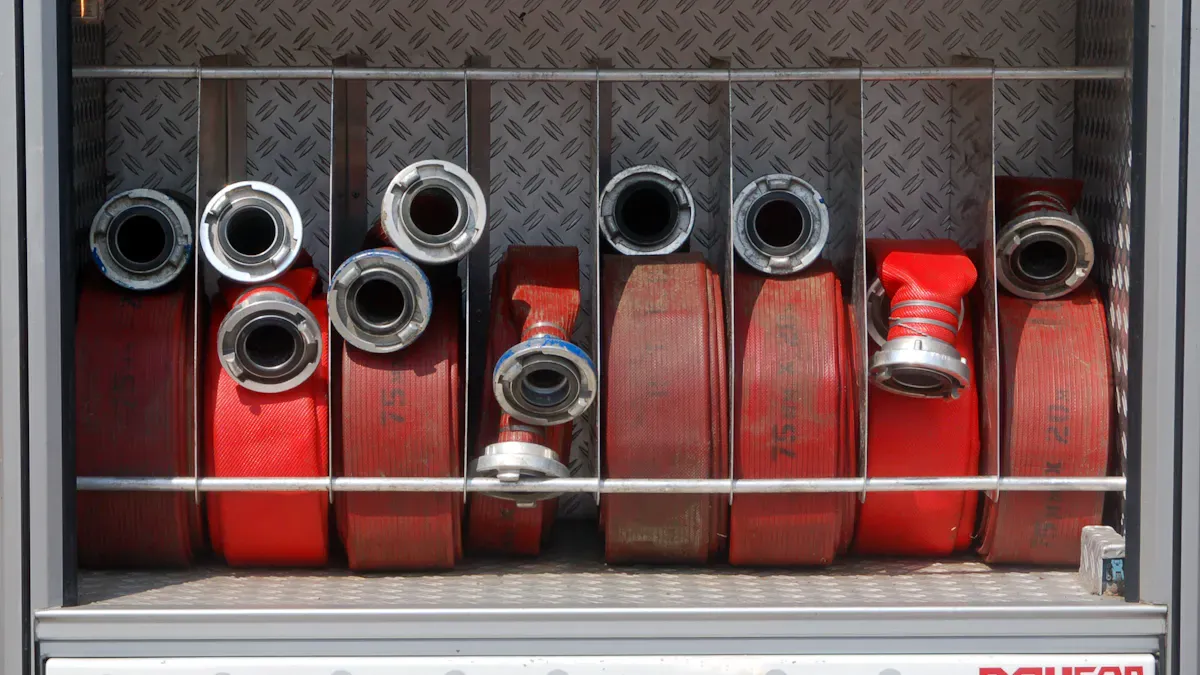
Fire hose nozzles play a crucial role in firefighting operations. They allow firefighters to control the flow and direction of water, adapting to various fire situations. Different types of nozzles, such as the fire hose nozzle and jet spray nozzle, offer unique advantages. For instance, fog nozzles provide adjustable fire hose spray patterns, making them ideal for tackling B fires and electrical fires. In contrast, smooth bore nozzles deliver a solid stream, perfect for interior attacks. Understanding the difference between jet and spray fire hose nozzles enhances firefighting effectiveness and ensures safety during emergencies. Additionally, when considering a brass vs aluminum fire hose nozzle comparison, it’s important to evaluate durability and weight. Finally, knowing how to choose the right flow rate for fire nozzle is essential for optimizing performance in various firefighting scenarios.
Key Takeaways
- Fire hose nozzles control water flow and direction, crucial for effective firefighting.
- Smooth-bore nozzles deliver a solid stream, ideal for deep penetration in structural and wildland fires.
- Combination nozzles offer adjustable spray patterns, enhancing versatility for various fire types.
- Automatic nozzles adapt to pressure changes, ensuring consistent water flow during emergencies.
- Choosing the right nozzle depends on fire type, flow rate, and available water pressure for optimal performance.
Smooth-Bore Fire Hose Nozzles
Smooth-bore fire hose nozzles are essential tools in firefighting, known for their straightforward design. These nozzles contain no internal components, except for the valve assembly, which simplifies their operation. They utilize a tapered metal fixed-size orifice to create a solid fire stream. This design allows for effective water delivery, especially in challenging firefighting scenarios.
Smooth-bore nozzles operate at specific pressures, typically around 50 psi. Their flow rates vary depending on the orifice size, as shown in the table below:
| Orifice Size | Flow Rate (gpm) |
|---|---|
| 7/8-inch | 161 |
| 15/16-inch | 185 |
| 1-inch | 210 |
| 1 1/8-inch | 266 |
| 1 1/4-inch | 328 |
These nozzles excel in situations requiring maximum reach and penetration to the fire’s seat. Their solid and consistent water pattern allows for efficient delivery, making them ideal for wildland firefighting and scenarios where debris may obstruct flow. Additionally, they perform well at lower engine pump pressures, which is beneficial in various firefighting contexts.
However, smooth-bore nozzles come with both advantages and disadvantages. The following table summarizes these aspects:
| Advantages | Disadvantages |
|---|---|
| Simplicity | Handling issues at lower pressures |
| Effectiveness in producing a solid stream | Inability to create a thermal balance |
| Reduced air entrainment properties | Less effective hydro-ventilation compared to fog nozzles |
| Suitable for specific firefighting scenarios | Potential for increased hose-kinking at lower pressures |
Constant Gallonage Fire Hose Nozzles
Constant gallonage fire hose nozzles are designed to deliver a consistent flow rate of water, regardless of the selected spray pattern. This feature is crucial for firefighters who need reliable water delivery during emergencies. The nozzle maintains a fixed orifice size, which allows it to achieve a stable gallons per minute (GPM) output.
One of the key advantages of constant gallonage nozzles is their ability to maintain a steady flow rate under varying pressures. This design ensures that the GPM remains relatively constant, even when the pressure fluctuates. Firefighters can switch between different spray patterns without worrying about changes in water flow. This adaptability enhances their effectiveness in various firefighting scenarios.
The operational principle behind these nozzles is straightforward. By keeping the orifice size unchanged while varying the nozzle pattern, they provide a uniform discharge of water. This consistency is vital when tackling different types of fires, as it allows firefighters to adjust their approach without compromising water delivery.
Firefighters often prefer constant gallonage nozzles for their reliability and ease of use. They can quickly adapt to changing conditions on the fire ground, ensuring that they have the right amount of water when needed. This capability is particularly beneficial in high-pressure situations where every second counts.
Automatic Fire Hose Nozzles
Automatic fire hose nozzles represent a significant advancement in firefighting technology. These nozzles automatically adjust to changes in water flow and pressure, making them particularly useful in dynamic firefighting environments. Firefighters appreciate their ability to maintain a consistent water stream, which is crucial during emergencies.
One of the primary benefits of automatic fire hose nozzles is their adaptability. In high-rise firefighting scenarios, water supply can often be inconsistent. Automatic nozzles respond to these fluctuations, ensuring that firefighters receive a reliable flow of water. This feature allows them to concentrate on fire suppression without the need for constant manual adjustments.
The operational mechanism of automatic nozzles involves a sophisticated design that senses changes in water pressure. When the pressure drops or rises, the nozzle adjusts its opening to maintain a steady flow rate. This capability enhances firefighting efficiency, especially in situations where every second counts.
Firefighters often find that automatic fire hose nozzles improve safety as well. By eliminating the need for manual adjustments, these nozzles reduce the risk of errors during critical moments. Firefighters can focus on their primary task: extinguishing the fire and protecting lives.
Combination Fire Hose Nozzles
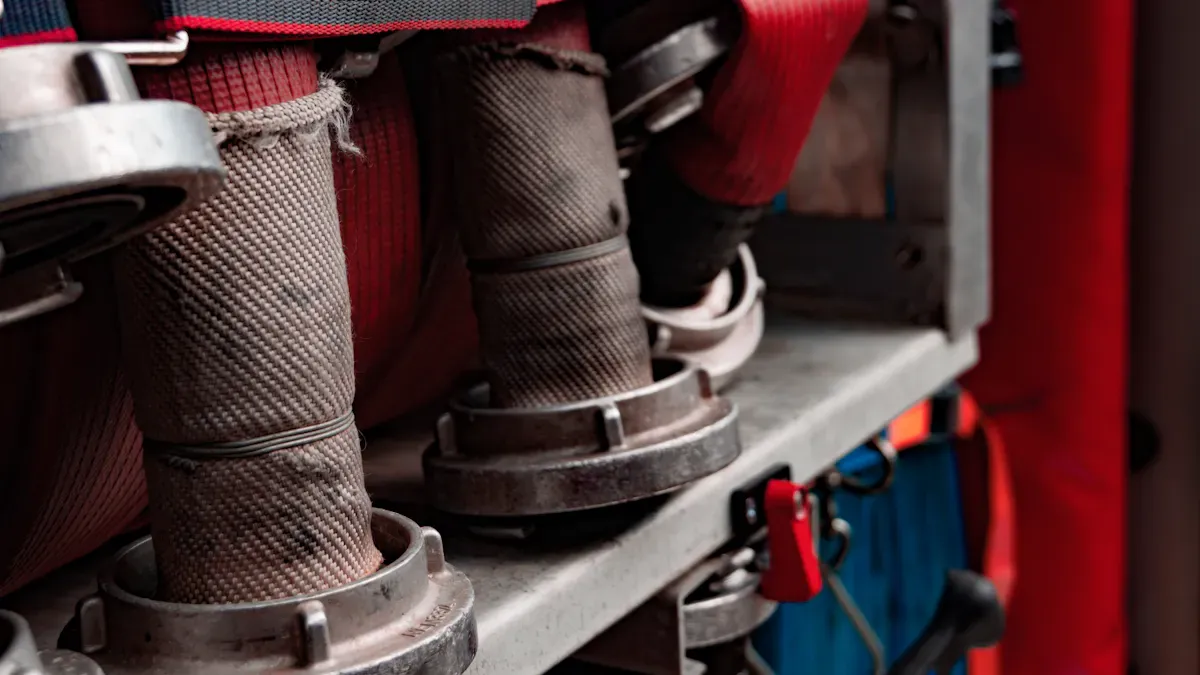
Combination fire hose nozzles, often referred to as fog nozzles, are versatile tools in firefighting. They allow firefighters to adjust the water discharge pattern, making them suitable for various fire types. These nozzles can produce multiple spray settings, including straight stream, fog, wide cone, and intermediate patterns. This adaptability is crucial for responding to different fire intensities.
Key features of combination nozzles include:
- Variable Stream Patterns: They provide options from a straight stream to a wide fog, allowing for effective fire control in various situations.
- Internal Baffles and Deflectors: These components break up the solid stream into droplets, enhancing heat absorption and improving firefighting efficiency.
Firefighters often prefer combination nozzles for structure fires, where conditions can change rapidly. Their ability to adjust flow rates makes them effective in both high-flow situations, like battling large blazes, and lower-flow needs, such as car and brush fires. This versatility ensures that firefighters can tackle a wide range of incidents effectively.
In addition to their adaptability, combination nozzles improve safety. By allowing quick adjustments to the spray pattern, they enable firefighters to respond to evolving fire conditions without delay. This feature is particularly beneficial in dynamic environments where every second counts.
Overall, combination fire hose nozzles represent a critical advancement in firefighting technology. Their ability to deliver multiple spray patterns and maintain effective water flow enhances firefighting operations, ensuring that firefighters can protect lives and property efficiently.
Spray Patterns and Applications of Fire Hose Nozzles
Fire hose nozzles offer various spray patterns, each designed for specific firefighting applications. Understanding these patterns helps firefighters choose the right nozzle for different fire scenarios.
-
Solid Stream: This pattern delivers a concentrated jet of water. It penetrates deep into the fire, making it ideal for structural fires and wildland firefighting. Firefighters often use solid streams to reach the seat of the fire quickly.
-
Fog Pattern: The fog pattern disperses water into fine droplets. This pattern cools the surrounding air and reduces heat. Firefighters commonly use fog nozzles in situations involving flammable liquids or electrical fires. The ability to adjust the spray width enhances versatility.
-
Wide Cone: This pattern spreads water over a larger area. It is effective for cooling hot surfaces and protecting exposures. Firefighters often deploy wide cone patterns during brush fires or when defending structures from approaching flames.
-
Straight Stream: Similar to the solid stream, the straight stream provides a focused jet. However, it allows for more control over the water flow. Firefighters can use this pattern for both offensive and defensive tactics.
-
Variable Patterns: Many modern nozzles allow firefighters to switch between different spray patterns quickly. This adaptability is crucial in dynamic environments where fire conditions can change rapidly.
Choosing the right spray pattern can significantly impact firefighting effectiveness. Firefighters must assess the fire type, environment, and available resources before selecting a nozzle. Proper training and knowledge of nozzle capabilities enhance safety and efficiency during firefighting operations.
Fire hose nozzles serve distinct purposes in firefighting, each designed for specific scenarios. Smooth-bore nozzles excel in delivering a solid stream for deep penetration, while combination nozzles offer versatility with adjustable spray patterns. Automatic nozzles adapt to pressure changes, ensuring consistent water flow.
Selecting the right fire hose nozzle is crucial for effective firefighting. Key considerations include:
- Fire Scenario Frequency: Different nozzles suit various fire types.
- Budget Constraints: Departments must balance performance with costs.
- Water Source Pressure: Nozzles should match available pump pressure.
- Spray Versatility: Adjustable nozzles provide tactical flexibility.
- Material and Build Quality: Durable materials ensure reliability.
By understanding these factors, firefighters can enhance their effectiveness and safety during emergencies.
FAQ
What is the primary function of a fire hose nozzle?
Fire hose nozzles control water flow and direction, allowing firefighters to adapt to various fire situations effectively.
How do I choose the right fire hose nozzle?
Consider the fire type, required flow rate, and nozzle versatility. Assess the specific firefighting scenario to select the most suitable nozzle.
Are automatic nozzles better than manual ones?
Automatic nozzles adjust to pressure changes, providing consistent water flow. They enhance efficiency and safety, especially in dynamic firefighting environments.
What are the advantages of smooth-bore nozzles?
Smooth-bore nozzles deliver a solid stream, offering maximum reach and penetration. They excel in wildland firefighting and situations with debris.
Can combination nozzles be used for all fire types?
Combination nozzles are versatile and suitable for various fire types. Their adjustable spray patterns allow firefighters to respond effectively to different scenarios.