
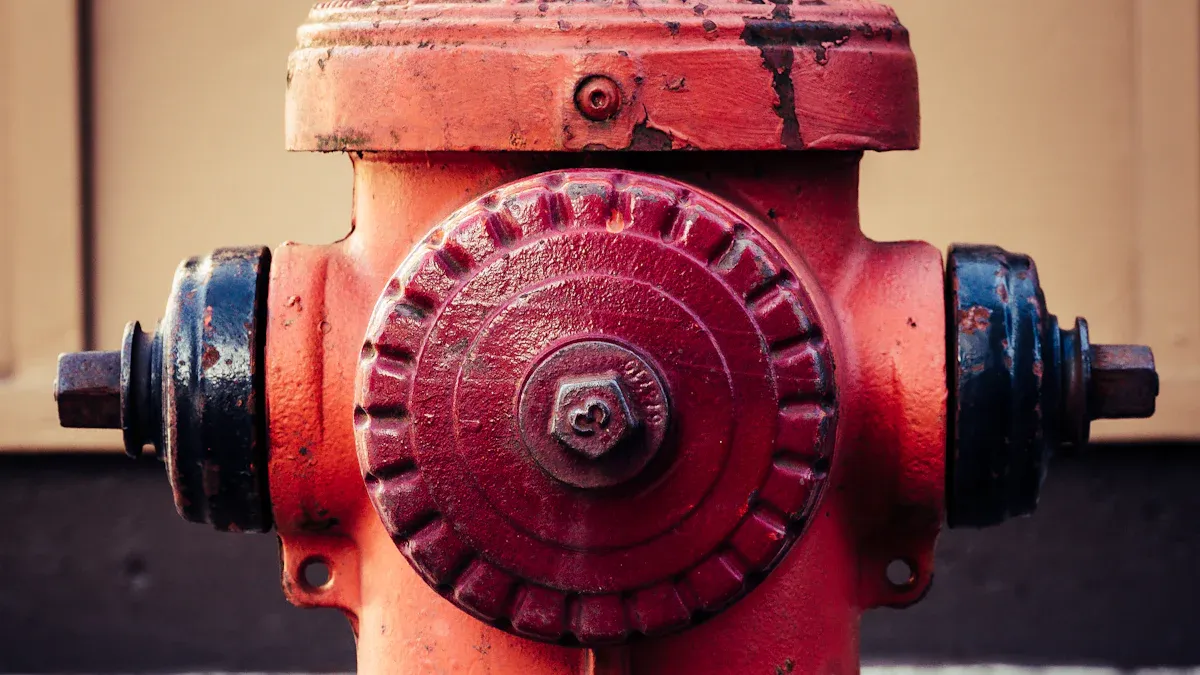
Fire landing valves play a crucial role in firefighting systems. They provide precise control over water flow, which enhances efficiency during fire suppression. Effective installations of these fire fighting landing valves can prevent approximately 87% of small fires from spreading excessively. Additionally, implementing accurate flow control methods can reduce water consumption by around 20% during fire incidents. Understanding the different types of fire landing valves is essential for ensuring optimal performance and reliability in emergency situations. Familiarity with the various fire landing valve types allows for better decision-making when selecting the appropriate equipment for specific firefighting needs.
Key Takeaways
- Fire landing valves are crucial for controlling water flow during firefighting, enhancing efficiency and safety.
- Different types of fire landing valves, such as gate, butterfly, check, ball, and pressure relief valves, serve unique functions in fire protection systems.
- Regular maintenance and inspections of fire landing valves are essential to ensure their reliability and compliance with safety standards.
- Selecting the right fire landing valve involves considering specific needs, materials, and adherence to safety codes.
- Understanding the features and applications of fire landing valves can significantly improve fire safety measures in residential, commercial, and industrial settings.
Types of Fire Landing Valves
Gate Valves
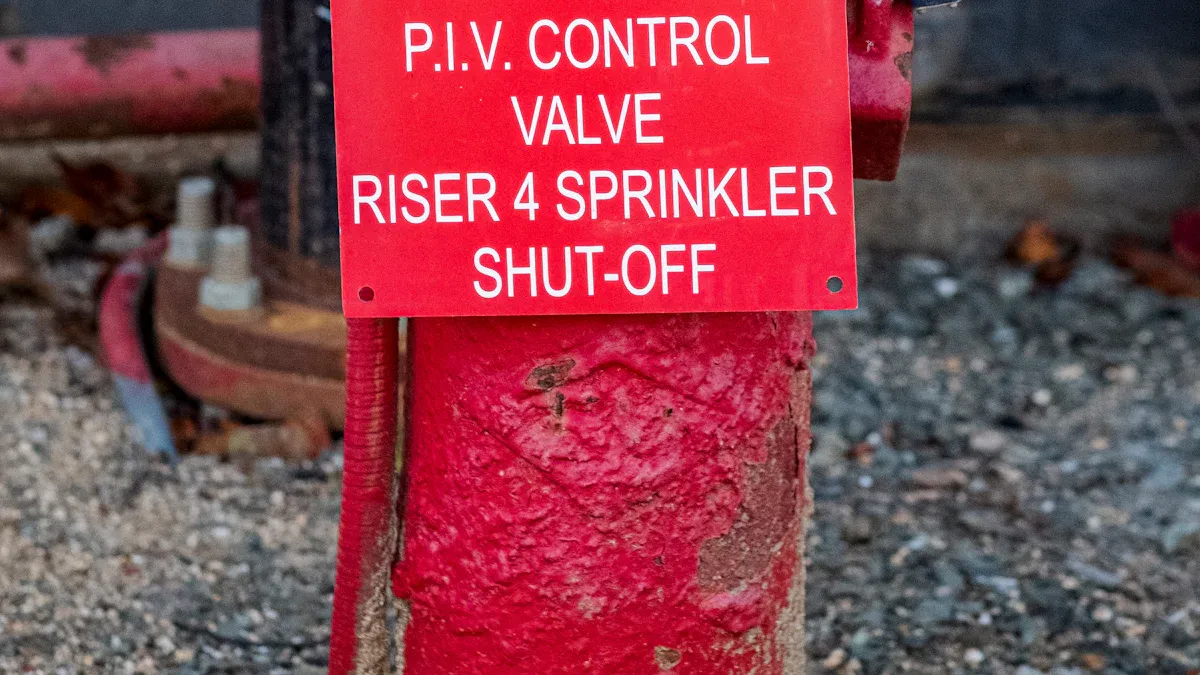
Gate valves are essential components in fire protection systems. They operate using a gate or wedge that moves up and down within the valve body. When the gate is lifted, water flows freely through the valve. Conversely, lowering the gate creates a tight seal, preventing backflow or leakage. This mechanism allows for full-bore isolation, making gate valves ideal for applications where complete shut-off is necessary, such as during maintenance operations.
Key Features of Gate Valves:
| Feature/Principle | Description |
|---|---|
| Types of Gate Valves | Flange End Rising Stem, Flange End Non-Rising Stem, Groove End Rising Stem, Groove End Non-Rising Stem, Flange End Underground |
| Operational Mechanism | Linear motion to control flow; gate moves up/down to open/close. |
| Open Position | Gate fully retracts for unobstructed flow. |
| Closed Position | Gate seals against seats for tight shut-off. |
| Fail-Safe Features | Valves may default to open during power failures. |
| Applications | Used in sprinkler systems, standpipe systems, fire hydrant networks, deluge systems, and backflow prevention. |
Gate valves are favored in fire protection systems primarily for their ability to provide full-bore isolation. This characteristic is crucial, as it allows for the complete shut-off of water flow, ensuring safety during maintenance without disrupting the entire system.
Butterfly Valves
Butterfly valves are another popular choice in fire landing valve applications. They feature a disc that rotates around a central axis, allowing for quick operation. The quarter-turn action of butterfly valves is faster than the multi-rotation required for gate valves. This speed is vital in fire landing valve applications to prevent water hammer, which can damage the system.
Advantages and Disadvantages of Butterfly Valves:
| Advantages | Disadvantages |
|---|---|
| Quick operation, compact design, good sealing performance under low pressure | Limited operating pressure and temperature range |
| Small fluid resistance, can be operated frequently | Potential issues with throttling and sealing |
| Simple structure, small size, light weight, suitable for large diameter valves | |
| Good adjustment performance | |
| Easy to install |
Butterfly valves are particularly effective in scenarios requiring frequent flow adjustments and rapid emergency shutdowns. Their compact design makes them suitable for installations in tight spaces, enhancing their versatility in fire protection networks.
Check Valves
Check valves play a critical role in preventing backflow in fire protection systems. They ensure that water flows in one direction, automatically closing if the flow direction reverses. This feature is essential for maintaining system integrity and preventing contamination.
Key Functions of Check Valves:
- Ensure that water flows in one direction, preventing backflow.
- Automatically close if the flow direction reverses, providing basic backflow prevention.
- Essential components of backflow preventers, as required by NFPA codes in fire protection systems.
Many check valves have a hinged clapper that remains closed until water flows from a source. If downstream pressure exceeds upstream pressure, the clapper seals against a rubber seat to prevent backflow. Check valves are widely used in various applications, including HVAC systems and sump pumps, but they are especially relied upon in fire sprinkler systems.
Ball Valves
Ball valves are vital components in fire landing valve assemblies. They operate by rotating a spherical disc, or ball, within the valve body to control water flow. This design allows for quick shut-off capabilities, making ball valves a preferred choice in many firefighting applications.
Key Features of Ball Valves:
| Feature | Description |
|---|---|
| Operation | Controls water flow in fire protection systems. |
| Key Benefit | Provides quick shut-off capabilities. |
| Common Usage | Frequently used in auxiliary piping. |
Ball valves excel in scenarios where rapid response is crucial. Their ability to provide a tight seal minimizes leakage, ensuring that water flows only when needed. However, they do have limitations in high-pressure firefighting scenarios.
- Particle Contamination: Debris can clog ball valves, affecting performance.
- High-Temperature Operations: Extreme temperatures may cause warping or degradation.
- Corrosion and Erosion: Exposure to harsh environments can lead to premature failure.
- Power Outages: Actuated valves may fail without power.
Despite these limitations, ball valves remain a reliable choice for many fire protection systems due to their efficiency and ease of use.
Pressure Relief Valves
Pressure relief valves (PRVs) enhance the safety and reliability of fire landing valve systems. They regulate water pressure, ensuring that it remains within safe limits during firefighting operations. This regulation is crucial for preventing damage to hoses and nozzles, which can occur if pressure exceeds safe thresholds.
Benefits of Pressure Relief Valves:
- PRVs provide the right amount of water pressure needed for firefighting, ensuring smooth and efficient operations.
- They conserve water and prevent wastage, which is critical during emergencies.
- PRVs protect critical components from damage by preventing excessive water pressure that can harm hoses and nozzles.
- They help maintain consistent water pressure, which is essential for effective fire suppression.
According to the NFPA 13 – 2025 guidelines, standard pressure relief valves are designed to open within a pressure range of 90% to 105% of their rated pressure. For example, a relief valve rated at 175 psi must open between 158 psi and 184 psi, and it must close at a pressure above 80% of its rating, which would be no lower than 140 psi.
Characteristics of Fire Landing Valves

Design Features
Fire landing valves possess several essential design features that distinguish them from other valve types. These features enhance their functionality and reliability in firefighting applications. Key design elements include:
- Brass valve body construction: This ensures durability and reliability in various conditions.
- Cast steel handwheel: Provides a sturdy mechanism for operation.
- DN40 PN16 150mm flanged inlet: Standardized inlet size for compatibility with fire systems.
- DN40 (38mm BSP Male) outlet: Ensures compatibility with standard fire hoses.
- Flange PCD 110mm: Standardized flange dimensions for easy installation.
- Hole Diameters 16mm: Standardized hole size for mounting and installation.
These features contribute to the overall effectiveness of fire landing valves in emergency situations.
Flow Control Mechanisms
Flow control mechanisms in fire landing valves significantly impact firefighting efficiency. Different valve types offer varying flow paths and resistance levels, which can affect water delivery during emergencies. The following table summarizes the flow characteristics of common valve types:
| Valve Type | Flow Path | Resistance Level |
|---|---|---|
| Straight Through Landing Valve | Straight | Low |
| Conventional Landing Valve | Angled/Obstructed | Medium/High |
Lower pressure drop in straight-through landing valves helps maintain strong water streams, improve firefighting performance, and reduce pump workload. This efficiency is crucial during firefighting operations.
Material Considerations
The materials used in fire landing valves play a vital role in their durability and performance. Common materials include:
| Material | Properties | Applications |
|---|---|---|
| Brass | Excellent corrosion resistance, machinability, and durability | Indoor and outdoor installations, commercial and residential applications |
| Stainless Steel | Superior strength, corrosion resistance, and hygiene | High-end and industrial applications, chemical plants, marine facilities, food processing units |
| Gunmetal | Robustness, resistance to dezincification, balance of strength and cost | Established fire safety infrastructure, applications requiring proven reliability |
| Cast Iron | High structural strength, ability to withstand significant water pressure | Municipal and large-scale industrial installations, municipal water supply networks |
| Others | Specialized properties for niche applications | Lightweight construction, enhanced chemical resistance, compatibility with unique fire suppression agents |
These materials ensure that fire landing valves can withstand the rigors of firefighting environments while maintaining optimal performance.
Applications of Fire Landing Valves
Commercial Buildings
Fire landing valves serve critical functions in commercial buildings. They provide direct water access in fire hydrant systems, enabling firefighters to quickly suppress fires. The following table outlines various applications of fire landing valves in commercial settings:
| Application Type | Description |
|---|---|
| Commercial Buildings | Provide direct water access in fire hydrant systems for firefighters |
| Malls | Facilitate rapid response during emergencies |
| Schools | Ensure safety for students and staff |
These valves enhance safety measures in high-traffic areas, ensuring that emergency responders can act swiftly.
Industrial Facilities
In industrial facilities, fire landing valves play an even more significant role. These environments often face unique challenges, such as high-pressure systems and larger dimensions. The table below highlights the differences in fire landing valve requirements between residential and industrial settings:
| Feature | Residential Valves | Industrial Valves |
|---|---|---|
| Material | Lightweight alloys | Heavy-duty metals |
| Size | Compact | Larger dimensions |
| Pressure Tolerance | Lower pressure | High-pressure systems |
| Application | Small-scale emergencies | Large-scale firefighting operations |
Industrial facilities require robust fire landing valves to handle the demands of extensive firefighting operations. These valves ensure that water supply remains consistent, even under high pressure.
Residential Properties
Fire landing valves also find applications in residential properties. They provide essential water access for firefighting efforts, ensuring that homes remain safe during emergencies. While the scale of operations may differ from commercial and industrial settings, the importance of reliable fire landing valves remains constant. Homeowners benefit from having these valves installed, as they contribute to overall fire safety.
Installation Requirements for Fire Landing Valves
Site Assessment
A thorough site assessment is crucial before installing fire landing valves. This process involves several key considerations:
- Conduct a comprehensive property assessment to determine optimal locations for fire landing valves.
- Evaluate the building’s design and its proximity to a reliable water source.
- Ensure compliance with fire department requirements and obtain necessary permits.
Additionally, it is essential to verify that the water source meets the required pressure and flow rates. Documentation proving the condition of the main water line should be submitted to the local fire department. Clearing the site of debris and obstructions will facilitate a smoother installation process.
Compliance with Codes
Adhering to local and international codes is vital for the safe installation of fire landing valves. The International Fire Code (IFC) provides guidelines for the design, installation, and maintenance of fire protection systems, including fire hydrant valves. Key requirements include:
- Accessibility: Valves must be easily accessible to firefighters.
- Pressure and Flow Standards: Must meet minimum requirements for effective firefighting.
- Durability: Constructed from materials that withstand extreme conditions.
- Maintenance: Regular inspections and testing are required.
Relevant ISO standards, such as ISO 6182 and ISO 5208, outline requirements for the durability and testing of fire protection equipment. Following these codes ensures that fire landing valves function effectively during emergencies.
Professional Installation Tips
Professional installation of fire landing valves enhances their reliability and performance. Here are some tips for successful installation:
- Ensure adequate connection of the water supply to the water mains.
- Mark valve locations with proper signage for visibility.
- Schedule regular maintenance and inspections to maintain functionality.
Following strict guidelines established by local fire departments and national safety standards is essential. Adhering to maximum distance requirements between valves, typically ranging from 300 to 600 feet based on fire risk assessment, will further enhance safety.
Maintenance and Troubleshooting of Fire Landing Valves
Regular Maintenance Practices
Regular maintenance is essential for ensuring the long-term reliability of fire landing valves. Implementing a structured maintenance schedule helps prevent issues that could compromise safety. Key practices include:
- Conducting annual inspections to verify operational status.
- Performing flow tests every five years to assess water availability at 20 psi residual pressure.
- Inspecting critical components like valve caps, stems, seals, and bolts for integrity.
Additionally, regular inspections help detect wear, corrosion, or damage early. Cleaning and lubricating the valves according to maintenance manuals is crucial. Technicians should also check the tightness of valve connections and the condition of seals. Following these practices ensures compliance with NFPA 291 standards, which is vital for public safety.
Common Issues and Solutions
Fire landing valves may encounter several common issues. Understanding these problems and their solutions can enhance system reliability. The table below outlines frequent issues and recommended maintenance tasks:
| Issue Type | Description |
|---|---|
| Stuck Valves | Caused by corrosion, debris accumulation, and inadequate lubrication. |
| Corroded Valves | Weakens components leading to leaks, sticking, and potential failure. |
| Overheating | Results in improper sealing due to expansion of the valve body from excessive temperatures. |
To address these issues, technicians should:
- Inspect the valve for any signs of leakage.
- Verify that the valve mechanism operates smoothly.
- Check that the hose connections are secure.
- Conduct inspections quarterly or semi-annually.
When to Call a Professional
Certain circumstances warrant the involvement of a professional for fire landing valve inspection or repair. Consider contacting an expert if:
- A valve is hard to turn, indicating it may require lubrication or replacement.
- The valve does not fully open or close, necessitating lubrication, repair, or replacement.
- Missing or damaged parts need repair or replacement during inspection.
Timely professional intervention can prevent minor issues from escalating into significant problems, ensuring the effectiveness of fire protection systems.
Fire landing valves are vital components in fire safety systems. They come in various types, including gate, butterfly, check, ball, and pressure relief valves. Each type serves a unique purpose, ensuring effective water flow during emergencies.
When selecting a fire landing valve, building owners should assess their specific needs. Considerations include valve type, material compatibility, and compliance with safety standards. For optimal performance, prioritize valves with UL/FM approvals and implement regular inspection protocols according to NFPA standards.
By understanding the importance of these valves, stakeholders can enhance fire safety measures and protect lives and property.
FAQ
What is the primary function of fire landing valves?
Fire landing valves control water flow in firefighting systems. They enable firefighters to access water quickly and efficiently during emergencies, ensuring effective fire suppression.
How often should fire landing valves be inspected?
Fire landing valves should undergo annual inspections. Regular checks help identify potential issues, ensuring optimal performance and compliance with safety standards.
Can fire landing valves be installed by non-professionals?
While some may attempt DIY installations, hiring professionals is recommended. Experts ensure compliance with codes and proper functionality, enhancing safety during emergencies.
What materials are commonly used in fire landing valves?
Common materials include brass, stainless steel, gunmetal, and cast iron. Each material offers unique properties, ensuring durability and reliability in various firefighting environments.
Are pressure relief valves necessary in fire landing systems?
Yes, pressure relief valves are essential. They regulate water pressure, preventing damage to hoses and nozzles, and ensuring consistent pressure during firefighting operations.