
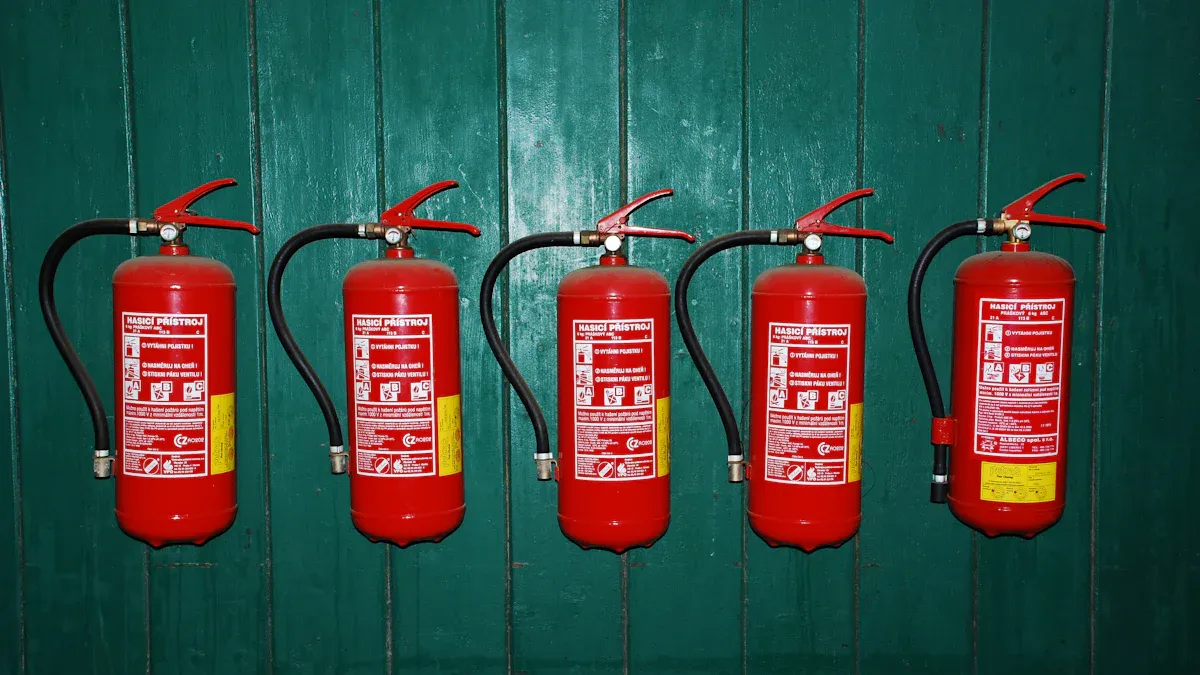
Selecting the right fire fighting equipment is crucial for ensuring the safety of firefighters. Misused or poorly fitting fire equipment parts are responsible for up to 70% of firefighter injuries. Key features such as thermal protection, breathability, and flexibility significantly impact performance. Additionally, having the right fire extinguisher and understanding the function of a fire hydrant valve can enhance safety measures. A structured checklist aids in making informed decisions during the purchasing process.
Key Takeaways
- Selecting the right firefighting gear is essential for safety. Always check for compliance with safety standards like NFPA to ensure protection.
- Regular inspections and proper maintenance of firefighting equipment can extend its lifespan. Inspect gear for damage and clean it after use to maintain effectiveness.
- Choose materials like Nomex and Kevlar for their heat resistance and durability. These materials enhance performance and protect against extreme conditions.
Key Considerations for Fire Fighting Equipment
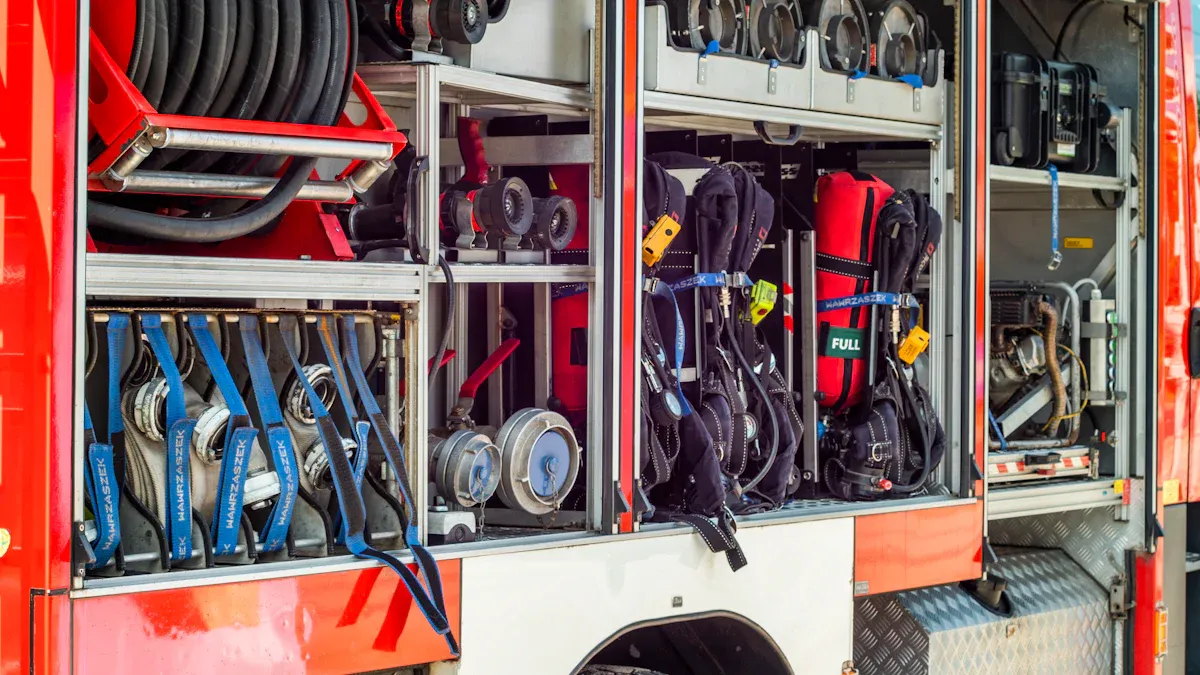
When selecting fire fighting equipment, safety standards play a pivotal role. These standards ensure that the gear meets minimum performance requirements, providing essential protection for firefighters. The National Fire Protection Association (NFPA) sets several key standards that manufacturers must adhere to. Below is a summary of some internationally recognized safety standards:
| Standard | Description |
|---|---|
| NFPA 1970-2025 | Specifies minimum requirements for firefighter gear, ensuring thermal protection and mobility. |
| NFPA 1851 | Outlines guidelines for the selection, care, and maintenance of protective ensembles. |
| NFPA 1981 | Sets performance and testing requirements for self-contained breathing apparatus (SCBA). |
| NFPA 1001 | Establishes certification standards for firefighters, including training in various emergency services. |
| NFPA 1500 | Addresses firefighter occupational safety, health, and wellness programs. |
Certification labels are another critical aspect of fire fighting equipment selection. These labels indicate that the equipment has undergone rigorous testing and meets specific safety criteria. Common certification labels include:
| Certification Label | Organization | Region |
|---|---|---|
| UL | Underwriters Laboratories | North America |
| CSA | Canadian Standards Association | North America |
| CE | Conformité Européenne | Europe |
| ETL | Intertek and ETL Semko | North America |
| NFPA | National Fire Protection Association | North America |
| ANSI | American National Standards Institute | North America |
| ASTM | American Society for Testing and Materials | North America |
These labels, such as UL and CSA, signify compliance with stringent safety standards, ensuring that the equipment is safe for use. The certification process involves third-party testing organizations, which must be accredited according to national standards. This process guarantees that all tests are witnessed and certified, maintaining a high level of quality and safety in fire fighting equipment.
Compliance with regulations is essential for ensuring the safety and effectiveness of fire fighting equipment. Regulations can vary significantly between regions, particularly between the United States and Europe. For instance, while the U.S. has specific requirements for self-contained breathing apparatus (SCBA), European standards may dictate different operational requirements. Understanding these differences is crucial for compliance and safety in firefighting operations.
In the EU, there is a strong push towards replacing certain firefighting foams with fluorine-free alternatives due to health and environmental concerns. The European Regulation (EU) 2019/1021 bans specific fluorinated substances, and future regulations are expected to phase out all PFAS in firefighting foams. This regulatory landscape necessitates proactive planning by fire departments to ensure compliance and safety.
Regular updates to safety standards occur every three to five years, incorporating advancements in fire safety technology. Non-compliance can lead to severe consequences, including legal action, financial penalties, and reputational damage. Fire departments must remain vigilant in adhering to these standards to protect their personnel and the communities they serve.
Performance and Material
Heat Resistance
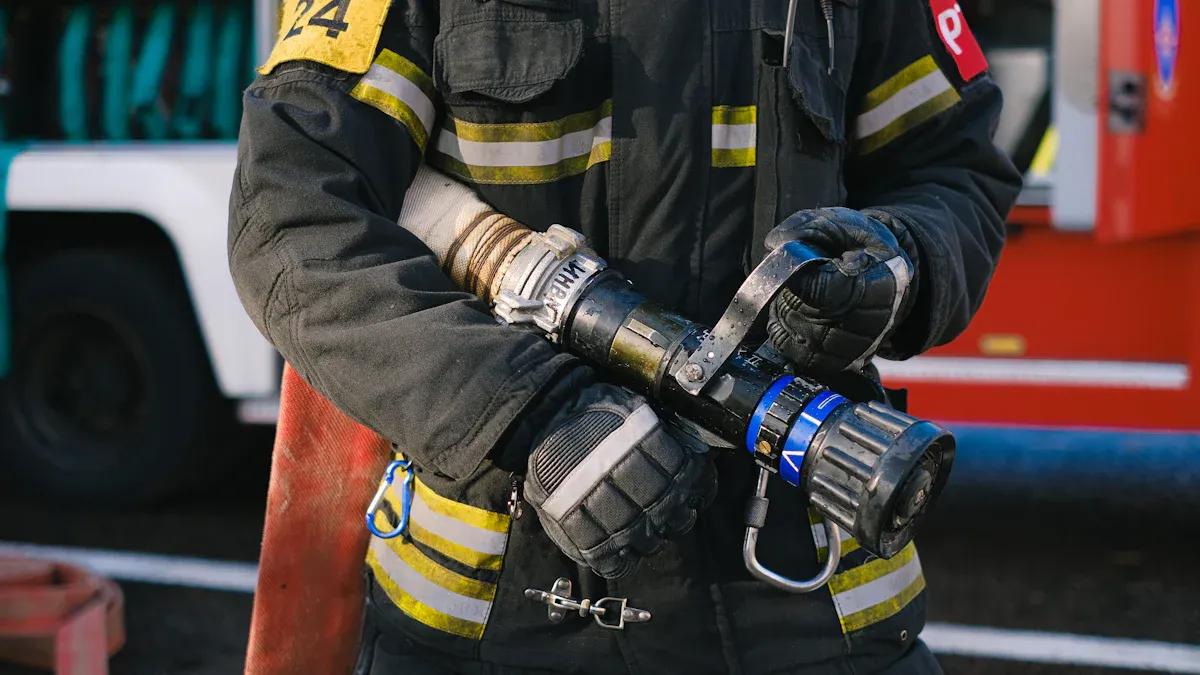
Heat resistance is a critical factor in the selection of fire fighting equipment. Firefighters often face extreme temperatures during operations, making it essential for their gear to withstand high heat levels. The materials used in turnout gear play a significant role in this aspect. For instance, Nomex and Kevlar can endure temperatures up to 1,200°F, while PBI offers even greater protection with a maximum temperature rating of 1,300°F.
| Material | Maximum Temperature Rating |
|---|---|
| Nomex | 1,200°F |
| Kevlar | 1,200°F |
| PBI | 1,300°F |
Modern firefighting suits have seen substantial advancements in heat resistance due to updated NFPA 1970 standards. These standards now incorporate new metrics that enhance thermal protection while addressing physiological stress. The introduction of tests like the ‘evaporative resistance’ test allows for a more comprehensive evaluation of heat loss through sweating. This evolution in design and testing reflects a marked improvement in the heat resistance capabilities of contemporary firefighting gear compared to that manufactured a decade ago.
Water Resistance
Water resistance is another vital characteristic of fire fighting equipment. Firefighters often work in wet conditions, and their gear must protect against water penetration. Standard tests measure water resistance, including AATCC 42, which assesses water resistance using impact penetration, and AATCC 127, which evaluates hydrostatic pressure.
| Test Name | Description |
|---|---|
| AATCC 42 | Water resistance using impact penetration |
| AATCC 127 | Water resistance using hydrostatic pressure |
The durability and performance of firefighting gear can significantly depend on its water resistance. Research indicates that repeated exposure and cleaning cycles can lead to a decrease in seam strength, particularly for the outer shell. After 40 cleaning cycles, all thermal and moisture barrier seam strengths exceeded the required 334 N, except for the outer shell in the no exposure treatment. This highlights the importance of selecting gear that maintains its integrity even after extensive use.
Breathability
Breathability is crucial for firefighter comfort during extended operations. Firefighters encounter extreme heat and physical demands, necessitating materials that provide durability, breathability, and thermal protection. Recent advancements in fabric technology have prioritized breathability, allowing perspiration to escape and aiding in temperature management during intense exertion.
Choosing the right fabric for turnout gear is essential. Lightweight and ergonomic designs enhance mobility and help reduce heat stress. Common materials include:
- Nomex: Lightweight and breathable, providing comfort.
- Kevlar: Offers superior durability and toughness, ideal for high-intensity conditions.
- Combination of Nomex and Kevlar: Balances comfort, protection, and longevity.
The relationship between breathability and thermal protection is complex. Fabrics with higher thermal protection provide better insulation but may reduce breathability. Conversely, fabrics with lower thermal protection tend to allow more moisture escape, enhancing comfort. The number of layers in the fabric also affects both thermal protection and breathability.
Comfort and Fit
Size and Adjustability
Proper sizing and adjustability are vital for ensuring comfort and safety in firefighting gear. Firefighters must have equipment that fits well to maintain mobility and effectiveness during operations. Various sizing systems exist to accommodate different body types:
| Sizing System Type | Description |
|---|---|
| Gender-specific sizing | Traditional approach that separates sizes for men and women, often leading to limitations in fit. |
| Performance-based sizing | Focuses on specific body measurements (torso length, shoulder width, waist-to-hip ratios) for a more inclusive fit. |
| Heterogeneous sizing model | A proposed model that accommodates a wider range of body types without relying on binary gender labels. |
Adjustability features, such as adjustable straps and closures, enhance the fit of firefighting gear. This flexibility allows firefighters to customize their equipment for optimal comfort, which is crucial during high-stress situations.
Weight and Mobility
The weight of firefighting gear significantly impacts mobility. Modern firefighting suits typically weigh around 50 pounds, including jackets, pants, helmets, boots, and gloves. This weight can hinder movement and lead to fatigue. However, advancements in materials aim to reduce this weight while maintaining protection. Innovations may improve mobility by as much as 25%, allowing firefighters to perform their duties more effectively.
Padding and Support
Padding and support in firefighting gear contribute to overall comfort and safety. Well-placed padding protects against impacts and abrasions while allowing for ease of movement. Manufacturers focus on advanced materials and technologies to enhance safety and comfort. Feedback from firefighters helps improve gear design, ensuring that it meets the demands of the job without sacrificing protection.
Compatibility with Other Equipment
Integration with Breathing Apparatus
Compatibility between firefighting suits and breathing apparatus is essential for ensuring firefighter safety. A well-designed suit integrates seamlessly with breathing equipment, allowing for optimal performance in hazardous environments. Key design features include:
| Design Feature | Description |
|---|---|
| Integrated Systems Approach | Developed a prototype suit based on end-user requirements for performance and safety. |
| Chemical Protection | Suit incorporates features for chemical protection alongside structural firefighting needs. |
| Performance Testing | Evaluated garment performance through instrumented tests and manikin evaluations. |
Firefighters benefit from high-grade face masks and headgear that create an airtight seal. This design blocks smoke and toxic gases while maintaining a lightweight and ergonomic structure for ease of movement.
Compatibility with Personal Protective Equipment
Manufacturers rigorously test compatibility between firefighting gear and other personal protective equipment (PPE). The testing process typically follows these steps:
| Step | Description |
|---|---|
| 1 | Manufacturer submits an application for certification against a specific standard. |
| 2 | Certification organization provides a quote and creates a test plan. |
| 3 | Proof of quality management system and product liability insurance is required. |
| 4 | Required samples are submitted for evaluation against performance requirements. |
| 5 | Compliance of products and materials is determined by the certification organization. |
| 6 | Review of product label and end-user information is conducted. |
| 7 | Manufacturer is allowed to indicate compliance on the product label. |
| 8 | Periodic audits and annual sample submissions are required for continued compliance. |
Adhering to universal standards, such as NFPA 1963, ensures interoperability among different brands of firefighting equipment. These standards establish uniform specifications for threads, dimensions, and materials, reducing the risk of incompatibility during emergencies.
Durability and Maintenance
Material Longevity
The longevity of firefighting gear materials significantly impacts their effectiveness. Certain materials are known for their durability under frequent use. The following table highlights some of the most reliable options:
| Material | Key Characteristics |
|---|---|
| Nomex | Heat resistance, moisture management, long-standing use in firefighting gear |
| Kevlar | Strength retention after thermal exposure, durability |
| PBO | Heat-blocking properties, high strength retention in protective gear |
NFPA 1851 establishes a maximum service life of 10 years for firefighting gear. However, proper care can extend the service life of coats and pants to 5 to 7 years for moderately busy fire departments.
Care Instructions
Maintaining firefighting gear is essential for ensuring its longevity and effectiveness. Here are some recommended care practices:
- Avoid high temperatures during drying to protect flame-resistant properties.
- Line dry whenever possible to maintain fabric strength.
- Store gear in a clean, dry area, hanging or laying flat to prevent stress on seams.
- Keep gear out of direct sunlight to minimize fading.
- Wash gear promptly after use to remove contaminants.
- Avoid bleach and fabric softeners to maintain flame-resistance.
Regular inspections are also crucial. Firefighters should check for thin or shiny spots, holes, or melted areas. Inspecting stitching, seams, and closures ensures the gear remains secure.
Warranty and Support
Warranties for firefighting equipment vary among manufacturers. For instance, Fire Innovations offers a one-year limited warranty covering defects in material and workmanship. Fort Garry Fire Trucks emphasizes high-quality standards and customer satisfaction but does not provide specific warranty details.
Customer support services typically include:
| Service Type | Description |
|---|---|
| Firefighter Gear | Includes personal protective equipment, turnout gear, and firefighting tools. |
| Safety Inspections | Ensures that firefighting equipment is compliant and ready for use. |
| Maintenance Services | Involves servicing and recharging of firefighting equipment to ensure reliability. |
These services help maintain the integrity and functionality of firefighting gear, ensuring that it remains effective in critical situations.
Selecting the right firefighting gear is vital for ensuring safety and operational effectiveness. Key factors include compliance with safety standards, material durability, and proper fit. Fire departments should utilize a structured checklist to make informed decisions. Investing in high-quality gear enhances contamination resistance, improves mobility, and ensures compatibility with other equipment.
FAQ
What is the most important factor when selecting firefighting gear?
Safety standards and compliance with regulations are crucial for ensuring firefighter protection and performance.
How often should firefighting gear be inspected?
Firefighting gear should undergo inspections at least once a year or after significant use to ensure safety and functionality.
Can firefighters customize their gear for better fit?
Yes, many manufacturers offer adjustable features to enhance fit and comfort, allowing firefighters to tailor their gear to their specific needs.