
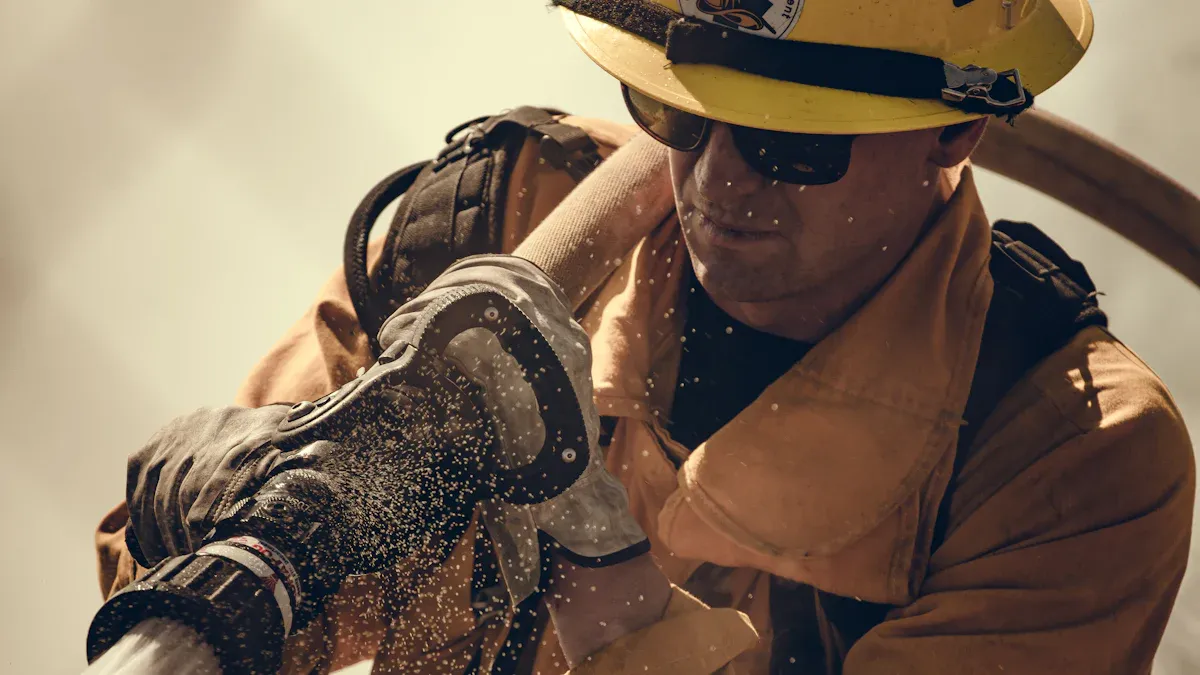
In 2026, having the right fire fighting equipment is crucial for enhancing safety and efficiency. Recent statistics reveal that 93 firefighter fatalities occurred in the U.S. in 2023, underscoring the ongoing risks. Modern tools, such as advanced fire extinguishers and innovative fire hose couplings, significantly improve operational effectiveness. The importance of a reliable fire extinguisher cannot be overstated, as it plays a vital role in emergency situations.
Key Takeaways
- Modern firefighter turnout gear enhances safety and comfort, using advanced materials for better thermal insulation and moisture management.
- Fire helmets now incorporate smart technology, providing real-time data and improving safety through features like enhanced facial protection and ventilation.
- Hydraulic rescue tools offer superior efficiency and safety, allowing firefighters to remove debris quickly and effectively during emergencies.
Safety Tools
Firefighter Turnout Gear
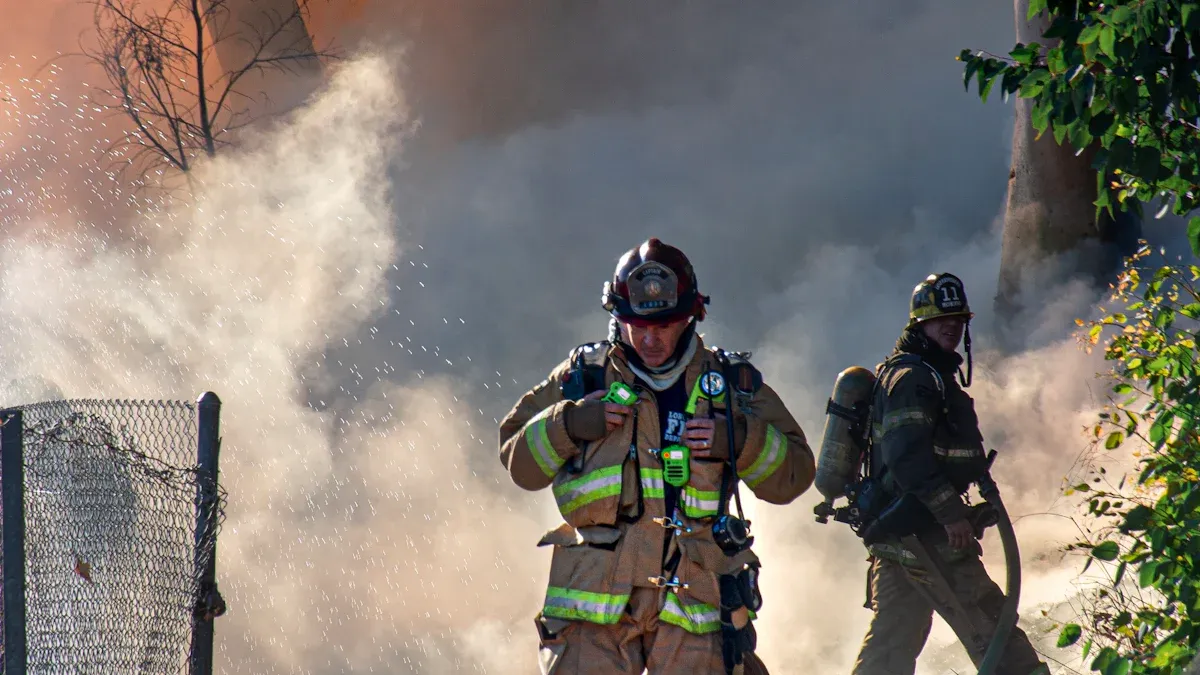
Firefighter turnout gear serves as the first line of defense against extreme heat and hazardous conditions. In 2026, advancements in materials and design have significantly improved the safety and comfort of this essential equipment. Modern turnout gear now incorporates non-PFAS materials, which enhance both safety and environmental considerations. The latest designs feature multi-layered protection, combining various materials to provide superior thermal insulation and moisture management. This innovation allows firefighters to perform their duties more effectively while reducing heat stress.
The San Francisco Fire Department has adopted this advanced gear, becoming the largest department in the U.S. to implement non-PFAS turnout gear. This gear underwent rigorous testing, including a 90-day wear trial, ensuring compliance with the latest safety standards. The integration of hydrogel technology further enhances the protective capabilities of the gear, offering improved thermal stability and moisture management.
| Step | Description |
|---|---|
| 1 | Manufacturer submits application for certification. |
| 2 | Certification organization creates a test plan and quote. |
| 3 | Proof of quality management system and insurance is provided. |
| 4 | Required samples are submitted for evaluation. |
| 5 | Compliance of products is determined by the certification organization. |
| 6 | Product label and end-user information are reviewed. |
| 7 | Compliance is indicated on the product label. |
| 8 | Periodic audits and annual sample submissions are required. |
Fire Helmets
Fire helmets have evolved significantly, incorporating advanced technologies to enhance firefighter protection. The GALLET F1 helmet features a patented ocular visor that provides enhanced facial protection. Additionally, the GALLET F2XR helmet is versatile, certified for water operations, and suitable for various rescue missions. MSA’s Connected Firefighter Platform further enhances personal protective equipment (PPE) management through internet-connected technologies.
Modern helmets also utilize smart technology, integrating AI to deliver real-time data from thermal imaging and other sensors. Future innovations may include 3D mapping and built-in display screens, while augmented reality capabilities allow for real-time information analysis and visual overlays. These advancements contribute to a safer firefighting environment, reducing the risk of head injuries.
- Modern fire helmets feature ergonomic adjustments like ratchet suspension systems and ventilated liners, enhancing comfort and preventing heat stress.
- A 2023 ergonomic study indicated that helmets with 360° airflow systems reduced core body temperature by 1.5°C during fire simulations compared to older models.
- Fire helmets must meet strict international standards for impact resistance, thermal protection, and electrical insulation, ensuring they withstand various hazards.
Fire Gloves
Fire gloves are critical for protecting firefighters’ hands from thermal exposure and mechanical trauma. Modern designs prioritize both dexterity and heat resistance, addressing the common causes of hand injuries among firefighters. These gloves meet the latest NFPA thermal protection standards, ensuring adequate protection against burns while maintaining flexibility for tasks requiring fine motor skills.
The construction of fire gloves utilizes advanced materials to enhance performance. For instance, Kevlar contributes to durability and flexibility, while Nomex enhances heat resistance. PBI provides additional thermal protection, ensuring that gloves can withstand extreme conditions.
| Material | Contribution to Gloves |
|---|---|
| Top Grain Cowhide | Offers durability and flexibility |
| Military-Grade Nomex® | Provides thermal protection |
| Porelle® | Acts as a moisture barrier |
Modern fire gloves are engineered to minimize the risk of injuries, allowing firefighters to operate efficiently and safely in high-stress environments.
Rescue Tools
Rescue Saws
Rescue saws play a crucial role in enhancing the speed and effectiveness of firefighter rescue operations. These tools have advanced significantly, allowing firefighters to cut through various materials quickly. The latest models feature high-performance chainsaws that improve cutting capabilities and maneuverability in tight spaces.
| Feature | Description |
|---|---|
| Cutting Performance | Advanced cutting capabilities with high-performance chainsaws. |
| Lightweight Design | Easy to handle, allowing for quick maneuvering in rescue situations. |
| Ergonomics | Improved handle design for better control and comfort during use. |
| Depth Control | Tool-less depth gauge for safe and efficient cutting. |
| Air Cleaning System | Reduces filter clogs and maintains engine performance. |
| Versatility | Capable of cutting through various materials including metal and wood. |
Fire departments commonly utilize several types of rescue saws, including chainsaws, circular saws (K-12), and ventilation saws. Chainsaws excel at cutting through dense materials, while circular saws are ideal for forcible entry and ventilation. Ventilation saws quickly create openings, which is essential for effective fire management. The enhanced speed and effectiveness of these tools significantly improve rescue operations, allowing firefighters to save lives more efficiently.
Hydraulic Rescue Tools
Hydraulic rescue tools have become indispensable in modern firefighting. These tools, including pumps, spreaders, cutters, and rams, provide immense cutting force, enabling quick and precise operations in emergencies. The power behind hydraulic tools allows rescuers to effectively remove metal and debris, which is vital for saving lives.
| Feature | Description |
|---|---|
| Power | Hydraulic power increases the force behind the tools, allowing rescuers to effectively remove metal. |
| Safety | Designed to prevent sparking and pushing metal further into vehicles, enhancing safety during rescues. |
| Efficiency | CORE Technology reduces weight and improves setup time, making tools easier to handle. |
| Underwater Capability | Modern tools can operate underwater, aiding in rescues from submerged vehicles. |
| Quick Coupling System | Allows for easy switching of tools and reduces hose tangling, saving time during rescues. |
Compared to traditional manual tools, hydraulic rescue tools offer superior efficiency and safety. They require less physical effort and provide greater cutting capacity, making them essential for critical situations. Fire departments increasingly rely on these tools to enhance their operational effectiveness.
K-Tools and Forcible Entry Kits
K-Tools and forcible entry kits are vital for firefighters during emergency entry scenarios. The K-Tool enables rapid entry through aluminum and glass doors in approximately 30 seconds without causing damage. This tool allows firefighters to relock the door after their operations are complete, minimizing property damage and maintaining good public relations.
- The K-Tool pulls lock cylinders from all types of doors, allowing the insertion of a special Key Tool to unlock the door.
- This method is recognized for its speed, ease of entry, and minimal property damage, which is crucial for maintaining good public relations.
Firefighters primarily use the K-Tool in forcible entry scenarios where they need to remove lock cylinders. It is effective for one-inch cylinders with sufficient space around them. However, its use is limited in cases of recessed locks or when encountering rim locks with through-bolted carriage heads. Understanding the types of locks and the spatial requirements for the K-Tool’s effective application is essential for successful operations.
Emergency Response Tools
Fire Extinguishers
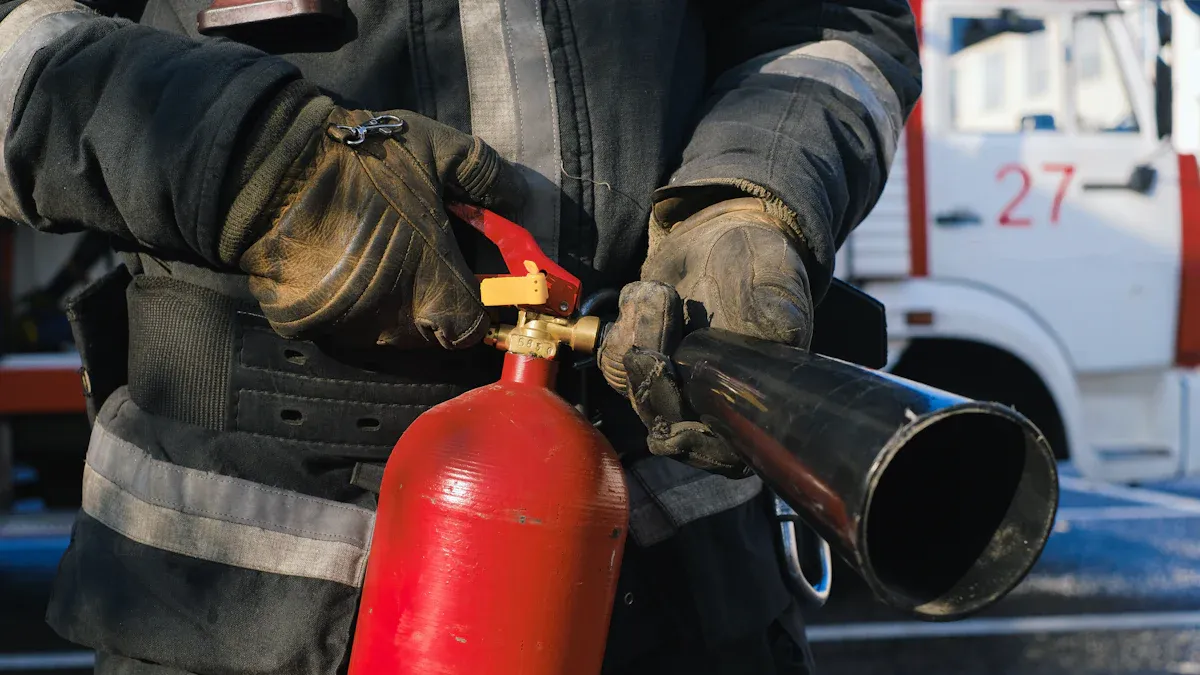
Fire extinguishers remain essential in firefighting operations. In 2026, various types of extinguishers cater to different fire classes. Understanding their specific uses is crucial for effective response.
| Type of Fire Extinguisher | Specific Use |
|---|---|
| Dry Chemical Agent | Forms a crust to remove oxygen and contain the fire. |
| Water | Absorbs heat and cools burning material. |
| Wet Chemical | Seals fuel to prevent vapors from igniting. |
| Carbon Dioxide (CO2) | Removes oxygen and replaces it with CO2 gas. |
| Halotron | Discharges a non-conductive liquid. |
| Foam | Smothers fire by creating a barrier. |
Fire departments must ensure that personnel are trained in the proper use of these extinguishers to maximize safety and effectiveness.
Thermal Imaging Cameras
Thermal imaging cameras (TICs) have revolutionized search and rescue operations. These devices detect body heat, allowing firefighters to see through obstacles like smoke and fog. The benefits of TICs include:
- Enhanced efficiency in locating victims.
- Improved safety by identifying hot spots and fire spread.
- Increased situational awareness through quick temperature measurements.
| Benefit | Description |
|---|---|
| Efficiency | TICs detect body heat, allowing searchers to see through obstacles. |
| Safety | TICs help identify hot spots and fire spread, reducing risks. |
| Situational Awareness | TICs provide quick temperature measurements, enhancing awareness. |
Fire Hose
Fire hoses have seen significant advancements in technology. Modern hoses now feature digital pressure monitoring systems, allowing real-time tracking of hose pressure. Other innovations include:
| Advancement Type | Description |
|---|---|
| Digital pressure monitoring systems | Allows real-time tracking of hose pressure. |
| QR code tagging | Provides easy access to inspection history. |
| Cloud-based compliance documentation | Facilitates storage and retrieval of compliance data. |
These advancements improve the reliability and efficiency of fire fighting equipment, ensuring that firefighters can respond effectively in emergencies.
Access Tools
Halligan Bar
The Halligan bar stands as a quintessential tool for forcible entry among firefighters. Designed to overcome the limitations of earlier tools, it features a drop-forged construction using high carbon steel. This design results in a lightweight yet robust tool capable of breaking through barriers effectively. By 1950, the Boston Fire Department equipped every truck company with a Halligan bar, showcasing its widespread acceptance and reliability in emergency situations.
Flathead Axe
The flathead axe serves multiple purposes in firefighting operations. Firefighters utilize it as a striking tool for forcible entry, making it essential for breaking through doors and walls. Its weight and sturdiness enhance its effectiveness, allowing firefighters to strike tools like the Halligan bar efficiently. Key uses of the flathead axe include:
- Striking and chopping for forcible entry.
- Ventilation by smashing through roofs.
- Holding positions during entry with other tools.
This versatility makes the flathead axe a staple in every engine company firefighter’s toolkit.
Bolt Cutters
Bolt cutters play a critical role in emergency access situations. Made from high-grade alloy steel, these tools ensure durability even in extreme conditions. Their ergonomic handles feature non-slip grips, providing better control during use. The optimized jaw geometry allows for heavy-duty cutting, enabling firefighters to free trapped individuals quickly. Key benefits of bolt cutters include:
- Effective for cutting through gates and fences.
- Essential for quick scene entry.
- Designed for heavy-duty applications.
These access tools significantly enhance the efficiency and effectiveness of firefighting operations, ensuring that firefighters can respond swiftly to emergencies.
Communication Tools
Two-Way Radios
Two-way radios are essential for effective communication during firefighting operations. They enhance coordination by allowing quick relay of information among team members. Firefighters can streamline operations and ensure everyone is on the same page during emergencies. Key benefits of two-way radios include:
- Real-Time Updates: Constant communication keeps firefighters informed about their status and potential hazards.
- Quick Decision-Making: Fast communication enables timely decisions, allowing teams to adapt strategies effectively.
- Safety Features: Many radios include emergency features like distress buttons for immediate help.
These radios are designed to withstand extreme conditions, ensuring reliable communication even in the most challenging environments. Features such as voice amplification and integrated mask radios further improve usability, allowing hands-free operation and clear communication in noisy situations.
Incident Command Boards
Incident command boards play a crucial role in emergency response management. They provide a centralized platform for tracking resources and personnel during incidents. Effective command boards should include the following features:
| Feature | Benefit |
|---|---|
| Digital Command Capabilities | Replaces traditional tools, enhancing efficiency in incident management. |
| Live Incident Map | Tracks accountability and assignments in real-time, improving operational efficiency. |
| Auto-Log Actions | Ensures all actions are recorded with timestamps, enhancing accountability. |
Customizable templates allow incident commanders to tailor the boards according to specific needs. This adaptability ensures that all critical information, such as hydrants and evacuation zones, is readily available for better planning and response.
Being equipped with essential firefighting tools significantly reduces risks and improves outcomes. Key tools like flashlights enhance visibility, while door chocks facilitate quicker access to victims. Firefighter gloves protect hands from hazards, ensuring safety during operations.
Readers should regularly assess their firefighting gear. Staying prepared for emergencies involves modernizing fire data systems, conducting advanced risk assessments, and prioritizing mental health strategies.
🔥 Preparedness saves lives!
FAQ
What is the most important firefighting tool?
Firefighter turnout gear is crucial. It protects against extreme heat and hazardous conditions, ensuring safety during operations.
How often should firefighting equipment be inspected?
Fire departments should inspect equipment monthly. Regular checks ensure functionality and compliance with safety standards.
What advancements have been made in fire hoses?
Modern fire hoses now feature digital pressure monitoring systems, enhancing reliability and efficiency during firefighting operations.