
Critical Selection Factors for Industrial Fire Extinguishers
Selecting fire safety equipment for industrial environments requires a technical assessment of potential fuel sources, environmental conditions, and regulatory compliance. The primary objective is to match the extinguishing agent to the specific hazard class to prevent equipment damage and ensure personnel safety. According to the National Fire Protection Association (NFPA), industrial facilities face higher risks due to the presence of flammable liquids, combustible dusts, and high-voltage electrical systems. Effective fire mitigation strategy involves analyzing the fire-fighting capacity of a unit, measured by its UL rating, against the total square footage of the hazard area. Proper selection reduces the probability of a small ignition evolving into a catastrophic industrial loss.
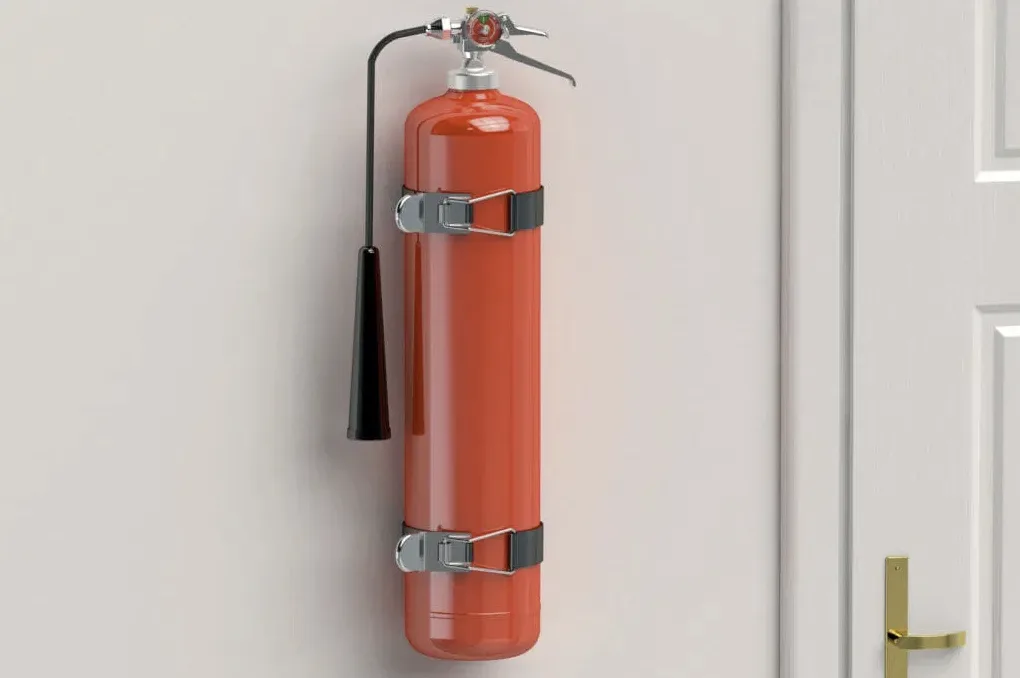
Evaluating Fire Classes and Agent Compatibility in Factories
Industrial fire hazards are categorized into five distinct classes (A, B, C, D, and K) based on the fuel involved. Identifying the correct portable fire extinguisher agent is the first technical step in procurement. For example, a Class D fire involving combustible metals like magnesium requires specialized dry powder agents, whereas a standard dry chemical unit would be ineffective and potentially dangerous. The Bureau of Labor Statistics (BLS) indicates that fire-related injuries in manufacturing often stem from the use of incorrect suppression agents. Therefore, a comprehensive hazard audit must be conducted to ensure that the chemical properties of the extinguisher are compatible with the site’s raw materials.
Comparison of Industrial Extinguishing Agents
| Fire Extinguisher Type | Fire Class | Application Scenarios |
|---|---|---|
| ABC Dry Chemical | A, B, C | General manufacturing, warehouses, and wood shops. |
| Carbon Dioxide (CO2) | B, C | Clean rooms, sensitive electronics, and power stations. |
| Purple-K (PKP) | B, C | High-risk oil, gas, and chemical processing facilities. |
| Class D Powder | D | Metal machining, aerospace manufacturing, and foundries. |
| Wet Chemical | K | Industrial kitchens and food processing plants. |
OSHA Compliance and Industrial Placement Logistics
The Occupational Safety and Health Administration (OSHA) 1910.157 standard mandates specific distribution requirements for fire suppression hardware. For high-hazard industrial zones, the travel distance to a heavy-duty fire extinguisher must not exceed 50 feet for Class B hazards. This ensures that employees can access equipment within seconds of detection. Furthermore, units must be mounted in visible, unobstructed locations. Utilizing a fire extinguisher cabinet is recommended in industrial settings to protect the device from physical impact, corrosive chemicals, and heavy dust accumulation which can compromise the discharge mechanism over time.
Technical Specifications and UL Ratings for Heavy Industry
The Underwriters Laboratories (UL) rating on an extinguisher serves as a quantitative measure of its extinguishing potential. A rating such as 4-A:60-B:C indicates that the unit can handle 5 gallons of water-equivalent for Class A fires and 60 square feet of Class B fire coverage. According to 2026 industrial safety reports from the National Safety Council (NSC), proper scaling of UL ratings to the room’s fire load is critical. Large-scale manufacturing plants often require high-capacity wheeled units rather than hand-carried models. These wheeled extinguishers provide the necessary volume of agent to suppress deep-seated fires in large machinery or bulk storage areas.
Environmental Conditions and Hardware Durability Factors
Industrial environments often subject fire safety equipment to extreme temperatures, vibration, and moisture. In such conditions, standard mild steel cylinders may suffer from accelerated corrosion. Opting for stainless steel components or specialized coatings is a technical necessity for longevity. The pressure gauge must be checked regularly to ensure it remains within the functional operating range, especially in facilities with high ambient heat. Environmental durability also extends to the fire hose and nozzle assembly, which must resist cracking and blockage in outdoor or chemically aggressive environments. Failure to account for these stressors can lead to equipment malfunction during an emergency.
Maximum Travel Distances by Hazard Category
| Hazard Level | Distance |
|---|---|
| Low Hazard | 75 Feet (22.9 m)、30-50 Feet (9.1-15.2 m) |
| Moderate Hazard | 75 Feet (22.9 m)、30-50 Feet (9.1-15.2 m) |
| High Hazard | 75 Feet (22.9 m)、30 Feet (9.1 m) |
Maintenance Intervals and Hydrostatic Testing Requirements
Regular maintenance is a mandatory legal requirement under NFPA 10 standards to verify the mechanical integrity of pressure vessels. Industrial extinguishers must undergo an annual external examination and a periodic internal inspection. Hydrostatic testing is a process where the cylinder is pressurized with water to check for leaks or structural weaknesses. According to the Department of Transportation (DOT), most dry chemical cylinders require hydrostatic testing every 12 years, while CO2 cylinders require it every 5 years. For facilities utilizing a recessed fire extinguisher box, maintenance personnel must ensure that the enclosure does not impede the quick removal of the unit for inspection or use.
Integrating Automatic Suppression for Industrial Risk Mitigation
While portable units are essential, they are often insufficient for unstaffed industrial areas or high-speed chemical reactions. In these scenarios, automatic fire suppression systems provide a superior defense. These systems utilize heat-sensitive tubing or smoke detectors to trigger a localized release of extinguishing agents, such as FM-200 or Novec 1230. Data from the U.S. Fire Administration (USFA) demonstrates that integrated suppression systems reduce property damage by up to 70% in industrial settings. Choosing between a portable unit and an automatic system depends on the “occupancy” of the risk area and the speed at which a fire is expected to grow.
Personnel Training and Industrial Response Protocols
An extinguisher is only as effective as the operator’s ability to use it. OSHA 1910.157(g) requires employers to provide an educational program to familiarize employees with the general principles of fire extinguisher use. In industrial settings, this training often includes the PASS technique (Pull, Aim, Squeeze, Sweep) and specific instructions on when to abandon fire-fighting efforts. Technical reports from the National Institute for Occupational Safety and Health (NIOSH) emphasize that improper technique can lead to agent waste or injury. Regular drills ensure that staff can identify the correct equipment and operate it effectively under the stress of a real-world fire incident.
FAQ
What defines a “high-hazard” industrial area for extinguisher placement?
A high-hazard area contains large quantities of flammable liquids or combustible materials that allow for rapid fire spread. In these zones, the fire load exceeds 200,000 BTU per square foot. These areas require more frequent extinguisher placement and higher UL-rated units to ensure a quick response.
How does vibration affect fire extinguisher performance in factories?
Constant industrial vibration can cause the extinguishing powder inside dry chemical units to “pack” or settle at the bottom. This compaction may prevent the agent from discharging correctly. To mitigate this, units in high-vibration areas should be inspected more frequently and occasionally inverted to keep the powder loose.
Can I use a CO2 extinguisher on a Class A fire in a warehouse?
Carbon Dioxide (CO2) is not recommended for Class A fires because it does not provide a cooling effect or penetrate porous materials like wood or paper. While it may temporarily knock down flames, the fire is likely to reignite. An ABC dry chemical or water-based unit is required.
What are the signage requirements for industrial fire extinguishers?
Signage must be visible from a distance and indicate the location of the extinguisher even if the unit itself is obstructed by machinery. OSHA requires that signs be legible and placed high enough to be seen over industrial equipment. Photoluminescent signs are often used for visibility during power failures.
When should industrial extinguishers be decommissioned?
Extinguishers must be removed from service if the cylinder shows signs of deep corrosion, the threads are damaged, or the unit fails a hydrostatic test. Additionally, “non-rechargeable” units must be replaced every 12 years from the date of manufacture, regardless of their visual condition or pressure gauge reading.