
Chinese fire equipment manufacturers prioritize safety and compliance by adhering to fire equipment standards such as UL, FM, and CE. These fire fighting equipment standards guarantee that products meet rigorous safety requirements. Compliance with UL FM CE fire equipment standards is vital for ensuring reliability and performance in critical situations. Additionally, fire equipment certification standards play a crucial role in facilitating global market acceptance. Thus, many seek to understand if Chinese fire equipment factories can get UL certification to enhance their credibility and trustworthiness in the industry.
Key Takeaways
- Chinese fire equipment manufacturers must comply with UL, FM, and CE standards to ensure safety and reliability.
- Achieving UL certification involves rigorous testing and factory inspections, enhancing product credibility in North America.
- FM standards focus on the reliability of entire systems, ensuring fire fighting equipment performs well in emergencies.
- CE certification is essential for accessing the European market, demonstrating compliance with safety and environmental standards.
- Compliance with these standards protects consumers and enhances manufacturers’ reputations globally.
Overview of Fire Fighting Equipment Standards
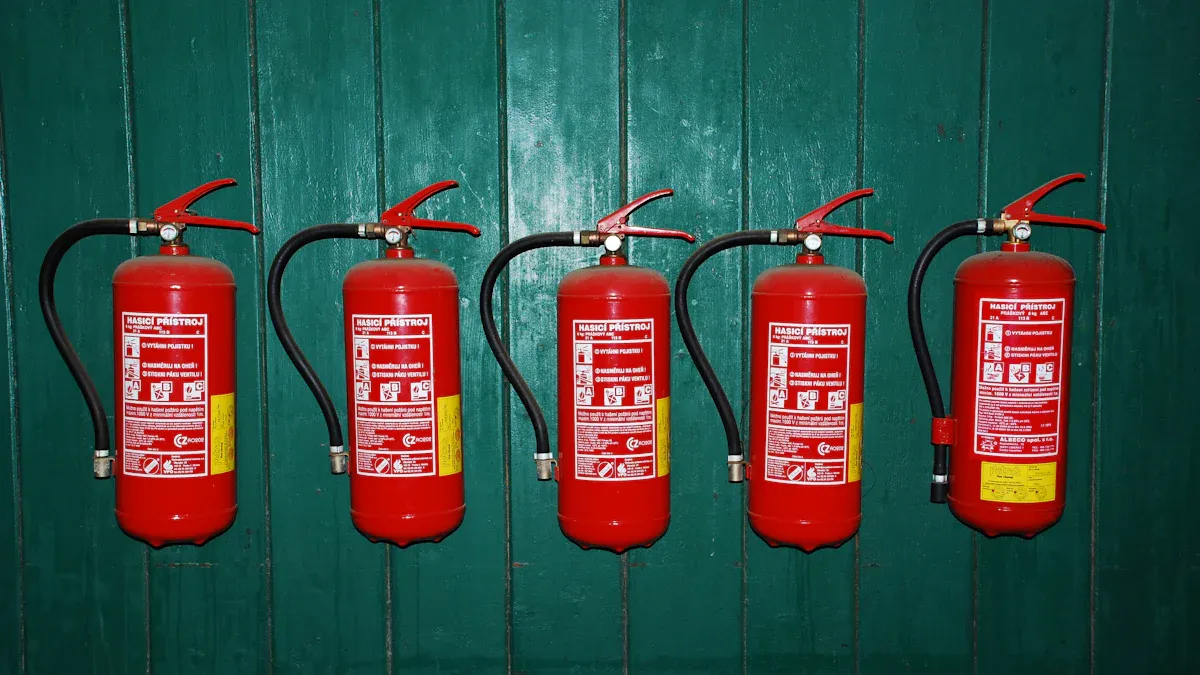
Fire fighting equipment standards play a crucial role in ensuring the safety and effectiveness of fire protection systems. These standards provide guidelines for manufacturers, helping them produce reliable and efficient products. Various international standards govern the manufacturing of fire fighting equipment, including those established by the International Organization for Standardization (ISO).
The following table outlines key ISO standards relevant to fire fighting equipment:
| ISO Standard | Description |
|---|---|
| ISO 7240 Series | Standards for fire detection and alarm systems, covering components like detectors and control units. |
| ISO 14520 Series | Requirements for gaseous fire-extinguishing systems, crucial for sensitive environments. |
| ISO 11601 | Standardizes requirements for fire hose reels and cabinets to ensure reliability and accessibility. |
| ISO 16073 Series | Outlines requirements for personal protective equipment for firefighters, ensuring safety against hazards. |
| ISO 7241 | Provides requirements for couplings used in firefighting hoses, ensuring compatibility and durability. |
| ISO 19353 | Guidelines for fire prevention and protection in industrial processes, focusing on risk assessment and safety measures. |
Different regions have their own regulatory bodies and standards. For instance, in the United States, organizations like the National Fire Protection Association (NFPA) and Underwriters Laboratories (UL) set the benchmarks for fire fighting equipment. In Europe, the European Union regulations and British Standards (BS) play a significant role. Meanwhile, China has made recent improvements in its regulations, driven by public demand for better fire safety measures.
Understanding these standards is essential for manufacturers like ZheJiang World Fire Fighting Equipment Co., Ltd. Compliance with these regulations not only enhances product quality but also builds trust with customers globally. By adhering to these standards, manufacturers ensure that their fire fighting equipment meets the necessary safety and performance requirements.
UL Standards
Underwriters Laboratories (UL) standards are critical for ensuring the safety and reliability of fire fighting equipment. These standards set rigorous testing and performance criteria that manufacturers must meet to gain certification. Compliance with UL standards not only enhances product quality but also builds consumer trust.
Key Requirements of UL Standards
Manufacturers must adhere to several key requirements to achieve UL certification for their fire fighting equipment. The following table outlines these essential requirements:
| Requirement | Description |
|---|---|
| UL Listing | Equipment must be listed by an independent organization to ensure compliance with safety standards. |
| Testing Process | Manufacturers must send samples to a lab for testing according to UL standards. |
| Compliance with NFPA | Many components must comply with NFPA standards, which often reference UL standards for listing. |
Achieving UL Certification
For a Chinese fire equipment factory to achieve UL certification, they must follow a structured process. This process includes:
- Conducting type tests according to the testing standard requirements.
- Undergoing an initial factory inspection after receiving a qualified test report.
- Completing an evaluation, review, and certification decision.
- Participating in surveillance, which includes routine supervision and inspection to verify the factory’s quality assurance capabilities.
Commonly Certified Fire Fighting Equipment
Certain types of fire fighting equipment frequently receive UL certification in China. The following table lists these common types:
| Type of Fire Extinguisher |
|---|
| Carbon Dioxide |
| Dry Chemical |
| Foam |
| Halocarbon Clean Agent |
| Water-Type |
By adhering to UL standards, manufacturers like ZheJiang World Fire Fighting Equipment Co., Ltd. can ensure that their products meet the highest safety and performance benchmarks. This commitment to quality not only satisfies regulatory requirements but also positions them favorably in the global market.
FM Standards
FM standards, established by FM Approvals, are essential for ensuring the reliability and safety of fire fighting equipment. These standards focus on rigorous testing and evaluation processes that manufacturers must follow to achieve certification. Compliance with FM standards not only enhances product quality but also assures customers of the equipment’s performance in emergencies.
Key Requirements of FM Standards
FM standards provide several benefits and requirements for fire fighting equipment. The following table outlines these critical aspects:
| Requirement/Benefit | Description |
|---|---|
| Reliability in Emergencies | Fire pumps with UL/FM certification undergo testing to ensure reliable performance under demanding conditions. |
| Compliance with Building Codes | Many regulations require UL/FM certification for fire pumps, ensuring compliance with safety standards. |
| Durability and Performance | Certification guarantees that pumps can withstand high pressures and extreme conditions for reliable use. |
| Global Recognition | UL/FM certifications are recognized internationally, making them suitable for global projects. |
| Insurance Requirements | Many insurers require UL/FM standards for fire protection systems, potentially lowering premiums. |
Achieving FM Certification
For a Chinese fire equipment factory to achieve FM certification, they must follow a structured process. This process includes:
- Request from the manufacturer: The manufacturer initiates the process by requesting FM Approvals, including details such as location, scope of work, model numbers, specifications, and relevant sales literature.
- Proposal and authorization by manufacturer: FM Approvals sends a proposal letter outlining costs, schedule, scope of work, required tests, and sample needs. The manufacturer then authorizes the proposal and submits the requested materials.
- Review, testing, and initial audit: FM Approvals reviews the submitted items, conducts testing, and may perform an initial audit of the manufacturing facility.
- The report, FM APPROVED mark, and listing: After successful testing, a report is developed, and the manufacturer can mark the product as ‘FM Approved’ and list it in the Approval Guide.
- Surveillance audits: Ongoing audits are conducted to ensure compliance with safety standards and maintain FM Approved status.
By adhering to FM standards, manufacturers like ZheJiang World Fire Fighting Equipment Co., Ltd. can ensure their products meet the highest safety and performance benchmarks. This commitment to quality not only satisfies regulatory requirements but also enhances their reputation in the global market.
CE Standards
CE standards are essential for fire fighting equipment manufacturers aiming to market their products in Europe. These standards ensure that products meet safety, health, and environmental protection requirements. Compliance with CE standards not only enhances product credibility but also facilitates access to the European market.
Key Aspects of CE Standards
Manufacturers must follow specific steps to achieve CE certification. The process typically includes:
- Prepare a technical file that includes product specifications and safety standards.
- Undergo rigorous testing of product samples to ensure compliance with European standards.
- Ensure all documentation is complete and accurate to avoid delays during audits.
These steps help manufacturers demonstrate that their fire fighting equipment meets the necessary safety and performance benchmarks. The CE mark signifies that the product complies with all relevant European directives, providing assurance to customers and regulatory bodies.
Importance of CE Certification
Achieving CE certification offers several advantages for manufacturers. It enhances product visibility in the European market and builds consumer trust. Additionally, CE certification can lead to increased sales opportunities, as many buyers prefer products that meet recognized safety standards.
For companies like ZheJiang World Fire Fighting Equipment Co., Ltd., obtaining CE certification is a strategic move. It not only aligns with their commitment to quality but also positions them favorably against competitors in the global market. By adhering to CE standards, they can assure customers of the reliability and safety of their fire fighting equipment.
Comparison of UL, FM, and CE Standards
When comparing UL, FM, and CE standards, several key differences emerge in their documentation and compliance requirements. Each standard serves a unique purpose and audience, influencing how manufacturers approach certification.
-
UL Certification: This standard includes multiple programs such as UL Listed, UL Classification, and UL Recognized services. Each program indicates different levels of safety and quality assurance. The UL Listed Mark signifies general safety, while the UL Classified Mark indicates evaluation for specific properties under certain conditions. Notably, UL standards require certification for each individual panel, ensuring that every component meets stringent safety criteria.
-
FM Certification: FM standards focus on project design rather than individual components. This approach allows manufacturers to certify entire systems, which can streamline the compliance process. FM certification emphasizes reliability in emergencies, ensuring that fire fighting equipment performs effectively under demanding conditions. Manufacturers must provide comprehensive documentation, but the responsibility for compliance lies primarily with them.
-
CE Certification: CE standards are essential for accessing the European market. Manufacturers must prepare a technical file that includes product specifications and safety standards. Unlike UL, CE certification does not require individual panel certification. Instead, it emphasizes the overall compliance of the product with European directives. Manufacturers must ensure that all documentation is complete and accurate to facilitate the certification process.
Importance of Compliance for Fire Fighting Equipment
Compliance with UL, FM, and CE standards is vital for manufacturers of fire fighting equipment. These standards ensure that products meet safety, quality, and performance benchmarks. Adhering to these regulations not only protects consumers but also enhances the reputation of manufacturers in the global market.
Key Benefits of Compliance:
- Assurance of product quality
- Enhanced marketability
- Increased customer trust
Manufacturers like ZheJiang World Fire Fighting Equipment Co., Ltd. recognize that compliance significantly impacts their export potential. The following table illustrates the importance of various compliance standards:
| Compliance Standard | Importance |
|---|---|
| ISO 9001 | Indicates robust quality management systems. |
| UL/ULC or FM Approvals | Required for North American market entry. |
| CE Marking | Mandatory for European Union compliance (EN3 standard for extinguishers). |
| GB Standards | Essential for domestic Chinese sales and often aligned with export requirements. |
Failure to comply with these standards can lead to severe legal consequences. Manufacturers may face legal liability for injuries or damages caused by non-compliance. They could also void certifications, leading to non-compliance with safety standards. Additionally, insurance claims may be denied, leaving factories liable for costs. Regulatory violations can result in fines and citations from bodies like OSHA in the U.S. or equivalent organizations in Europe.
Moreover, compliance with international standards is crucial for maintaining a positive brand image. Violations can damage a brand’s reputation and disrupt the supply chain. In China, a significant percentage of audited factories have faced critical health and safety violations, highlighting the challenges in meeting international compliance standards.
Compliance with UL, FM, and CE standards remains essential for Chinese fire equipment factories. These standards ensure product safety and reliability, which are critical in emergency situations. By adhering to these regulations, manufacturers can gain market acceptance and meet international requirements. This commitment to quality not only enhances their reputation but also builds trust with customers globally. Ultimately, prioritizing compliance with these standards positions manufacturers favorably in the competitive landscape of fire fighting equipment.
FAQ
What is the significance of UL certification for fire equipment?
UL certification ensures that fire equipment meets rigorous safety and performance standards. It builds consumer trust and facilitates market acceptance, especially in North America.
How do FM standards differ from UL standards?
FM standards focus on the reliability of entire systems, while UL standards evaluate individual components. Both ensure safety but approach certification differently.
Why is CE certification important for manufacturers?
CE certification is crucial for accessing the European market. It demonstrates compliance with safety, health, and environmental protection requirements, enhancing product credibility.
Can Chinese manufacturers obtain UL and FM certifications?
Yes, Chinese manufacturers can obtain both UL and FM certifications. They must follow specific processes, including rigorous testing and factory inspections, to achieve compliance.
What are the consequences of non-compliance with fire equipment standards?
Non-compliance can lead to legal liabilities, voided certifications, and denied insurance claims. It may also damage a manufacturer’s reputation and disrupt their supply chain.