

In high-risk industrial environments, selecting the right fire hose reel is crucial for ensuring safety and compliance. An appropriate industrial fire hose reel can significantly impact emergency response effectiveness. Regulations, such as those from NFPA 1962, emphasize the need for proper inspection and maintenance of equipment like wall mounted fire hose reels. Additionally, a hose reel for factory settings should be chosen based on the specific needs of the environment, including options like swinging type hose reels for ease of use. Ensuring that these systems, including fire hose reels with nozzles, meet safety standards protects both personnel and property.
Key Takeaways
- Assess the fire risk level in your industrial environment to choose the right fire hose reel. Different hazards require specific equipment to ensure safety.
- Select fire hose reels based on their diameter and length to ensure effective water flow. A larger diameter allows for more water delivery, crucial for larger fires.
- Regularly inspect and maintain fire hose reels to ensure they function properly. Monthly checks can prevent failures during emergencies and enhance safety.
Intended Use of Fire Hose Reel
Assessing Risk Levels
Selecting the right fire hose reel begins with a thorough assessment of the fire risk level in the industrial environment. Different activities and materials present varying hazards that influence the choice of equipment. The following table summarizes key criteria to evaluate when determining the appropriate fire hose reel:
| Criteria | Description |
|---|---|
| Level of fire risk | Evaluate the hazards related to the industrial processes and materials. |
| Nominal diameter (DN) | Select DN19, DN25, or DN33 based on site-specific water flow requirements. |
| Regulatory compliance | Confirm adherence to standards such as NFPA 14 – Section 7.3.2 and BS EN 671-1. |
Industrial sites with high fire risk, such as chemical plants or refineries, require fire hose reels that meet stringent safety standards. Compliance with regulations like NFPA 14 and BS EN 671-1 ensures the equipment performs reliably under emergency conditions. Additionally, regional authorities, including UAE and KSA Civil Defense, often reference EN 671 standards when approving fire safety equipment.
Identifying Specific Applications
The type of industrial environment directly shapes the features and design of the fire hose reel. High-risk areas demand advanced systems, while lower-risk zones may use simpler models. For example:
-
Chemical plants and oil refineries often use deluge fire hose reels. These reels deliver large volumes of water or foam to control intense fires involving flammable chemicals. A notable case involved a chemical plant successfully extinguishing a storage tank fire using a deluge reel, highlighting the importance of specialized equipment.
-
Manufacturing facilities require fire hose reels that provide quick access and durability. These reels help control fires involving machinery or combustible materials, where rapid response is critical.
-
Environments prone to static discharge need hose reels with anti-static components to prevent ignition of flammable vapors.
In high-risk industrial settings, automatic fire hose reels with features like controlled braking and locking mechanisms enhance safety. These reels may integrate with fire detection systems to enable rapid deployment, reducing response time. Conversely, manual hose reels suit lower-risk areas where trained personnel can operate them efficiently. The industrial activity type and associated hazards dictate the fire hose reel specifications, balancing safety, operational complexity, and compliance.
Fire Hose Reel Specifications
Diameter and Length
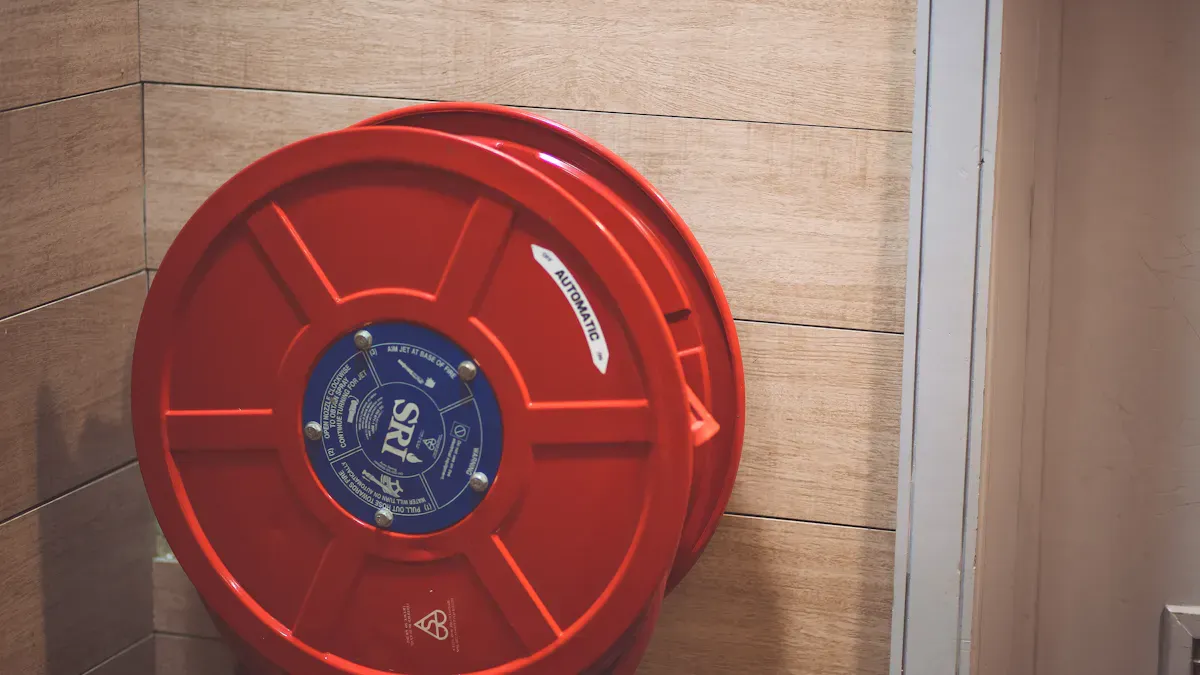
The diameter and length of a fire hose reel significantly influence its effectiveness in high-risk industrial environments. Proper specifications ensure that the reel can deliver adequate water flow to combat fires effectively.
- Recommended Diameter: Fire hose reels typically feature diameters ranging from 1 1/2 to 2 1/2 inches (3.8 to 6.4 cm). This range accommodates various applications, from light-duty to heavy-duty firefighting.
- Recommended Length: The standard lengths for fire hose reels in industrial settings vary from 25 to 100 feet (7.6 to 30.5 meters), with 50 and 75 feet being the most common. In metric terms, lengths can range from 30 to 100 meters, with 45m and 60m frequently used.
| Specification Type | Recommended Range |
|---|---|
| Length | 25 to 100 feet (7.6 to 30.5 meters) |
| 50 and 75 feet most common | |
| Diameter | 1 1/2 to 2 1/2 inches (3.8 to 6.4 cm) |
The diameter of the hose directly affects the flow rate and pressure, which are crucial for effective firefighting. A larger diameter allows for a higher volume of water delivery, essential for combating larger fires. Conversely, a smaller diameter may suffice for minor incidents.
Bend Radius and Pressure Ratings
The bend radius of a fire hose reel is another critical specification. A proper bend radius ensures that the hose remains flexible and does not kink during operation. Kinking can restrict water flow and hinder firefighting efforts.
- Bend Radius: Fire hose reels should maintain a bend radius that allows for smooth deployment and retraction. Typically, a bend radius of at least 10 times the diameter of the hose is recommended to prevent damage.
Pressure ratings are equally important for operational safety. Fire hose reels must be rated to handle specific pressure levels to ensure safe and effective operation without failure during emergencies.
| Type of Reel | Minimum Operating Pressure | Maximum Operating Pressure | Application Area |
|---|---|---|---|
| Standard Reels | 2.5 bar (36 psi) | 10 bar (145 psi) | General use in buildings |
| Heavy-Duty Reels | 15–20 bar (220–290 psi) | N/A | Industrial and high-hazard zones |
Standard reels typically require a minimum operating pressure of 2.5 bar (36 psi) and can handle up to 10 bar (145 psi). Heavy-duty reels, often used in industrial settings, are rated for 15–20 bar (220–290 psi). Compliance with these pressure ratings is essential to avoid hose bursts, coupling failures, or injury during deployment.
Fire Hose Reel Retraction Methods
Manual vs. Automatic
Choosing between manual and automatic fire hose reel retraction methods significantly impacts operational efficiency in high-risk industrial environments. Each method has its advantages and disadvantages, which can affect response times during emergencies.
| Method | Advantages | Disadvantages |
|---|---|---|
| Manual | Greater control; suitable for tight spaces where automatic retraction isn’t feasible. | Requires physical effort; slower retraction speed. |
| Automatic | Hands-free operation; programmable retraction speeds; suitable for heavy-duty hoses. | Higher initial cost; potential for mechanical failure. |
In high-stakes situations, the choice of retraction method can influence how quickly personnel can respond to a fire. For instance, automatic systems often allow for faster deployment, while manual systems may require more time and effort.
Ease of Use and Maintenance
Ease of use plays a crucial role in selecting fire hose reels for industrial settings. A user-friendly design ensures that personnel can deploy the hose quickly during emergencies. Factors influencing ease of use include:
- The mechanism of the hose reel affects deployment speed.
- Accessibility and design impact operational efficiency during stressful situations.
Maintenance requirements also vary between manual and automatic systems. Regular upkeep is essential to ensure reliability. Key maintenance tasks include:
- Regular cleaning to prevent corrosion.
- Lubrication of moving parts to reduce friction.
- Monthly inspections for wear and tear.
Following a structured maintenance schedule enhances the longevity and functionality of fire hose reels, ensuring they remain ready for use when needed.
Material Grades for Fire Hose Reels
Durability and Resistance
The durability and resistance of fire hose reels depend significantly on the materials used in their construction. Different materials offer unique properties that enhance performance in high-risk industrial environments. The following table outlines common material types, their properties, and their suitability for such settings:
| Material Type | Properties | Suitability for High-Risk Environments |
|---|---|---|
| Steel | Exceptional strength, structural stability, rust resistance (galvanized) | Ideal for heavy-duty applications in industrial settings |
| Aluminum | Lightweight, durable, corrosion-resistant | Suitable for installations where weight is a concern |
| Plastic/Composite | Immune to rust, performs well in wet environments | Used in light-duty or temporary installations |
| Stainless Steel | High tensile strength, outstanding corrosion resistance | Best for extreme environments (marine, chemical factories) |
| Protective Coatings | Enhances durability, provides rust and chemical resistance | Extends lifespan of reels exposed to harsh conditions |
Metal materials, such as steel and aluminum, provide high structural strength and durability. However, they may require protective coatings to prevent rust. Plastic materials, while lightweight and corrosion-proof, may not withstand high-stress environments.
Compliance with Safety Standards
Compliance with safety standards is crucial for fire hose reel materials. Various international standards ensure that materials meet safety and performance requirements. The following table summarizes key standards relevant to fire hose reels:
| Standard | Description |
|---|---|
| NFPA 1961 | National Fire Protection Association standard for fire hose reels. |
| EN 694 | European standard for fire hose reels. |
| LPCB | Certification indicating compliance with stringent safety regulations. |
Different countries may have specific regulatory frameworks governing fire safety equipment. For instance, the Netherlands mandates compliance with the Building Decree 2012 and the Fire Safety Usage Decree. Adhering to these standards ensures that fire hose reels perform reliably in emergencies, safeguarding personnel and property.
Size Requirements for Fire Hose Reels
Space Considerations
When selecting fire hose reels for industrial facilities, space considerations play a crucial role. The type of facility significantly influences the choice of reel. For example:
| Facility Type | Recommended Reel Type | Space Considerations |
|---|---|---|
| Small Spaces | Compact cabinet or recessed reels | Designed to save space and be discreet, suitable for confined areas but may limit hose length |
| Large Facilities | Swivel or semi-automatic reels (30–45m) | Require more space but provide greater reach and easier handling |
| High-Risk Environments | Heavy-duty, anti-static reels | May need additional grounding and specific hose types, impacting installation space |
Wall-mounted or recessed fire hose reels maximize space efficiency in confined areas. They keep equipment accessible while maintaining a clean and organized environment. Conducting a site-specific fire risk assessment ensures compliance and operational effectiveness.
Storage and Accessibility
Proper storage and accessibility of fire hose reels are essential for quick deployment during emergencies. When installed at ergonomic heights and with clear pathways, personnel can access them rapidly. This accessibility is crucial for controlling fires before professional help arrives.
Best practices for ensuring effective storage include:
| Best Practice | Description |
|---|---|
| Regular Inspections | Conduct visual and functional checks monthly or quarterly to ensure operational readiness. |
| Storage Conditions | Store hose reels in a dry, temperature-controlled environment, away from UV exposure and chemicals. |
| Compliance Standards | Ensure all hose reels meet local fire codes for legal and insurance compliance. |
| User Training | Train personnel in proper deployment and handling procedures. |
| Signage | Clearly mark fire hose reel locations with illuminated or reflective signs for quick identification. |
| Freeze Protection | Install freeze-proof reels or ensure drainage in cold climates to prevent ice damage. |
Fire hose reels equipped with quick-release mechanisms enable rapid deployment, which is vital in life-threatening situations. This design feature streamlines the process of accessing water lines, thereby significantly reducing response times during emergencies.
In summary, selecting the right fire hose reel involves careful consideration of several factors. These include compatibility with hose types, ease of installation and maintenance, and essential safety features. An informed choice enhances safety and operational effectiveness in high-risk industrial environments.
- Fire hose reels provide a reliable means of extinguishing fires.
- Understanding different types and dimensions helps in selecting the right reel.
- Key factors include application, area coverage, installation, maintenance, and budget.
By prioritizing these elements, organizations can ensure they meet safety standards and improve overall productivity.
FAQ
What is the purpose of a fire hose reel?
Fire hose reels provide quick access to water for extinguishing fires in industrial settings.
How often should fire hose reels be inspected?
Inspect fire hose reels monthly to ensure they function properly and meet safety standards.
Can fire hose reels be used in outdoor environments?
Yes, select fire hose reels designed for outdoor use to withstand weather conditions and environmental factors.